
Last updated September 22, 2026
Level 1 sweep and inspection to the NFPA 211 annual standard - flue, crown, cap, and flashing checked and photographed
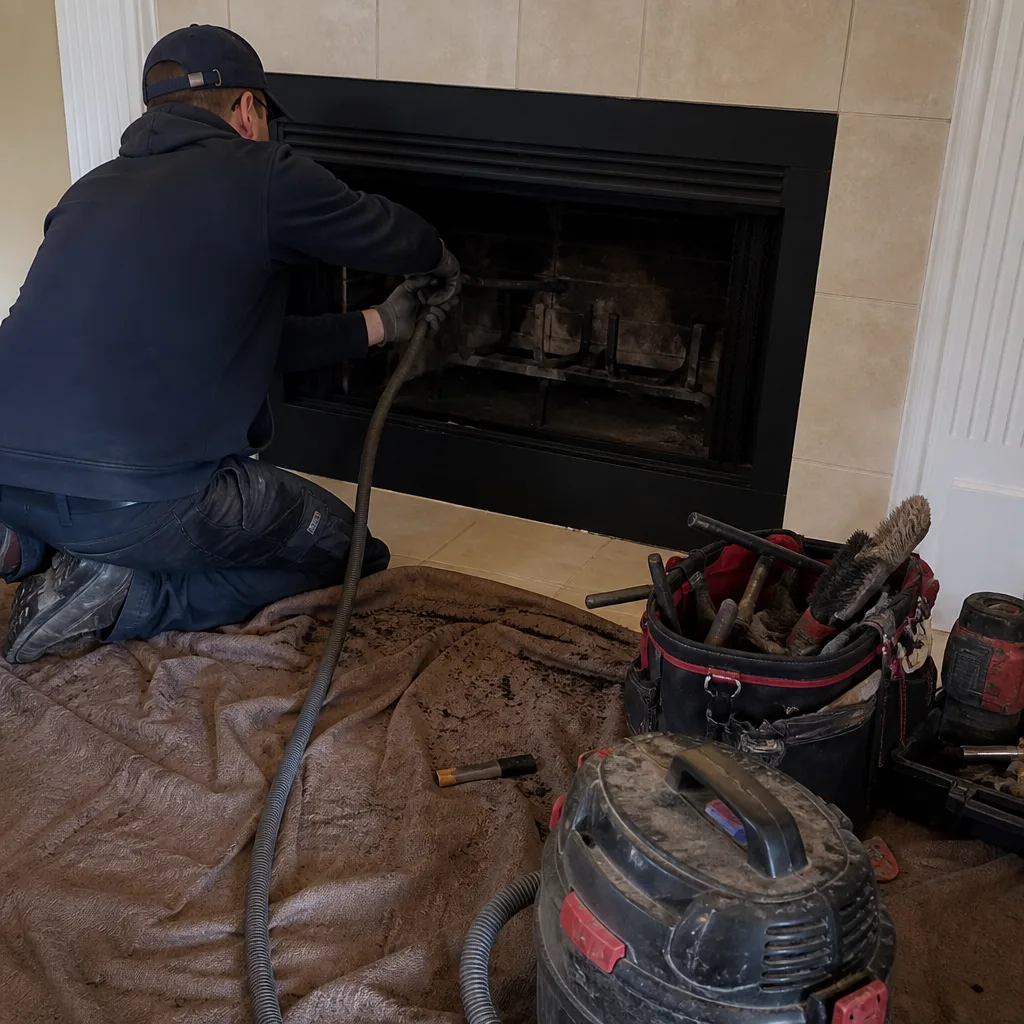
Chimney sweep logs do not sweep chimneys. They loosen some creosote - which then falls where a brush and vacuum still have to collect it.
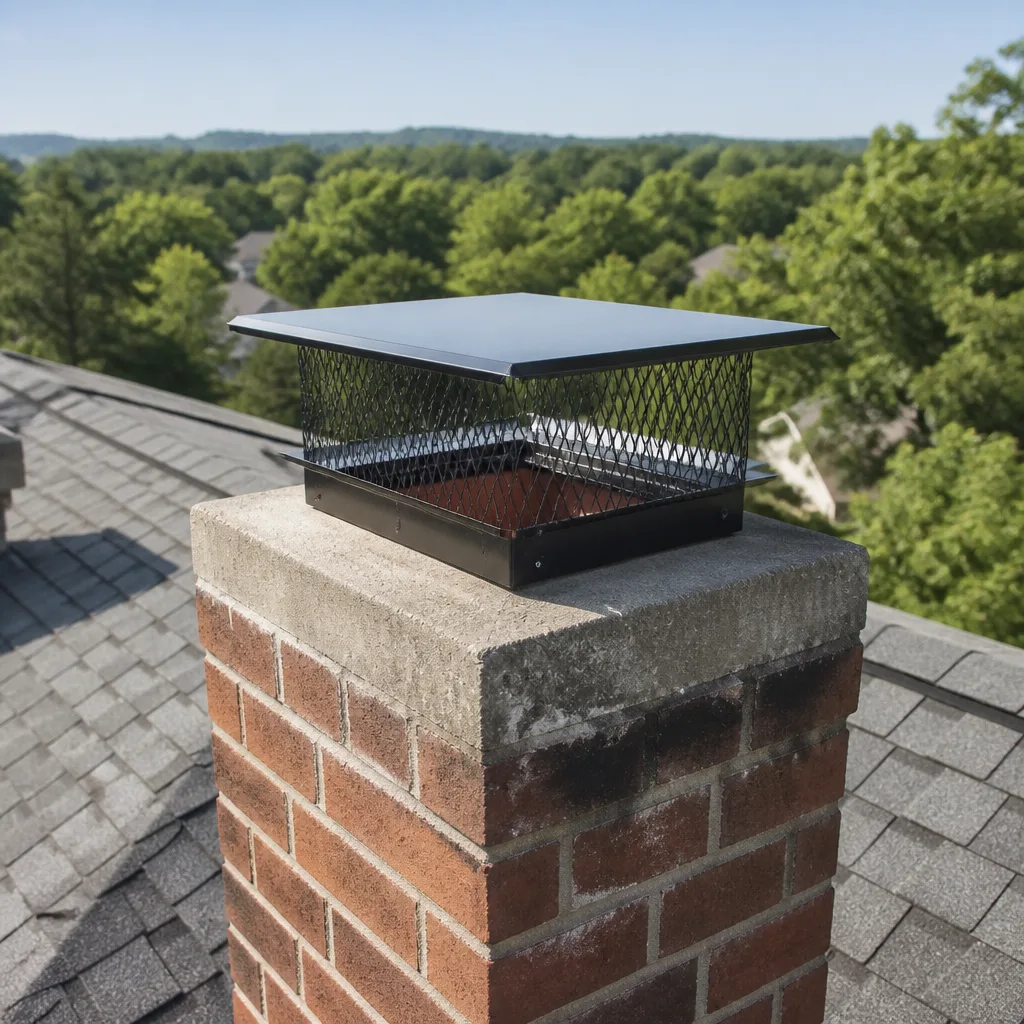
Caps & crowns
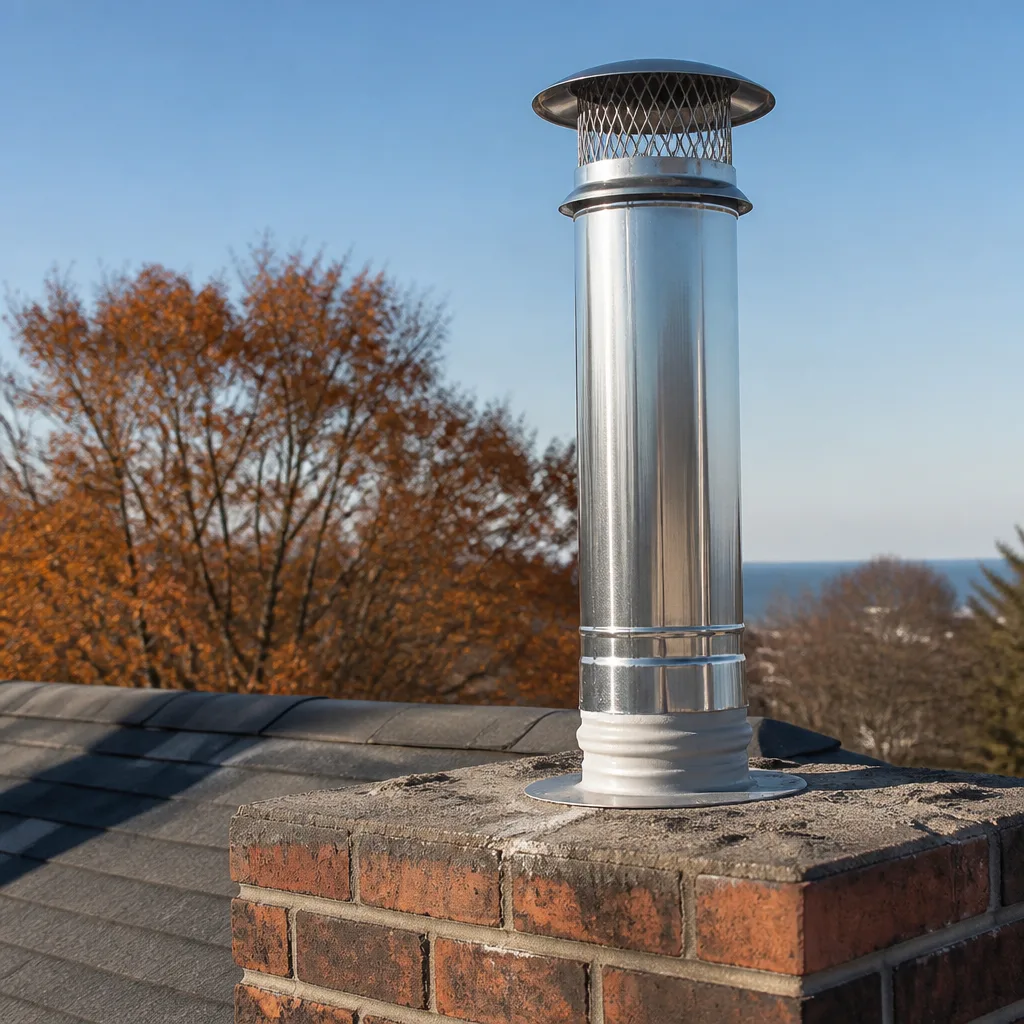
Masonry repair
 Before
 After
After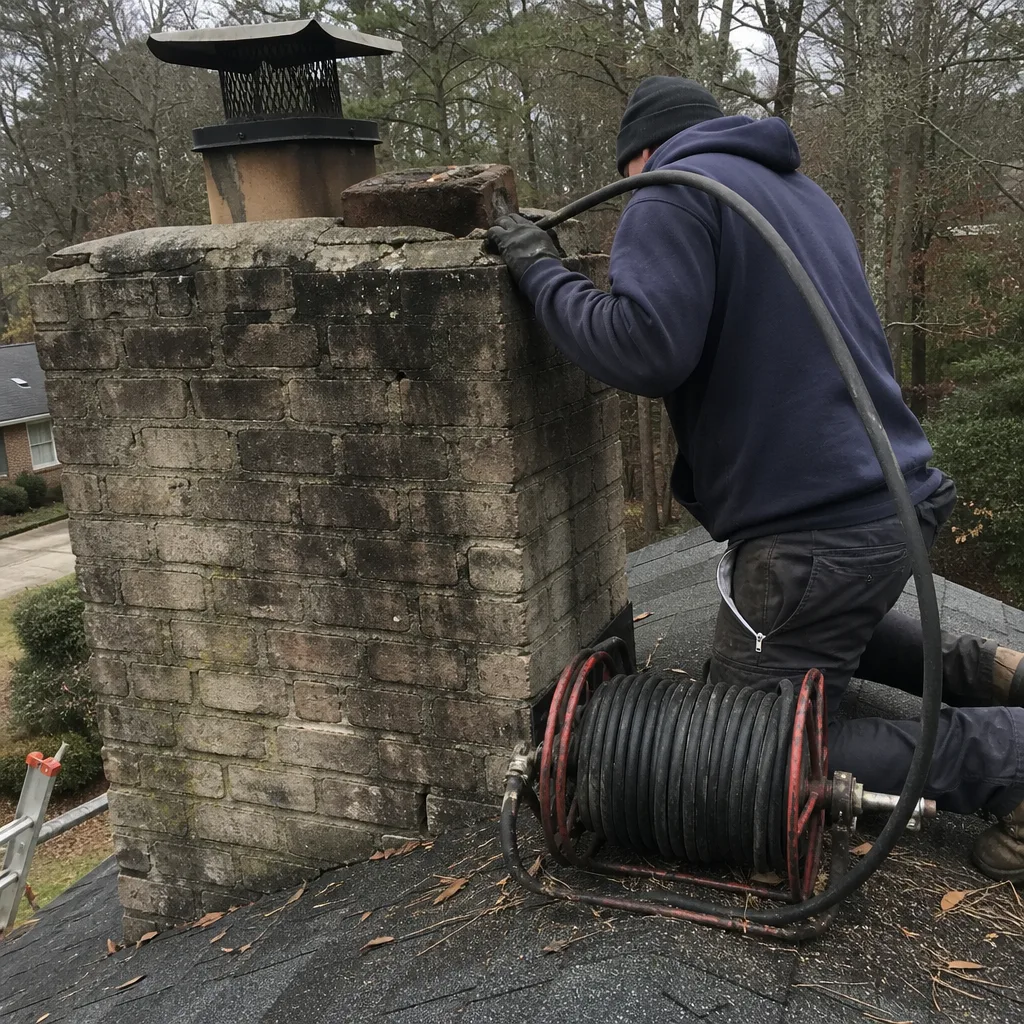 Before
 After
After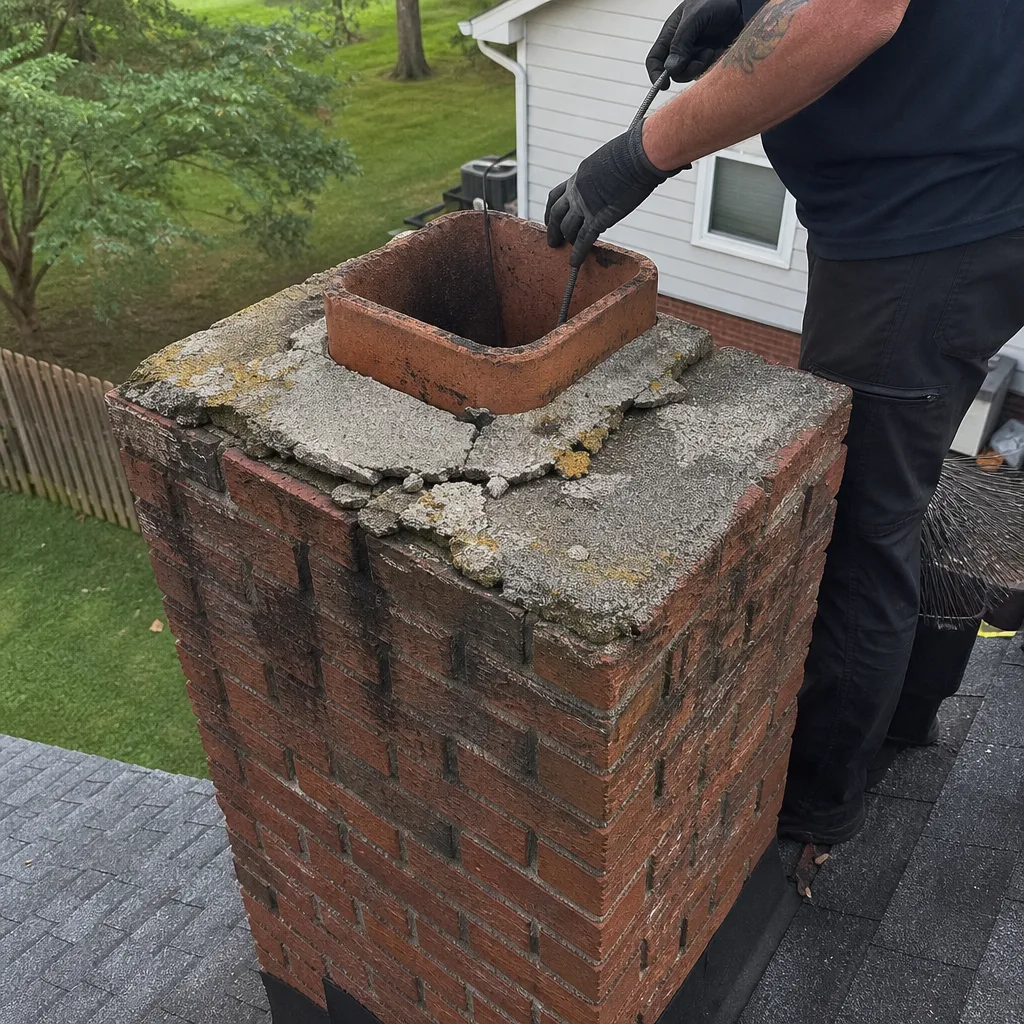 Before
 After
AfterSeasonal Chimney Cleaning Care for Marietta: Year-Round Homeowner’s Guide
The “clean it before winter” advice was written for Minnesota. In Marietta, the highest creosote ignition risk window runs from late October through mid-March, which means a September cleaning appointment often comes six weeks before the chimney actually needs it and misses the real pre-season window. Our 38,000+ inspections since 2009 have shown us that Marietta’s humid summers, storm-heavy springs, and late-starting burning season create four distinct chimney risk windows that don’t match national maintenance calendars. This guide maps the actual month-by-month rhythm Marietta homeowners should follow, what each season does to your flue, and how to build a two-appointment annual schedule that matches Cobb County’s climate instead of a generic checklist.
Quick Answer
Marietta homeowners should schedule chimney cleaning in late September through October for peak readiness, inspect for animal intrusion in March through April after nesting season, and check cap and flashing condition in June through September following storm season. A second camera inspection in spring catches winter damage that fall appointments miss, while summer humidity converts light creosote into harder deposits that require more intensive cleaning if left until November.
Table of Contents
- Why National Chimney Schedules Fail in Marietta
- Fall (October): The Real Pre-Season Preparation Window
- Winter (November-March): Burning Season and Creosote Accumulation
- Spring (March-April): Post-Season Animal and Moisture Checks
- Summer (May-September): Humidity, Storms, and the Damp
- Building Your Two-Appointment Annual Rhythm
- What a Camera Scan Reveals: Spring vs. Fall
- Chimney Sweep Costs in Marietta: What Affects Your Price
BeforeAfterWhy National Chimney Schedules Fail in Marietta
National chimney associations publish broad recommendations: inspect annually, clean when creosote reaches one-eighth inch, schedule before first use. For Chimney Cleaning Permits, Codes & Inspections in GA: What You Need to Know, local requirements may add additional layers. These guidelines assume a climate where burning season starts in October and ends in March, where summers are dry enough to leave chimneys dormant, and where freeze-thaw cycles drive the masonry damage calendar.
Marietta breaks every one of these assumptions.
Our burning season starts later and runs longer. Cobb County homeowners often light first fires in mid-to-late November, not October, and many keep supplemental fireplaces running into April during cold snaps. The Chimney Cleaning & Sweep in Marietta calendar must account for this extended use window.
More critically, Marietta’s humidity changes what happens inside a dormant chimney. From May through September, relative humidity regularly exceeds 75 percent. Moisture enters the flue through the cap, through small crown cracks, or through a poorly sealed damper. That moisture doesn’t just sit there. It reacts with existing creosote deposits, converting soft, powdery Stage 1 creosote into harder, more adhesive Stage 2 material. By October, a chimney that would have needed a standard sweep in May now needs more intensive cleaning. We’ve documented this progression in hundreds of Marietta inspections where homeowners skipped summer checks.
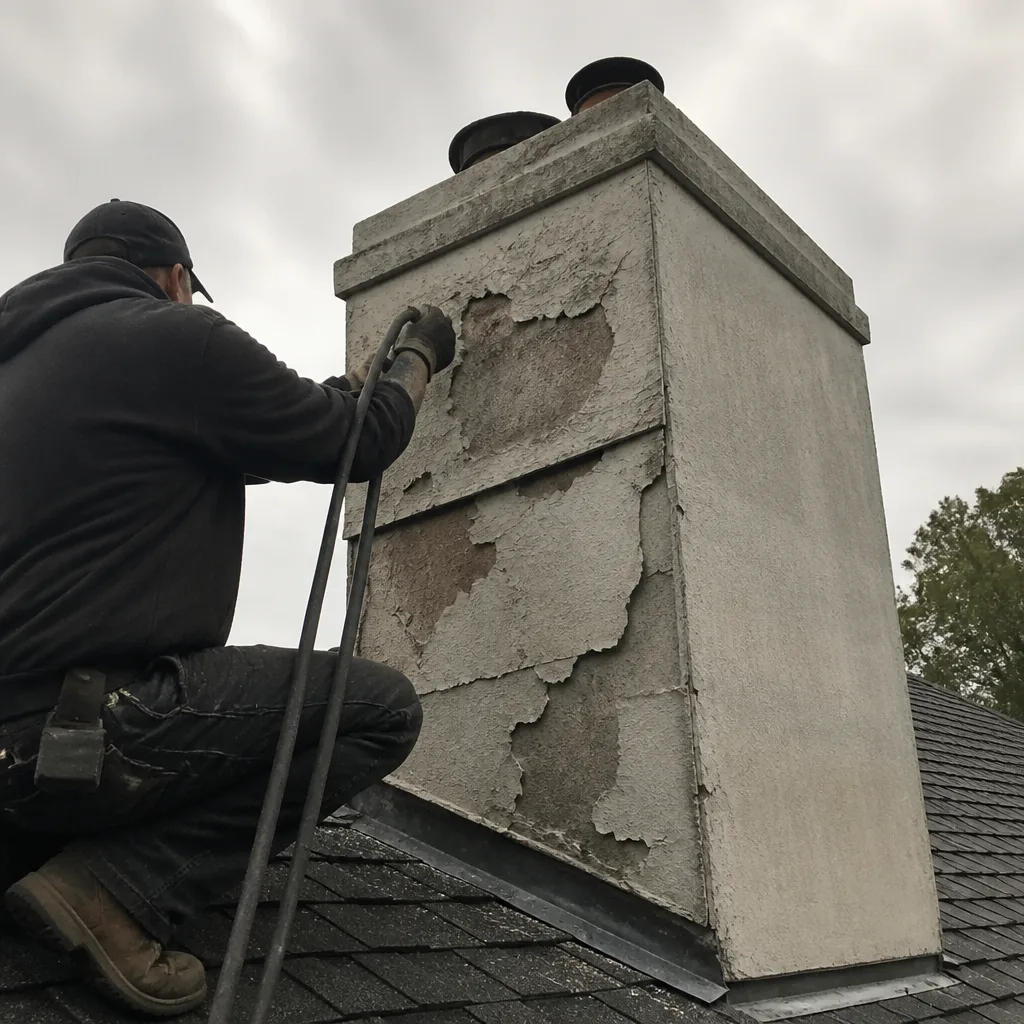
The storm calendar matters too. Marietta sits in a thunderstorm corridor where March through July brings repeated wind and hail events. Cap displacement, flashing separation, and crown spalling (surface flaking caused by water penetration and temperature cycling) accelerate during these months. A chimney inspected in September and declared sound may have significant storm damage by the following spring.
Finally, Marietta’s wildlife patterns differ from northern climates. Squirrel and raccoon nesting peaks in March through May, not mid-summer. A fall-only inspection misses active nests, while a spring check catches both the nests and the damage they leave behind.
The result: a single annual inspection, timed for “before winter,” leaves Marietta homeowners exposed to three other risk windows. The homeowners who avoid emergency calls are the ones who’ve learned to read their local calendar.
Fall (October): The Real Pre-Season Preparation Window
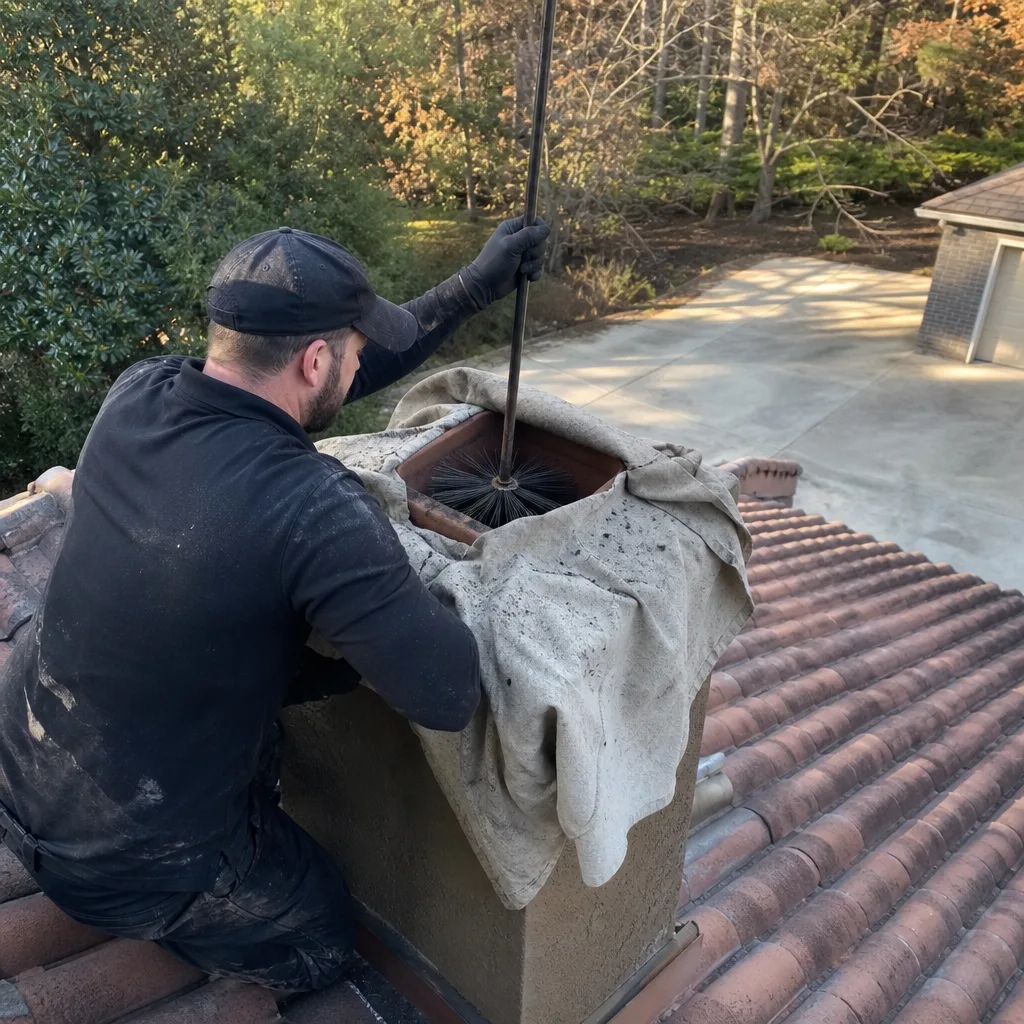
October is when Marietta homeowners should schedule their primary chimney cleaning and inspection, not September when national advice suggests. Here’s why the timing matters.
By mid-October, summer humidity has done its work. Any moisture-activated creosote conversion has completed. The chimney’s condition reflects what the flue actually contains, not what it held in May. Cleaning at this point removes all accumulated material before first fire, with no guesswork about what summer changed.
October scheduling also places the inspection after most fall storm activity but before consistent heating demand. In our experience, Marietta’s October weather pattern brings cooler, drier air that allows thorough exterior evaluation. Crown and cap conditions are visible without summer foliage obstruction. Flashing can be assessed while temperatures still permit sealant work if needed.
What happens during a proper October appointment:
- Camera-scan documentation of the full flue liner. We run a chimney camera from firebox to cap, documenting liner condition, joint integrity, and creosote class. Clause 4 of the Haven Standard requires this photo record on every job, and we’ve included it as standard since 2009.
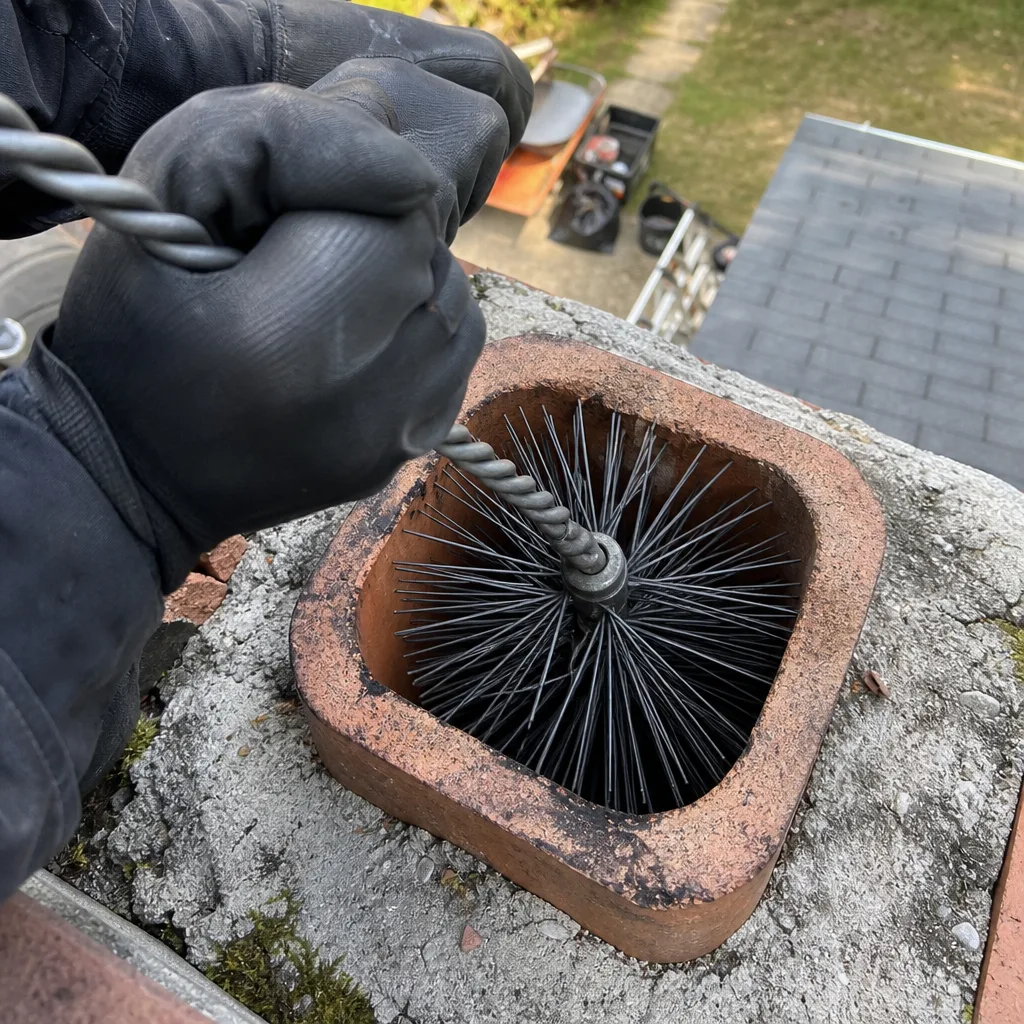
- Mechanical sweep of the flue. Brushes matched to your liner material - stainless steel for clay tile, poly for stainless liners - remove deposits. Stage 2 creosote, if present, requires more aggressive mechanical action or rotary cleaning.
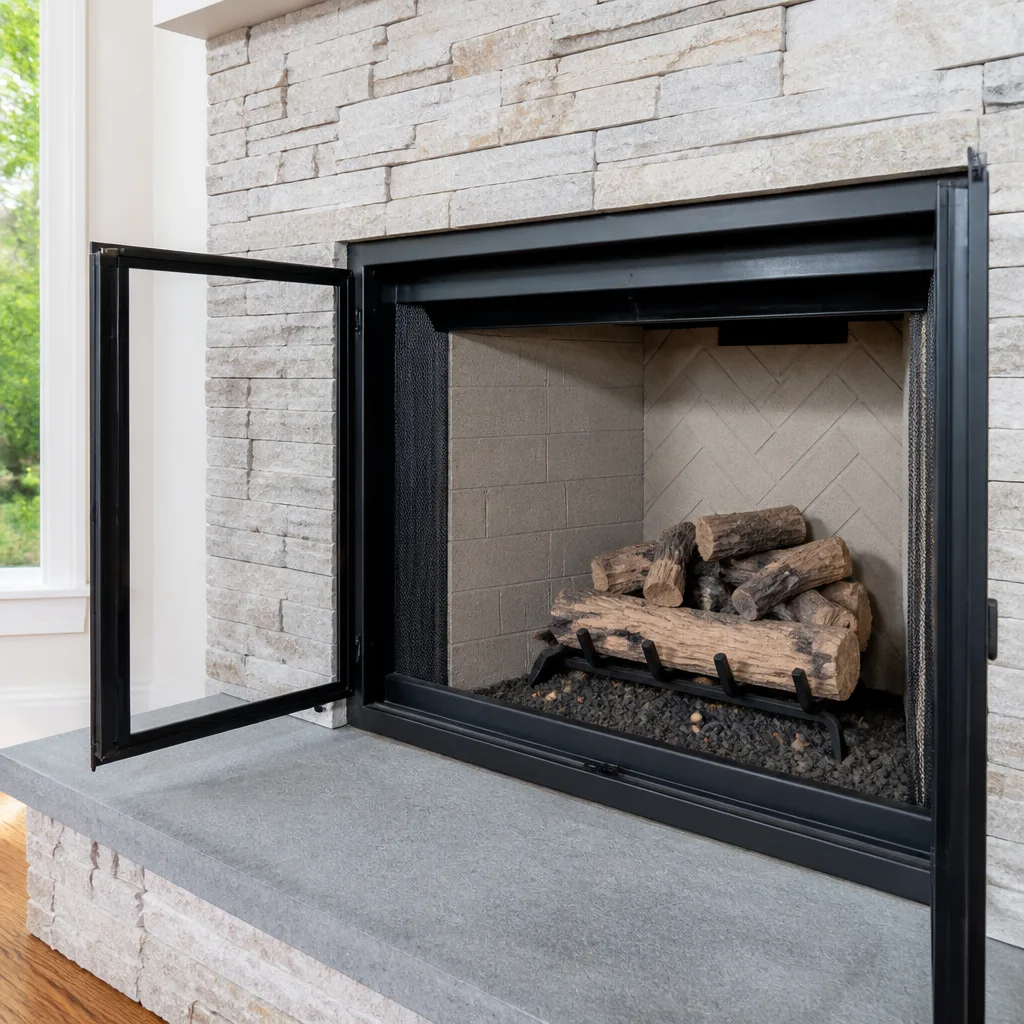
- Smoke chamber and firebox inspection. The smoke chamber (the area above the damper that funnels smoke into the flue) is checked for proper parging (smooth mortar coating). Firebox brick and mortar are evaluated for spalling or joint failure.
- Damper operation and seal verification. We check that the damper opens fully, closes completely, and seals when shut. A leaking damper wastes energy and admits humid air during AC season.
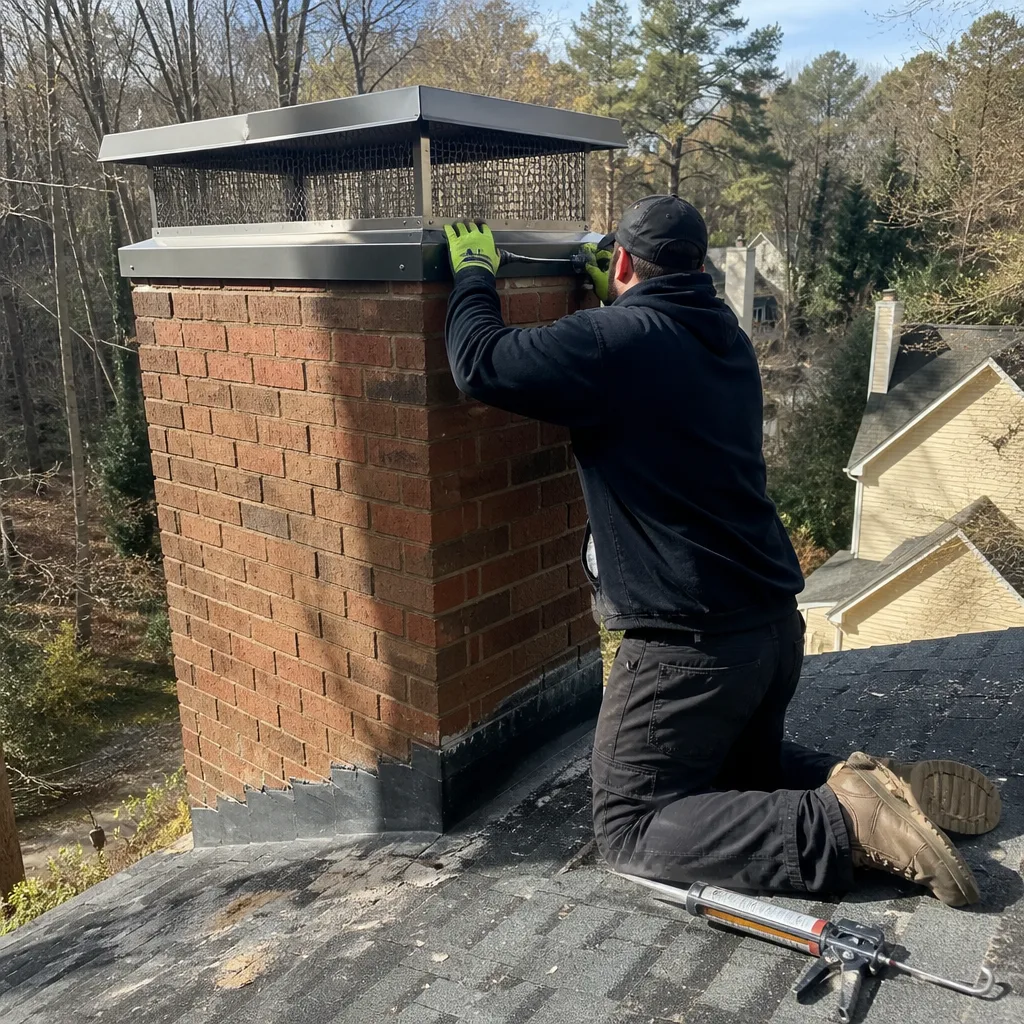
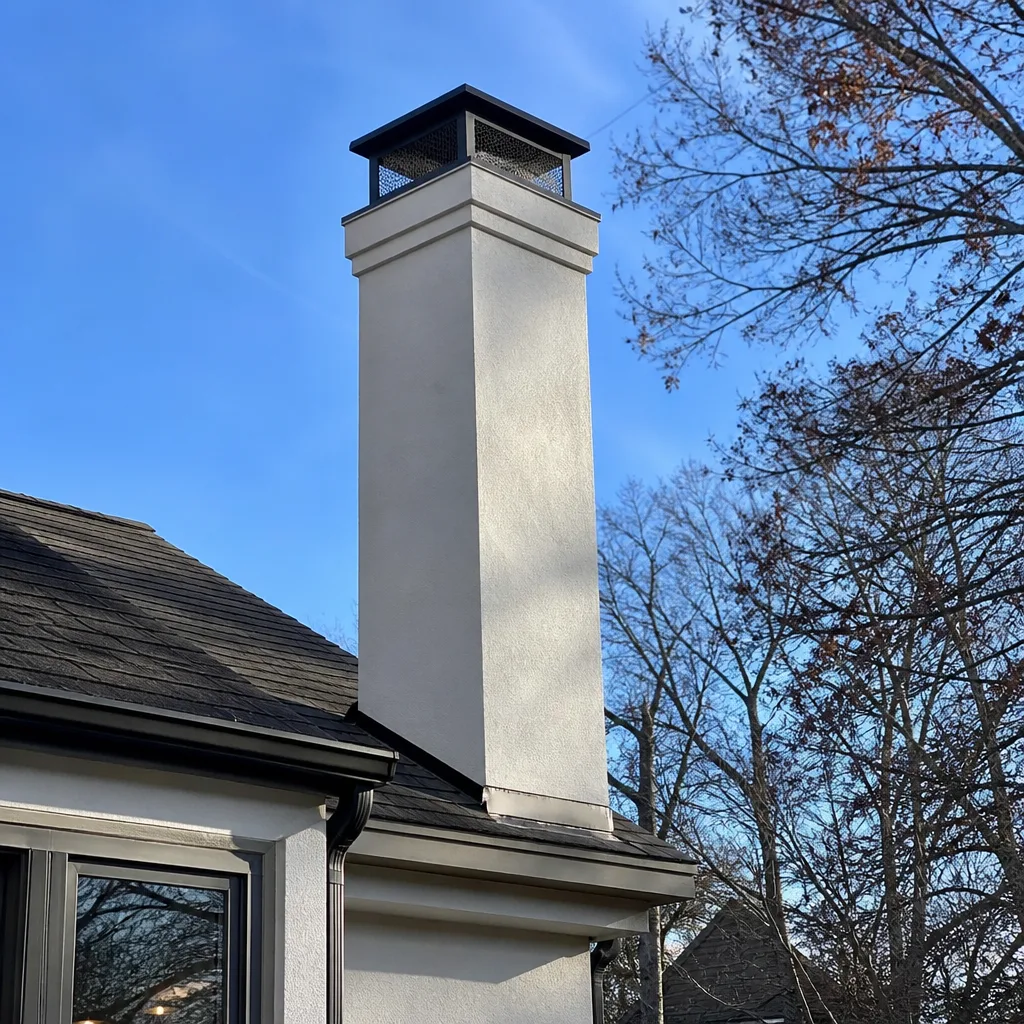
- Cap, crown, and flashing assessment. Exterior components are photographed and evaluated. We note crown cracks, cap mesh condition, and flashing seal integrity.
- Written scope, written price, written warranty. Before any work beyond the inspection begins, you receive a documented price and scope. Haven Standard Clause 1 - H.A.V.E.N., “Have it in writing” - governs this process.
The October appointment sets baseline documentation. Everything measured in spring will be compared against this record.
Winter (November-March): Burning Season and Creosote Accumulation
Marietta’s burning season doesn’t match the national image of a southern winter. Nighttime temperatures regularly drop below freezing from December through February. Homes in East Cobb, West Cobb, and the historic districts near Marietta Square rely on fireplaces for supplemental heat during these months, and some older homes with less efficient HVAC depend on them more heavily.
Creosote accumulation during this period depends on burning habits more than frequency. The homeowners we see with the heaviest deposits share common patterns: burning unseasoned wood (moisture content above 20 percent), restricting air intake to prolong burn time, or using the fireplace as an overnight heat source with smoldering logs.
Here’s what actually happens inside the flue during winter use:
- Stage 1 creosote forms with proper burning: dry hardwood, adequate air supply, hot fire. This is sooty, dusty material that sweeps out easily.
- Stage 2 creosote develops with cooler flue temperatures or restricted airflow. It appears as hard, shiny black flakes that adhere to liner walls. Mechanical sweeping removes it, but requires more time and aggressive brushing.
- Stage 3 creosote - glazed, tar-like deposits - indicates sustained poor burning practice or a chronically cold flue. This material is highly combustible and difficult to remove without chemical treatment or rotary equipment. In Marietta, we most often find Stage 3 in chimneys serving exterior walls on north-facing sides of homes, where the flue stays colder.
Winter is not the time for routine cleaning for most Marietta homeowners. The exception: if you notice performance changes during use. Smoke spillage into the room, difficulty starting or maintaining draft, or unusual odors indicate obstructions or damage that need immediate evaluation. Chimney Repair in Marietta becomes necessary when winter use reveals structural problems.
Carbon monoxide risk peaks in winter too. A blocked or damaged flue can force combustion gases back into living space. Every Marietta home with a fireplace or wood stove should have CO detectors on every sleeping level, tested monthly during burning season.
Spring (March-April): Post-Season Animal and Moisture Checks
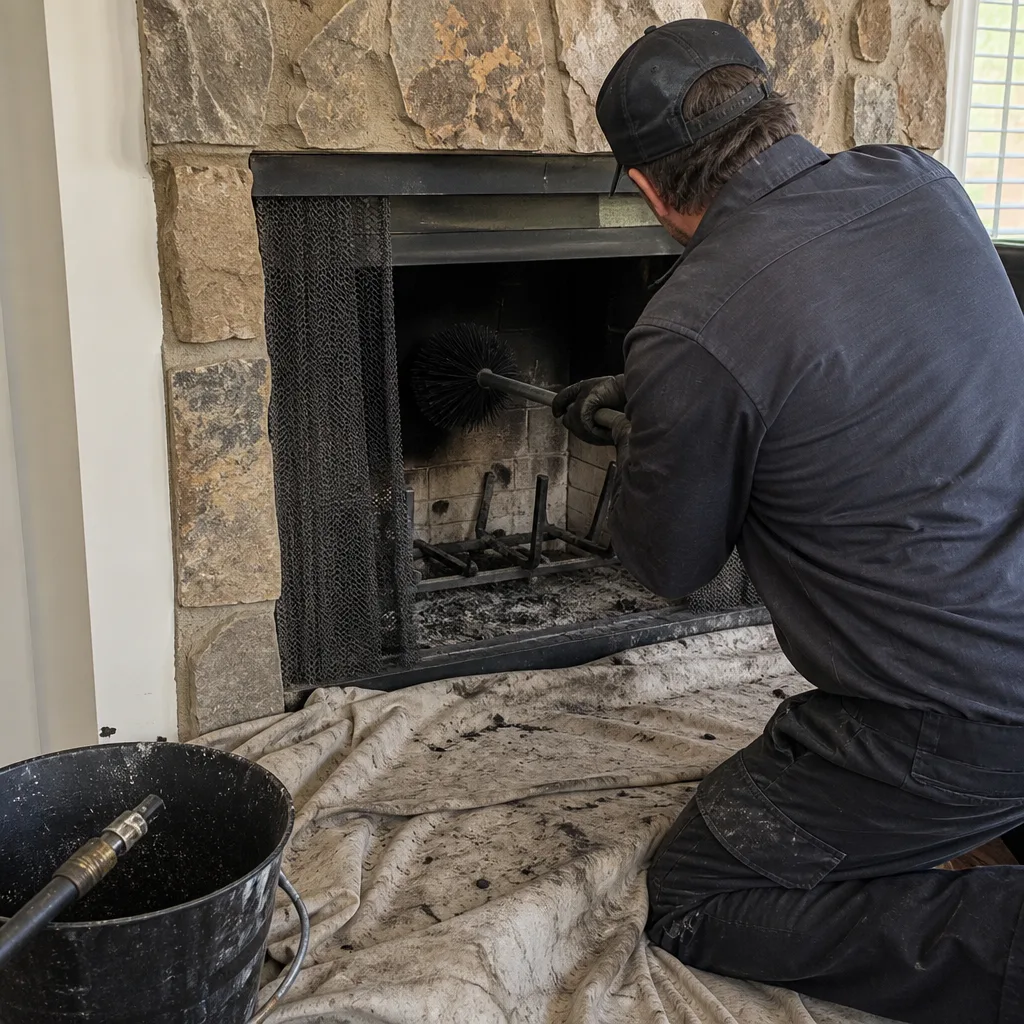
March and April represent the most underutilized inspection window for Marietta homeowners. This is when the evidence of winter is fresh and the evidence of spring nesting is just beginning.
After final fires in February or March, the flue contains a full season’s accumulation. More importantly, it contains the record of how the chimney performed under stress. A camera scan in spring reveals:
- Thermal cracking in clay tile liners from repeated heating and cooling cycles
- Spalling or joint erosion in the smoke chamber from acidic condensation
- Corrosion patterns in stainless steel liners that indicate improper fuel or moisture intrusion
- Creosote distribution patterns that show whether the flue was drafting properly or if smoke was backing up at the top
Spring is also peak nesting season. Squirrels, raccoons, and chimney swifts are active in Marietta from March through May. A cap with damaged mesh, a missing cap, or a crown gap large enough for animal entry becomes an invitation. We’ve removed nests from chimneys in Indian Hills, East Cobb, and near Kennesaw Mountain where homeowners had no idea animals had entered.
The spring inspection serves a second purpose: it documents winter damage before summer humidity accelerates it. A hairline crown crack in March becomes a water penetration path by June. Catching it in spring allows repair during dry weather, with materials that cure properly.
What we check in a spring appointment:
- Full camera scan comparing to October baseline documentation
- Cap and crown condition with attention to storm damage from March events
- Evidence of animal entry: nesting material, droppings, damage to mesh
- Flashing integrity after winter expansion-contraction cycles
- Damper seal after months of operation
Spring appointments are typically shorter than fall cleanings because the flue contains less material. The value is diagnostic, not removal-focused. Many Marietta homeowners who adopt the two-appointment rhythm tell us the spring visit provides peace of mind they didn’t know they were missing.
Summer (May-September): Humidity, Storms, and the Damp
Summer is when Marietta chimneys suffer invisible damage. The flue sits unused, but it’s not inert. Humid air moves through the system constantly, driven by temperature differentials between the cooler interior flue and warmer exterior.
The critical summer task that most homeowners skip: verifying damper seal after AC season begins.
A damper that closes but doesn’t seal creates a chimney effect in reverse. Warm, humid exterior air is drawn down the flue into the cooler home. This humid air contacts the metal damper, the smoke chamber walls, and any remaining creosote. The result is accelerated corrosion, liner deterioration, and that musty odor some Marietta homeowners notice when first opening the damper in fall.
We’ve inspected chimneys in neighborhoods from Whitlock Heights to Sandy Plains where summer humidity exposure had degraded stainless steel liners that should have lasted decades. The common factor: a warped or rusted damper that never fully sealed.
Summer storm damage accumulates too. Marietta’s thunderstorm pattern peaks in July, with hail events that dent caps, displace flashing, and erode crown surfaces. By September, a chimney that passed its fall inspection may have multiple storm-related issues.
The summer maintenance checklist for Marietta homeowners:
- Visually inspect the cap from ground level after significant storms - look for tilting, missing mesh sections, or visible gaps
- Check for water staining on the firebox walls or smoke chamber, visible when looking up from the fireplace opening
- Verify damper closure: close it fully, hold a lit incense stick or thin tissue near the edge - movement indicates leakage
- Listen for animal activity: scratching, chirping, or unusual odors from the fireplace area
- Schedule any needed cap, crown, or flashing repairs during dry weather for proper material curing
Materials matter for summer repairs. We source caps and flashing components through Gelco and Famco for their corrosion resistance in humid climates. Crown repair compounds from HeatShield are formulated for southern exposure and thermal cycling. These aren’t premium upgrades - they’re the standard specification we’ve used since 2009 because they last in Marietta’s conditions.
If you smell mustiness from the fireplace during summer, that’s a signal. Don’t wait for October. Fireplace Services in Marietta include summer diagnostics that prevent fall emergencies.
Building Your Two-Appointment Annual Rhythm
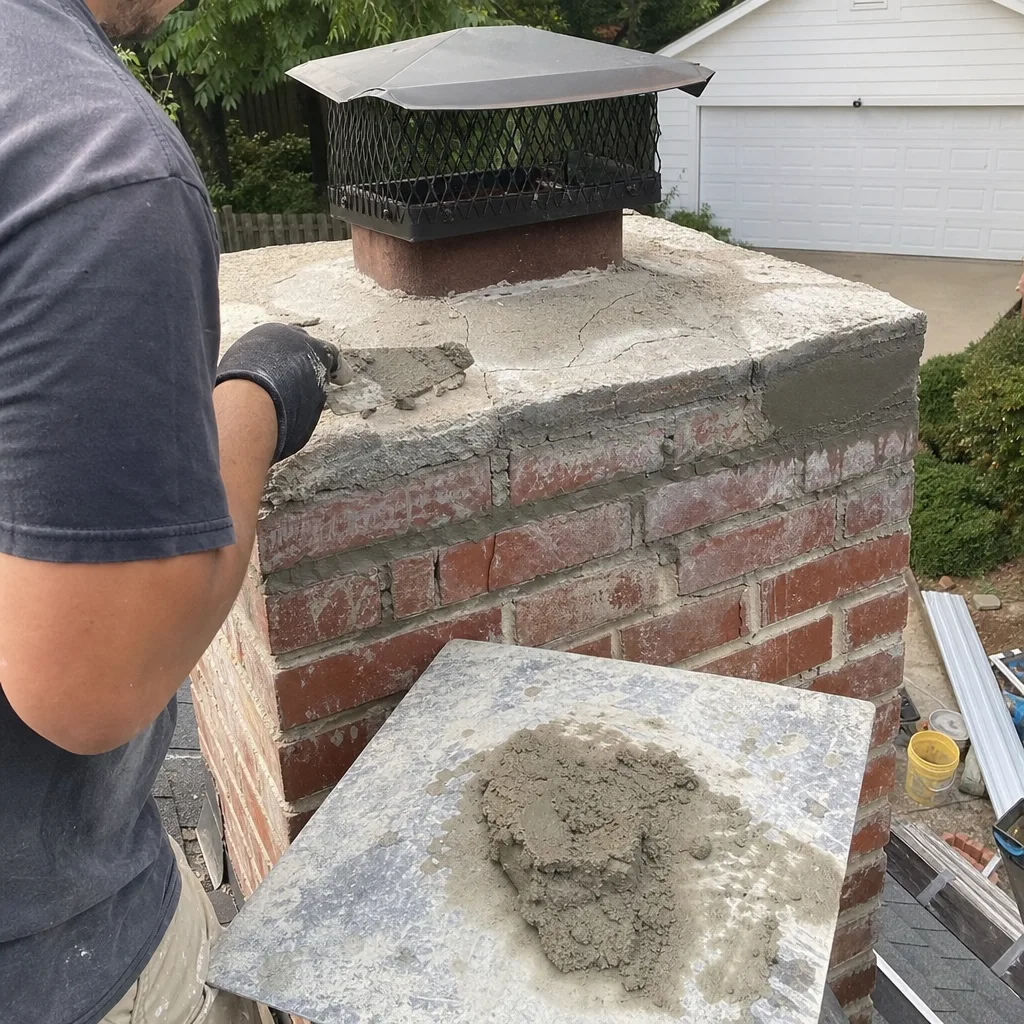
The single annual inspection model fails Marietta homeowners because it tries to catch everything at one point in a cycle with four distinct phases. For more guides & resources on maintaining your chimney throughout the year, see our blog. The two-appointment rhythm matches how Cobb County chimneys actually age.
Appointment 1: Late September through October - Cleaning and Pre-Season Documentation
This is the full service visit: mechanical sweep, camera scan, written record, exterior assessment. The chimney enters burning season clean, documented, and repaired. Any needed work is quoted in writing before it begins, with materials specified from our buying network (DuraFlex, Olympia Chimney, and others procured specifically to keep customer prices honest).
Appointment 2: March through April - Post-Season Diagnostic Scan
This is the shorter diagnostic visit: camera scan compared to October baseline, animal and moisture damage assessment, storm damage documentation. No cleaning is typically needed unless winter use was exceptionally heavy. The value is catching damage early and planning summer repairs.
What this rhythm prevents:
- Fall-only cleaning that misses summer moisture damage until it becomes liner failure
- Spring animal nests that block the flue for first fire
- Crown cracks that widen through freeze-thaw and humidity cycles
- Stage 2 creosote that hardens through summer and requires more aggressive fall cleaning
The cost of two appointments is not double the cost of one. Our March-April diagnostic scans are priced as shorter visits because no cleaning is performed. Over a five-year period, homeowners who follow this rhythm typically spend less than those who defer maintenance and need emergency service or major repair.
The 365-Day Done Right Promise applies to every appointment. If we document something in October and it’s not right when we return in March, we make it right.
What a Camera Scan Reveals: Spring vs. Fall
The camera scan is the core of NFPA 211 Level 2 inspection, which Emberly Chimney Cleaners Marietta home has performed on every job since 2009. But what the camera reveals differs significantly by season.
Fall Camera Findings (October)
The fall scan documents pre-season condition. We’re looking for:
- Creosote class and distribution - where it accumulates indicates draft pattern
- Liner joint alignment - shifted clay tiles indicate structural movement
- Moisture staining patterns - tells us where water entered during summer
- Animal evidence - nests, droppings, or entry damage from spring activity
Fall findings drive immediate cleaning scope and repair planning before burning begins.
Spring Camera Findings (March-April)
The spring scan documents post-season degradation. We’re looking for:
- Thermal fatigue cracks - fine fractures in clay tile or metal fatigue in stainless liners that opened under repeated heating
- Acid etching - pitted or thinned liner surfaces from acidic condensation during cool-start fires
- Creosote pattern changes - uneven accumulation indicates drafting problems that developed during use
- Spalling progression - flaking or chipping of masonry surfaces that worsened through freeze-thaw
Spring findings drive summer repair scheduling and inform changes to burning practice for the following season.
The comparison between fall and spring documentation is where the real value lies. A liner that showed minor joint misalignment in October and significant offset in March is telling a story about structural movement that needs addressing. A crown that was sound in October and cracked in March took storm or thermal damage that won’t heal itself.
Clause 4 of the Haven Standard requires this photo record on every job. We don’t delete archives. When you call with a question about something we documented three years ago, we can pull the image.
Chimney Sweep Costs in Marietta: What Affects Your Price
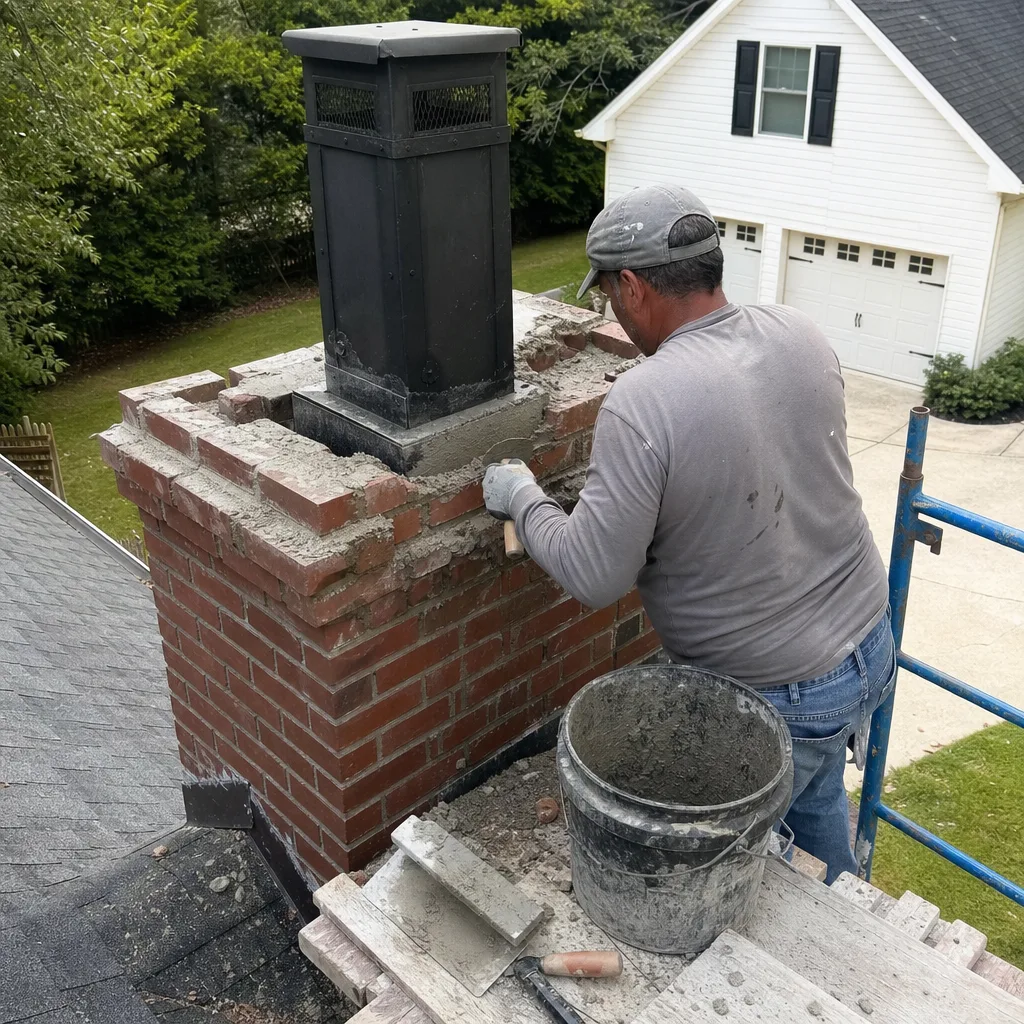
We name prices on the page because “call for a quote” defeats the purpose of research. Here’s what chimney cleaning costs in Marietta and what moves the number.
Standard Chimney Sweep and Level 2 Inspection
- Single-flue system, standard access, Stage 1 creosote: $199-$289
- Includes full camera scan, photo documentation, written report, and written warranty
Factors That Increase Cost
- Stage 2 or Stage 3 creosote requiring rotary cleaning or chemical treatment: add $75-$150
- Multiple flues (common in homes with separate fireplace and heating appliance vents): $150-$225 per additional flue
- Difficult roof access, steep pitch, or height above two stories: add $50-$100
- Active animal removal and sanitization: $125-$250 depending on species and nest location
- Insert or stove removal and reinstallation for proper cleaning: $75-$125
Repair Costs (Quoted Separately, Always in Writing)
- Crown repair with HeatShield compound: $350-$650
- Cap replacement (Gelco or Famco stainless): $225-$425 installed
- Flashing repair or replacement: $275-$550
- Clay tile liner repair (spot reline): $800-$1,400
- Stainless steel liner installation (DuraFlex or Olympia Chimney): $2,400-$4,200
Nothing is recommended without camera evidence you can see yourself. If we document damage that can safely wait, we say so plainly. The Free Second Opinion on Any Written Estimate applies to competitor quotes too - bring us another company’s written scope and we’ll review it against what our camera shows.
Common Mistakes to Avoid
- Scheduling September cleaning because national advice says “before winter.” In Marietta, this often means paying for a sweep six weeks before your burning season starts, then running a full season on a chimney that hasn’t been checked since.
- Ignoring summer mustiness as “just how chimneys smell.” Musty odor from the fireplace indicates damper seal failure and humidity intrusion that’s accelerating liner deterioration.
- Assuming no burning means no maintenance. Unused chimneys in Marietta suffer more moisture damage than actively used ones because there’s no drying heat to drive out humidity.
- Accepting flashlight inspections as sufficient. A flashlight look from the firebox reveals perhaps 15 percent of flue condition. Camera documentation is the NFPA 211 Level 2 standard for reason.
- Waiting for visible exterior damage. By the time you see crown cracks or missing mortar from the ground, water has been entering for months or years.
- Using the cheapest wood available. Unseasoned or softwood creates Stage 2 and Stage 3 creosote that costs more to remove and increases fire risk.
- Skipping spring inspection because “we just had it cleaned in fall.” Fall cleaning removes deposits. It doesn’t predict what winter use, storms, and animals will do over the next five months.
When to Call a Professional
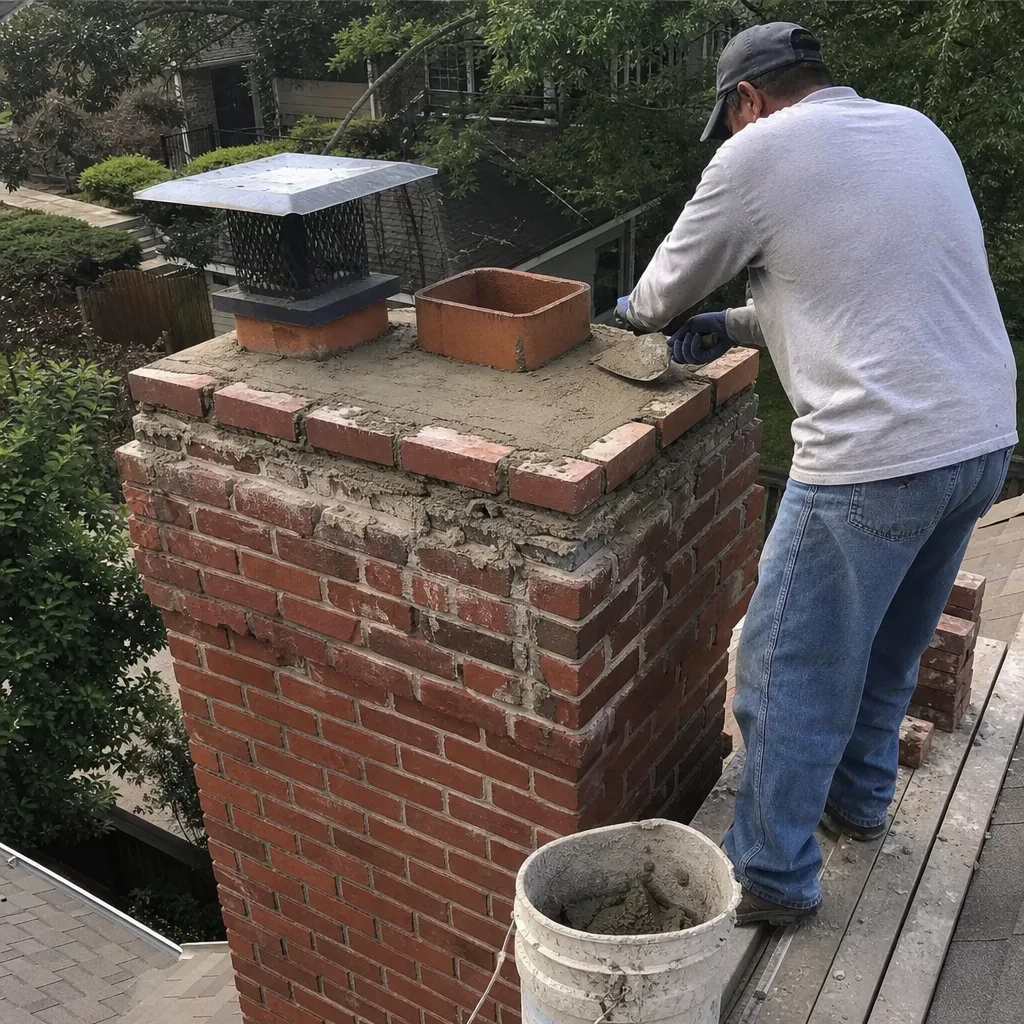
Call for evaluation when you notice smoke spillage, difficulty maintaining draft, unusual odors during use, visible debris falling into the firebox, or animal sounds from the chimney. These symptoms indicate active problems that worsen with continued use. Carbon monoxide detector alarms require immediate evacuation and emergency service call - do not attempt to diagnose this yourself.
Emberly Chimney Cleaners Marietta offers free estimates in Marietta. Every estimate includes camera documentation of what we find, a written scope and price before any work begins, and the 365-Day Done Right Promise backed by Haven Standard warranty. Call (470) 288-2763 to schedule. Live phone support runs 24 hours a day, 7 days a week - you’ll speak to a person, not a voicemail system.
Frequently Asked Questions
A standard chimney sweep with Level 2 camera inspection in Marietta typically costs $199-$289 for a single-flue system with standard access and Stage 1 creosote. Stage 2 or 3 deposits, multiple flues, or difficult access increase the price. Call (470) 288-2763 for an exact quote - estimates are free.
You need a new liner when camera documentation shows cracks, gaps, or deterioration that create fire or carbon monoxide hazards. We don’t recommend liner replacement without photo evidence you can review yourself. Many clay tile liners with minor spalling can continue service with monitoring; others with thermal cracking or joint separation need immediate replacement. The camera doesn’t lie, and we show you what it sees.
NFPA 211 recommends annual inspection; cleaning frequency depends on use and creosote accumulation. Most Marietta homeowners burning 2-3 times weekly through winter need annual cleaning. The two-appointment rhythm - full cleaning in October, diagnostic scan in March - catches problems the single annual visit misses. Homes with heavy use or poor burning practice may need mid-season evaluation.
Skipped maintenance leads to three predictable outcomes: creosote accumulation increases chimney fire risk, moisture intrusion degrades liners and masonry, and animal nesting creates blockages that force combustion gases into living space. In Marietta specifically, summer humidity accelerates all three by converting light creosote to harder deposits and promoting corrosion in damp, unused flues. The cost of deferred maintenance is always higher than scheduled care.
Summer chimney odor in Marietta usually indicates a leaking damper admitting humid exterior air into the flue. That humidity contacts creosote residue and creates musty smells while accelerating metal corrosion and liner deterioration. The fix is damper repair or replacement, not air freshener. A spring inspection identifies the source before summer humidity peaks.
Homeowners can remove light Stage 1 creosote from the firebox and smoke chamber with proper brushes, but flue cleaning requires roof access and knowledge of liner type to avoid damage. More importantly, without camera inspection you cannot assess liner condition, joint integrity, or hidden obstructions. The safety risk of undetected damage exceeds any savings from DIY cleaning. We recommend professional evaluation at minimum.
The Bottom Line
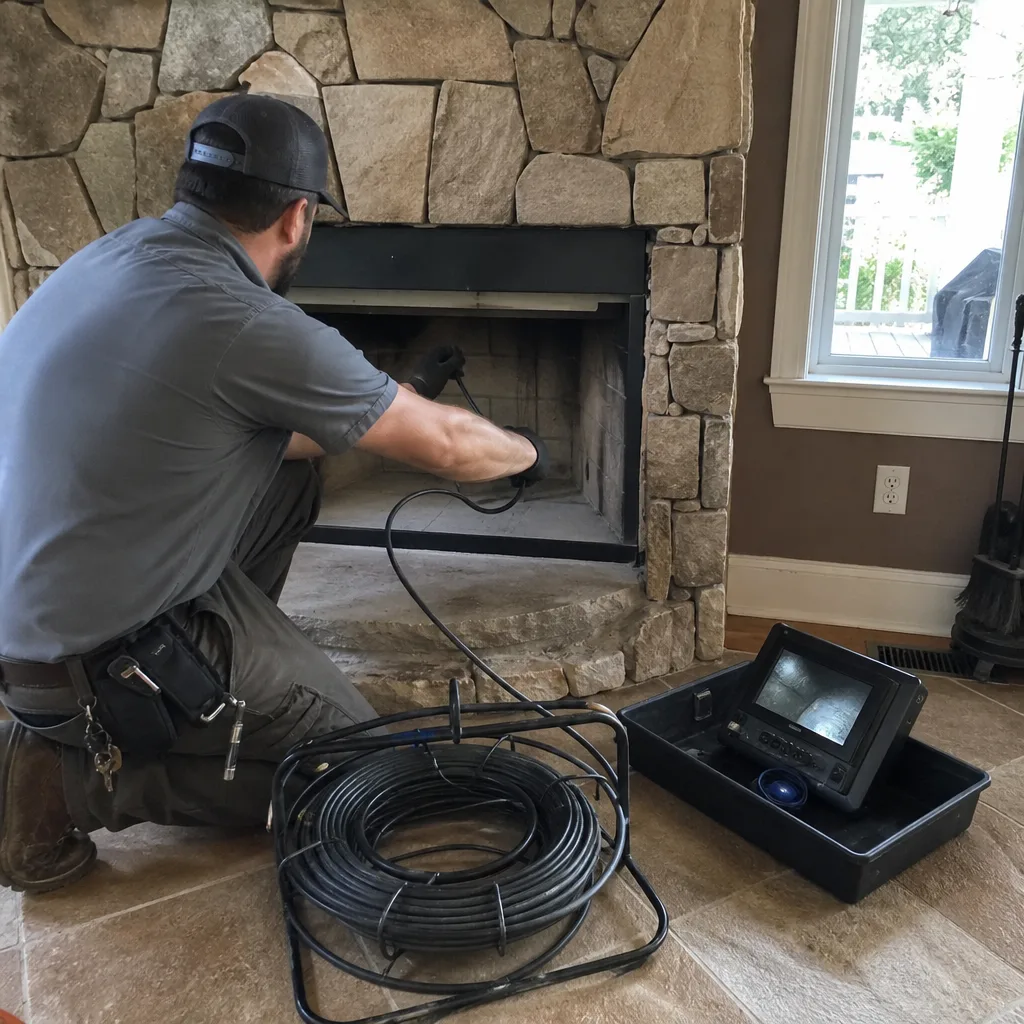
Marietta’s climate creates a chimney maintenance calendar that doesn’t match national advice. Humid summers harden creosote, storm-heavy springs damage exteriors, and a late-starting burning season means September cleanings often come too early. The homeowners who avoid emergencies follow a two-appointment rhythm: October cleaning with full documentation, March diagnostic scan for winter damage and animal activity. Every appointment should include camera evidence you can see, a written price before work starts, and documented records for comparison year over year. That’s been our practice since 2009, and it’s why 38,000+ Marietta-area chimneys have a maintenance history we can pull on request.
Written by Corrine Halstead, Owner at Emberly Chimney Cleaners Marietta, serving Marietta since 2009.