
Last updated September 22, 2026
Level 1 sweep and inspection to the NFPA 211 annual standard - flue, crown, cap, and flashing checked and photographed
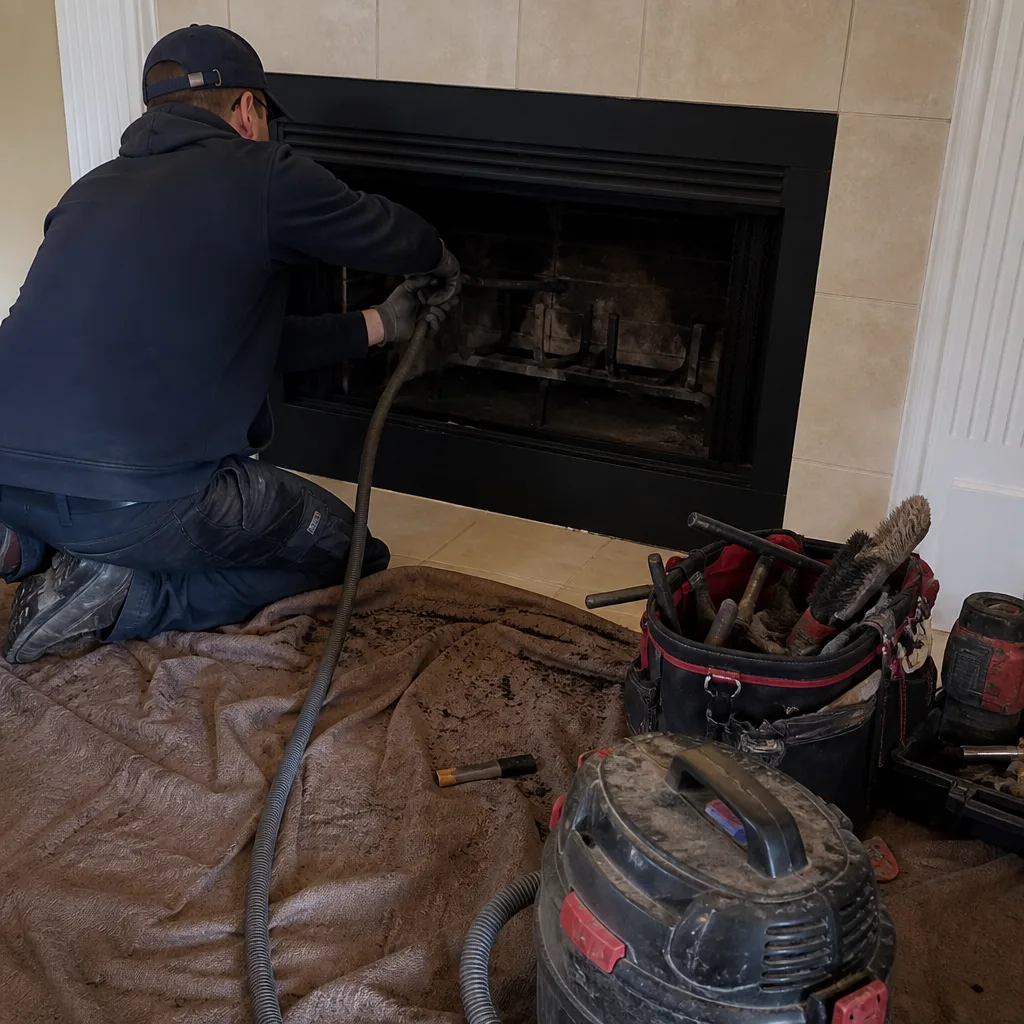
Chimney sweep logs do not sweep chimneys. They loosen some creosote - which then falls where a brush and vacuum still have to collect it.
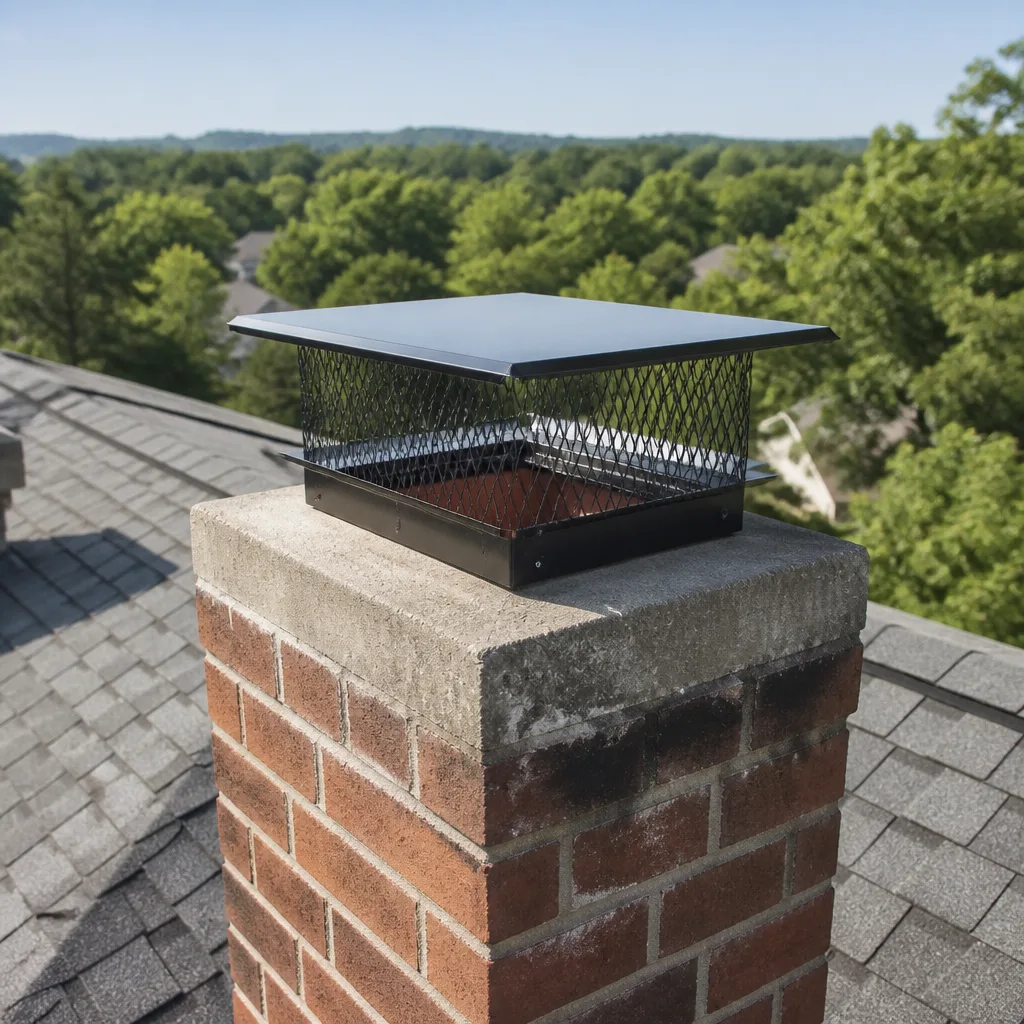
Caps & crowns
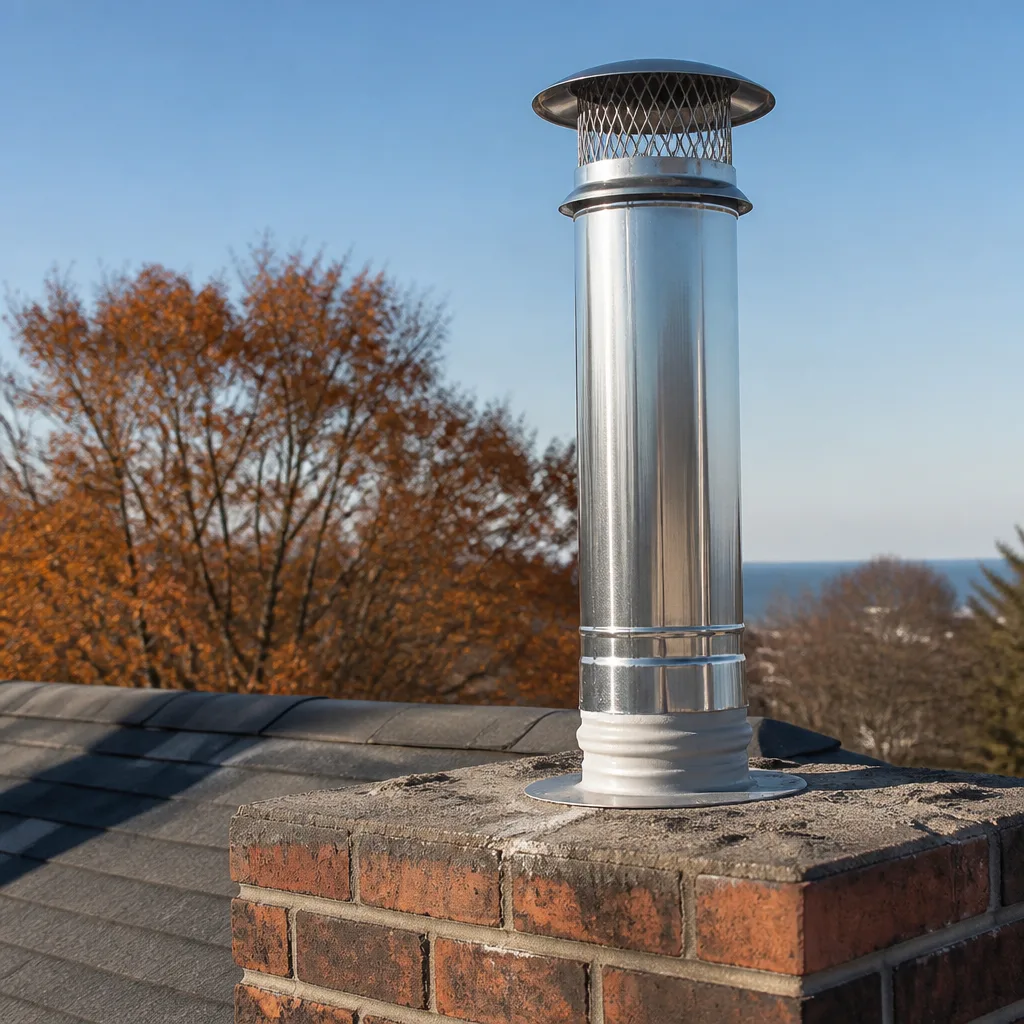
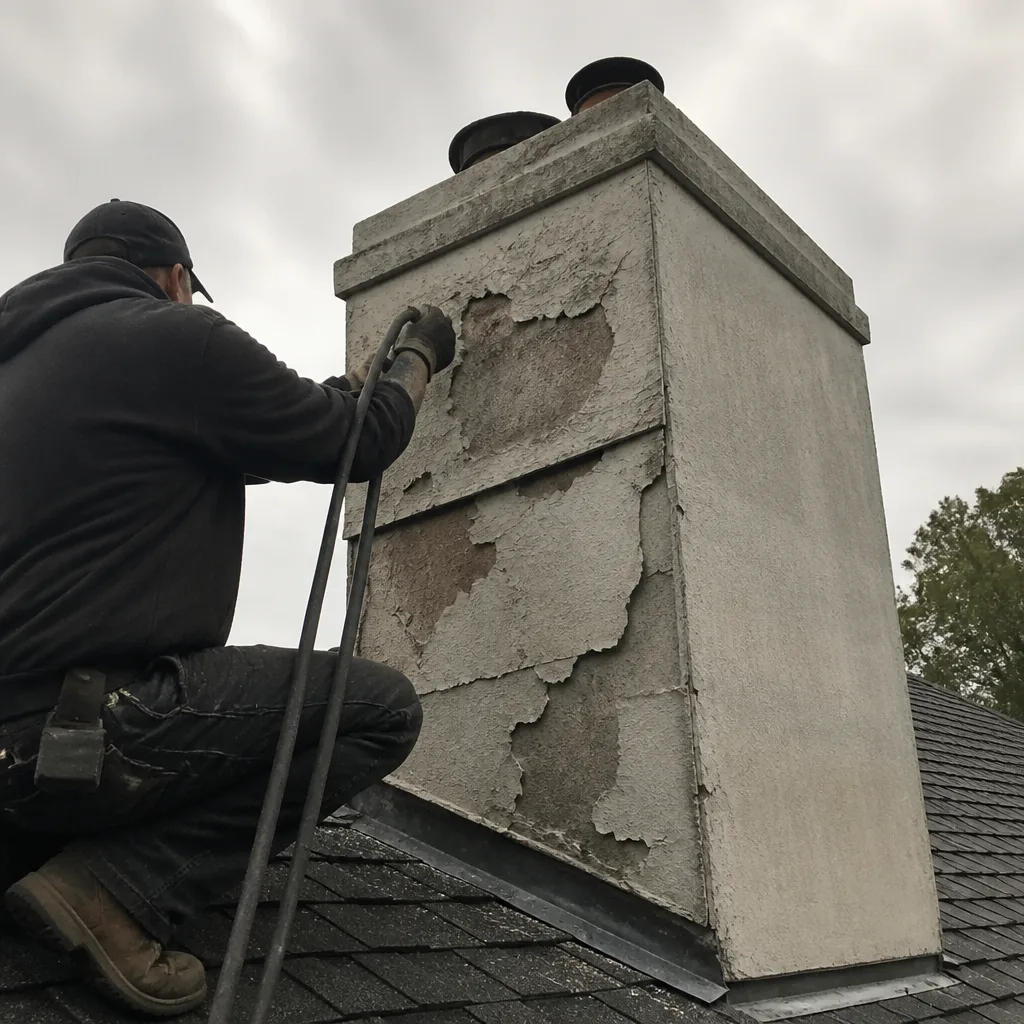
Masonry repair
 Before
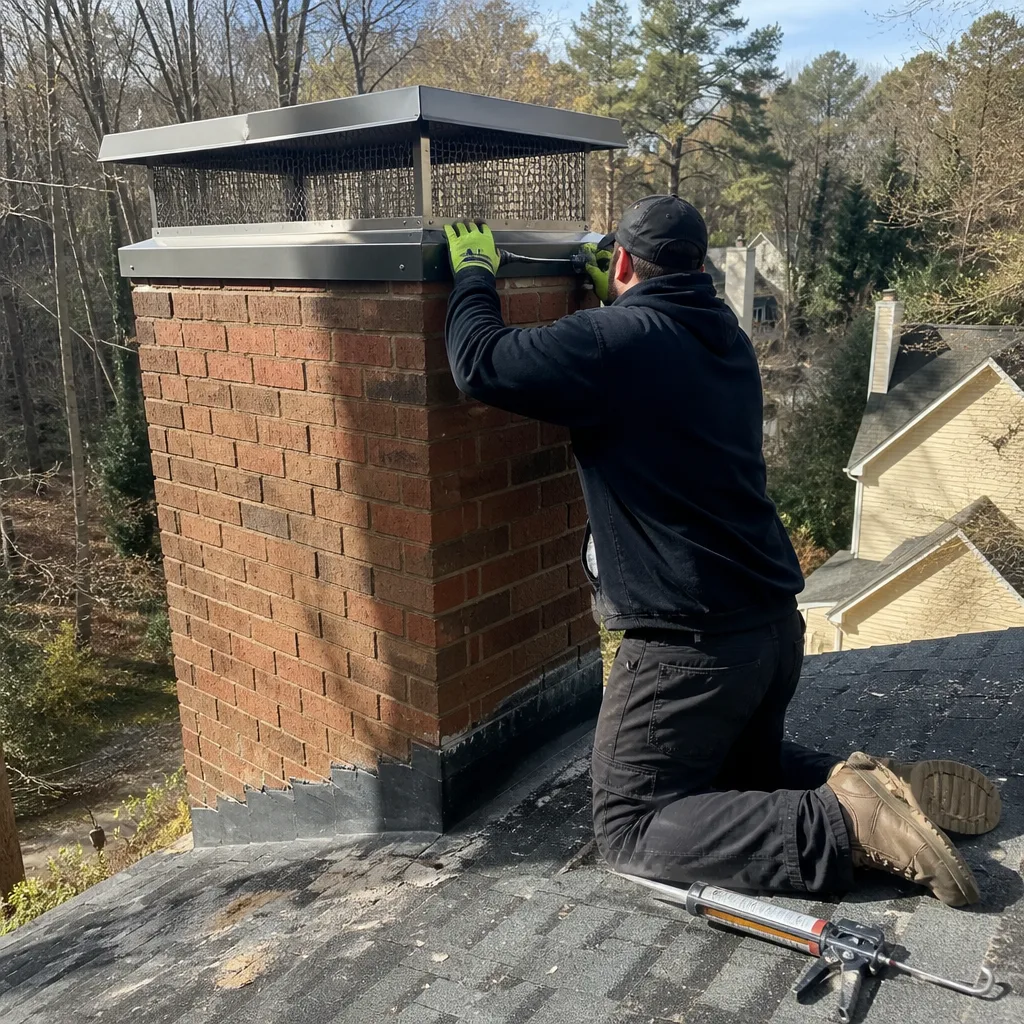 After
After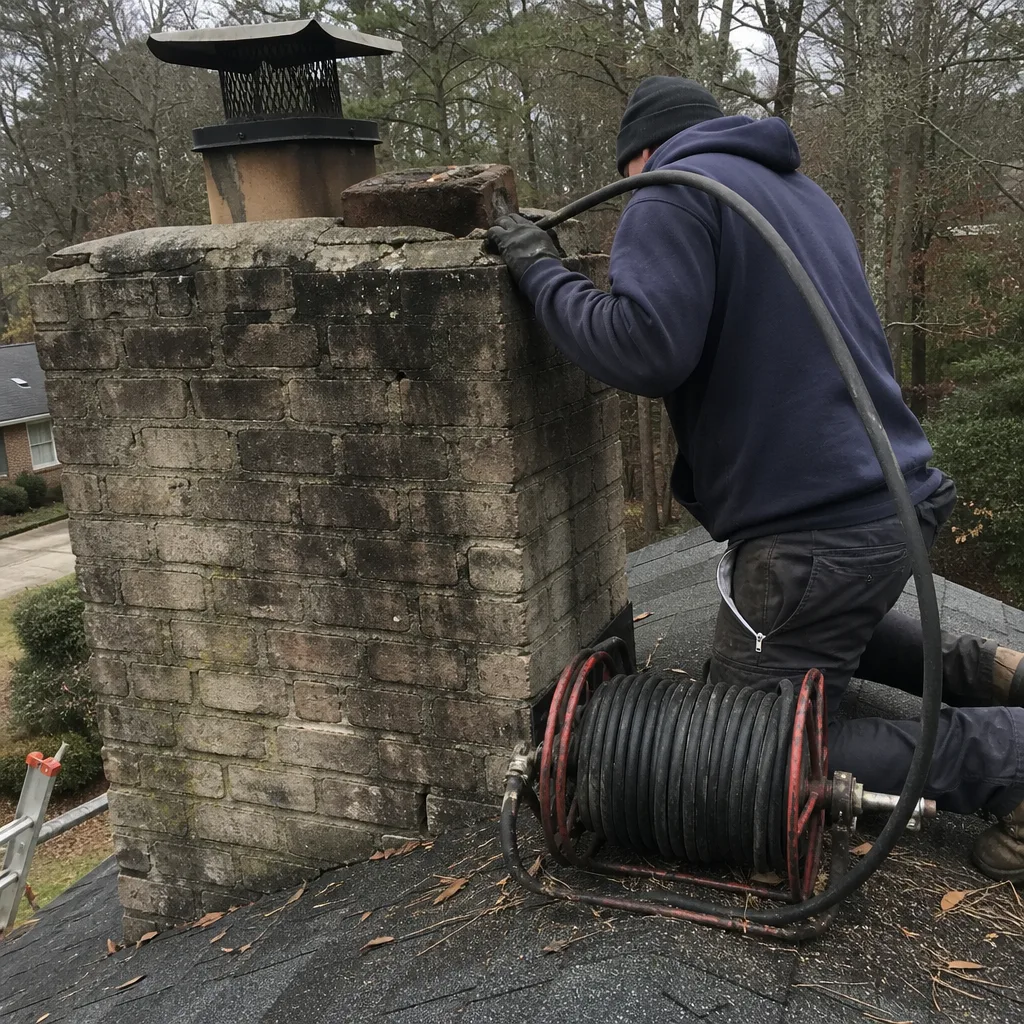 Before
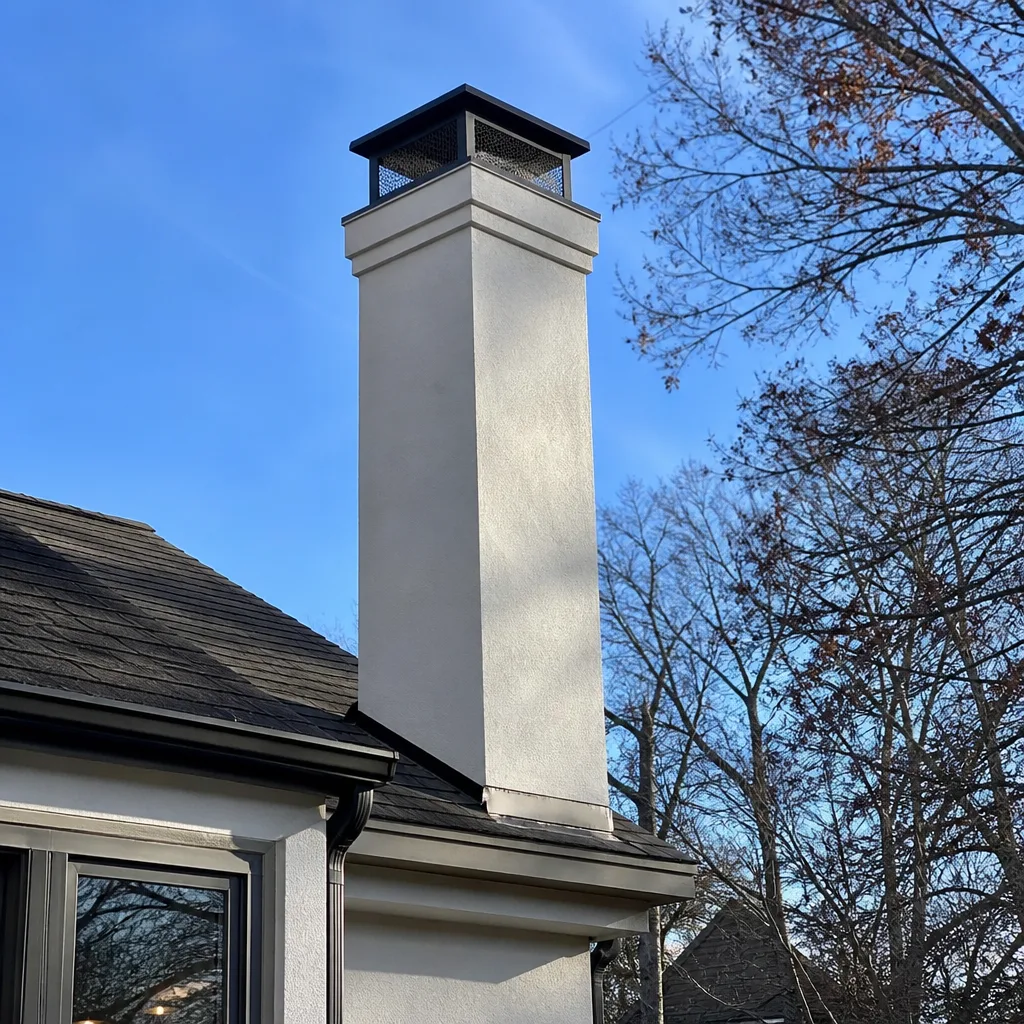 After
After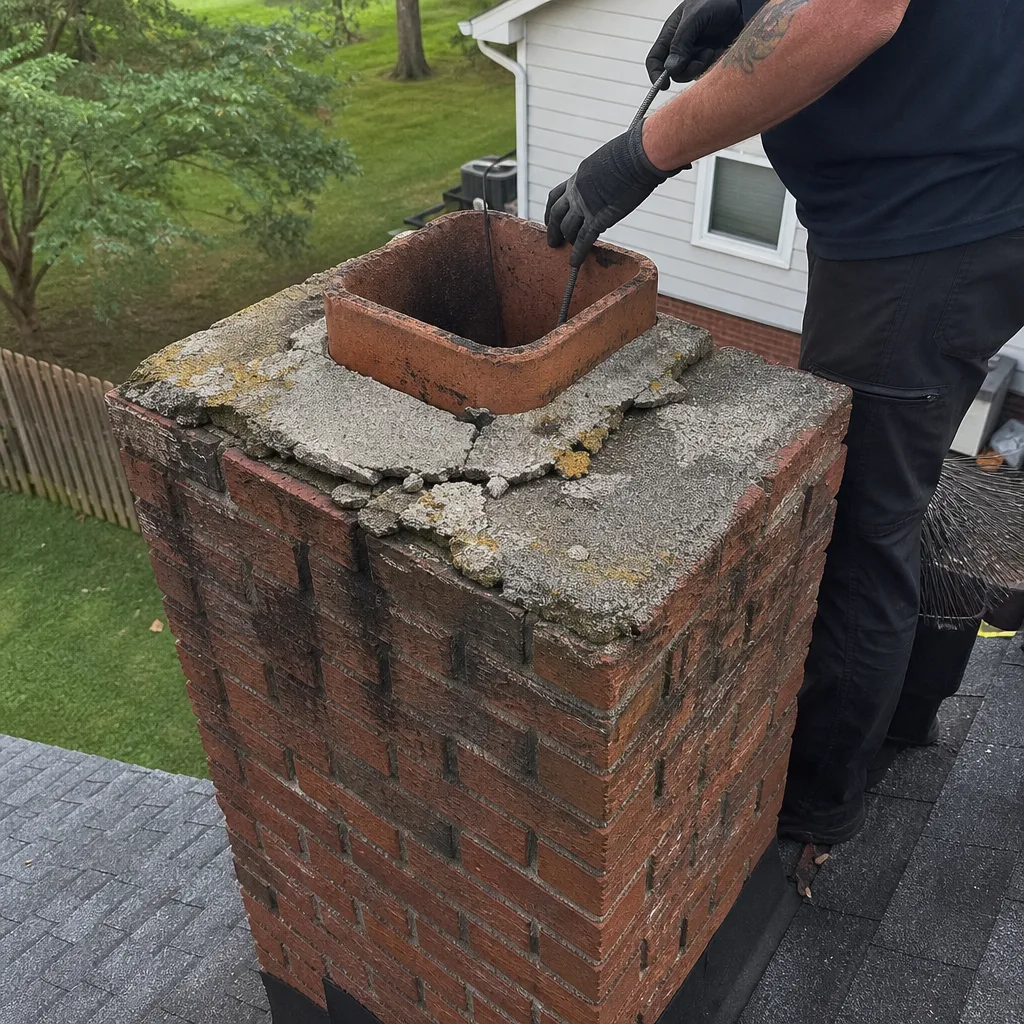 Before
 After
AfterChimney Cleaning & Sweep Maintenance Checklist for Marietta Homeowners
Your homeowner’s insurance policy likely contains a “maintenance exclusion” clause. If a chimney fire occurs and you can’t produce a dated sweep record, the claim denial letter may cite that clause - and a handshake appointment doesn’t qualify as a record. In Marietta, where hard freezes are rare but ice storms and spring tornado watches are annual events, chimney damage often hides in places a flashlight can’t reach. This checklist, along with our Complete Guide to Chimney Cleaning in Marietta, separates what you can verify yourself from what demands documented contractor proof, and shows you which items become your liability if you skip the paper trail.
Quick Answer
A complete chimney maintenance checklist for Marietta homeowners includes monthly self-inspections of visible components (damper, firebox, hearth), annual professional sweep with camera-scan documentation, and post-storm checks of the cap, crown, and flashing. Every professional visit should produce three documents: a written price quote before work starts, a scope-of-work completion record, and a camera findings summary with photos. Without these, “passed inspection” has no defensible meaning in a claims dispute.
Table of Contents
- What Homeowners Can Self-Inspect (and Actually Verify)
- What Requires Camera Documentation - And Why
- Marietta Storm Season: Post-Weather Checks That Matter
- The Three Documents Every Sweep Appointment Must Produce
- How to Build a Transferable Maintenance Log
- Why “Passed Inspection” Means Nothing Without a Camera Scan
- What Chimney Maintenance Costs in Marietta
- Setting Your Annual Schedule
BeforeAfterWhat Homeowners Can Self-Inspect (and Actually Verify)
There’s a short list of chimney components you can assess with your eyes, a flashlight, and basic household tools. These checks take fifteen minutes and cost nothing. The key is knowing where your knowledge ends and documented professional evaluation begins.
Monthly Checks You Can Perform
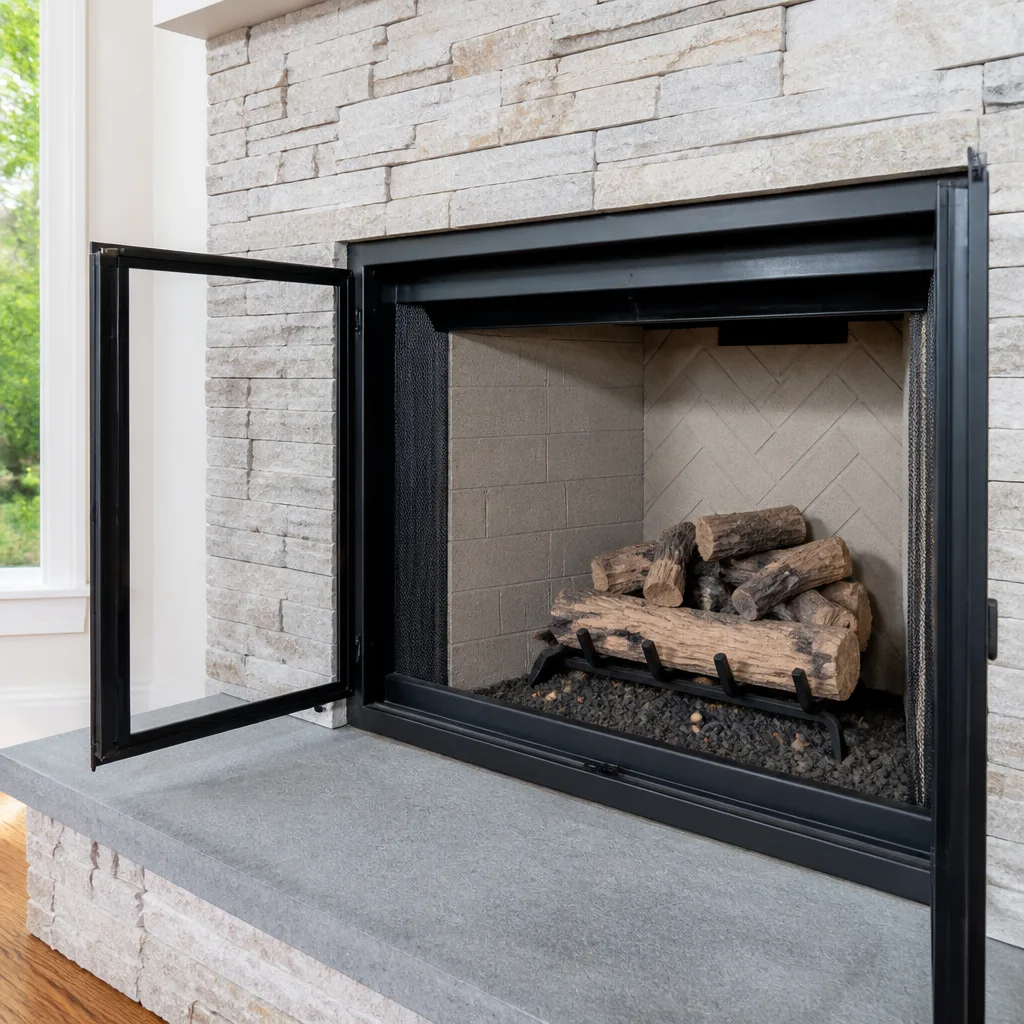
- Damper operation. Open and close the damper fully. It should move smoothly without grinding or catching. If it sticks, note whether it’s rust, creosote buildup, or mechanical wear. A stuck damper is a carbon monoxide risk - it must seal when closed and open fully when lit. Document the date and what you observed.
- Firebox visible cracks. Shine a flashlight at the back and sides of the firebox. Hairline cracks in refractory panels are common; gaps wider than a nickel, or cracks that run corner-to-corner, mean the panel is failing. In Marietta’s clay-heavy soils, foundation settling often stresses fireboxes differently than in granite-belt counties to the north.
- Smoke shelf debris. Look up past the damper with a strong flashlight. The smoke shelf - the flat area behind the damper throat - collects fallen debris, bird nests, and soot slough. You can’t clean it yourself without specialized tools, but you can spot obstructions from below. If you see material accumulation, that’s sweep-worthy.
- Hearth extension integrity. The hearth extension (the non-combustible surface in front of the firebox) must extend at least 16 inches in front and 8 inches to each side for an open fireplace. Check for cracks, lifting, or material degradation. This is a clearances issue - embers landing on compromised material can ignite subflooring.
- Exterior cap and screen from ground level. Binoculars help. The cap should sit square, the screen mesh should be intact without rust-through, and no vegetation or debris should protrude. In Marietta’s oak-hickory canopy, autumn leaf accumulation on caps is routine; spring brings squirrel and raccoon nesting season, typically March through May.
What These Checks Cannot Tell You
None of these self-inspections reveal flue liner condition, internal creosote classification, or crown integrity beneath the surface. A firebox can look sound while the liner behind it is spalling. A damper can operate smoothly while the smoke chamber above it is coated in Class III glazed creosote - the hard, tar-like deposit that ignites at lower temperatures and burns hotter than ordinary soot. These are the conditions that produce chimney fires and carbon monoxide infiltration, and they require a camera scan to identify - all detailed in our Chimney Cleaning Warning Signs: A Marietta Homeowner’s Reference Guide.
Document your monthly checks in a simple log: date, item checked, condition noted, your initials. This log becomes evidence of homeowner diligence if questions arise, but it does not replace professional documentation.
What Requires Camera Documentation - And Why
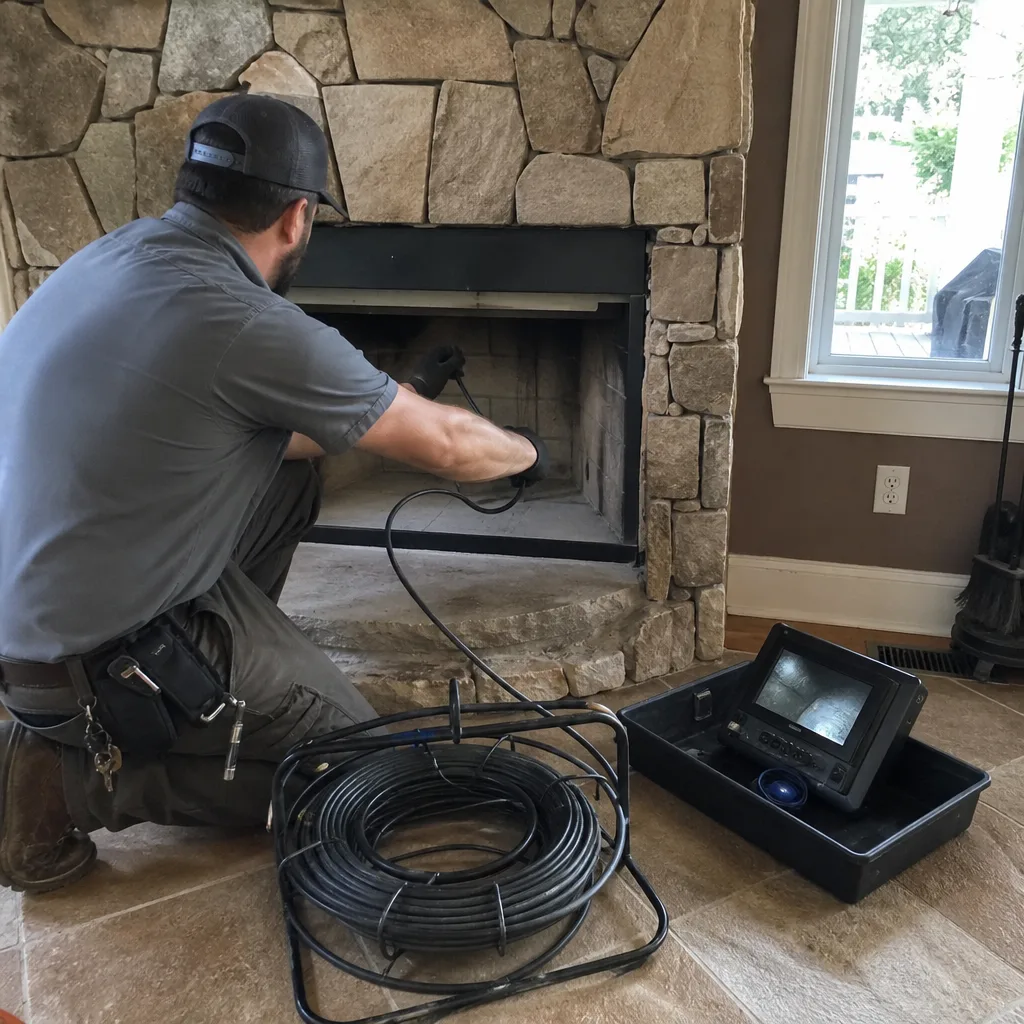
The National Fire Protection Association standard NFPA 211 defines three levels of chimney inspection. Level 1 is visual, from accessible areas, with no tools. Level 2 - the standard we established as default practice at Emberly Chimney Cleaners Marietta home in 2009 - requires a camera scan of the flue interior, accessible portions of the appliance, and the attic and crawl space where the chimney passes through. Level 3 involves demolition of building materials and is reserved for suspected hazards.
Clause 4 of the Haven Standard requires a documented photo record on every job. Not because regulators demanded it - they didn’t, in 2009 - but because a homeowner facing a $4,200 liner replacement quote deserves to see the damage themselves.
Components Requiring Camera or Specialized Documentation
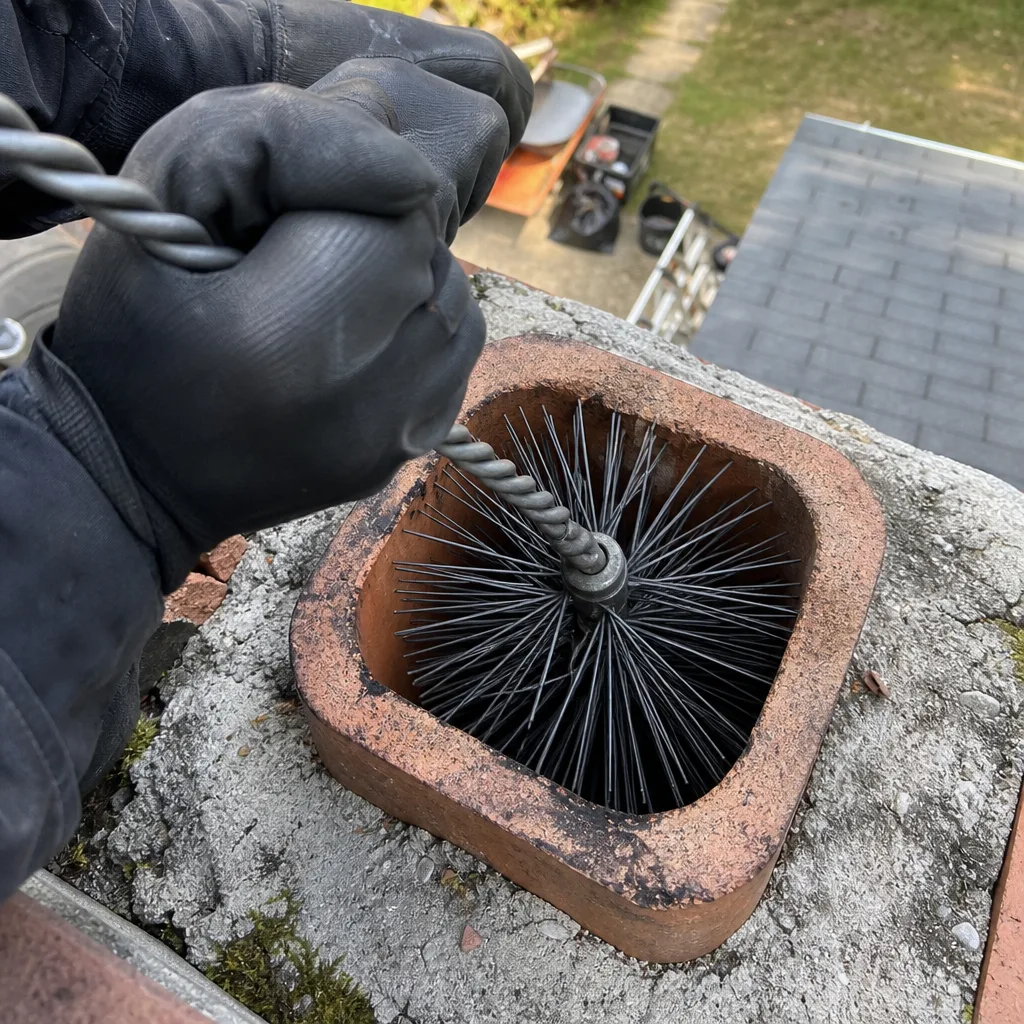
- Flue liner condition. Clay tile liners crack, spall (flake), and shift from thermal cycling and foundation movement. Stainless steel liners corrode at weld points. A camera reveals gaps between tiles, mortar loss, and exposure of combustible framing. We specify DuraFlex and Olympia Chimney liner materials when replacement is needed - both sourced through Haven’s buying network to keep pricing honest.
- Creosote classification. There are three classes. Class I is soot - brushable. Class II is granular - requires more aggressive tools. Class III is glazed, hard, and ignites at approximately 451°F. Only a camera and trained eye can distinguish Class II from Class III reliably, and the cleaning method differs significantly. Misclassified creosote left in place is a known factor in preventable chimney fires.
- Smoke chamber construction and condition. The smoke chamber - the area above the damper that funnels smoke into the flue - should be parged smooth. Rough, corbeled brick creates turbulence and creosote accumulation points. Camera access requires specialized equipment; visual inspection from below is inadequate.
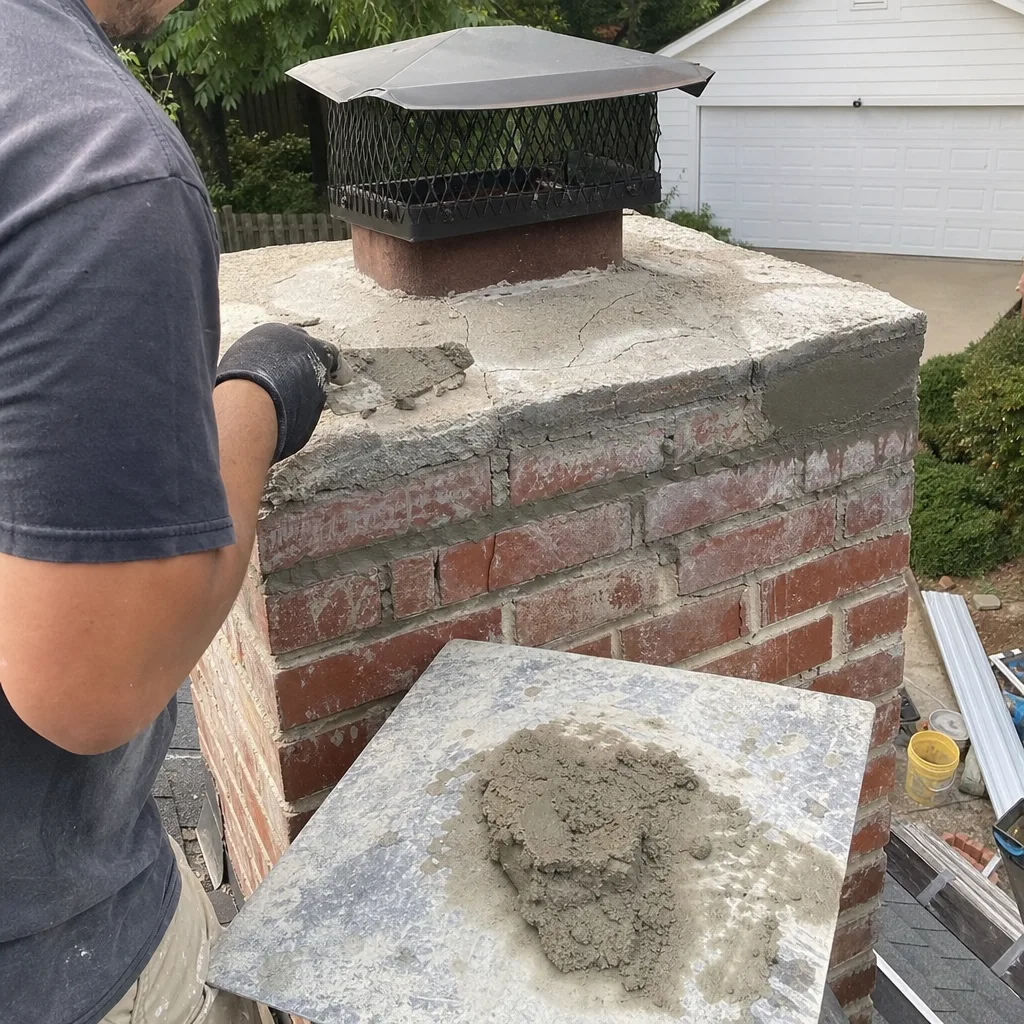
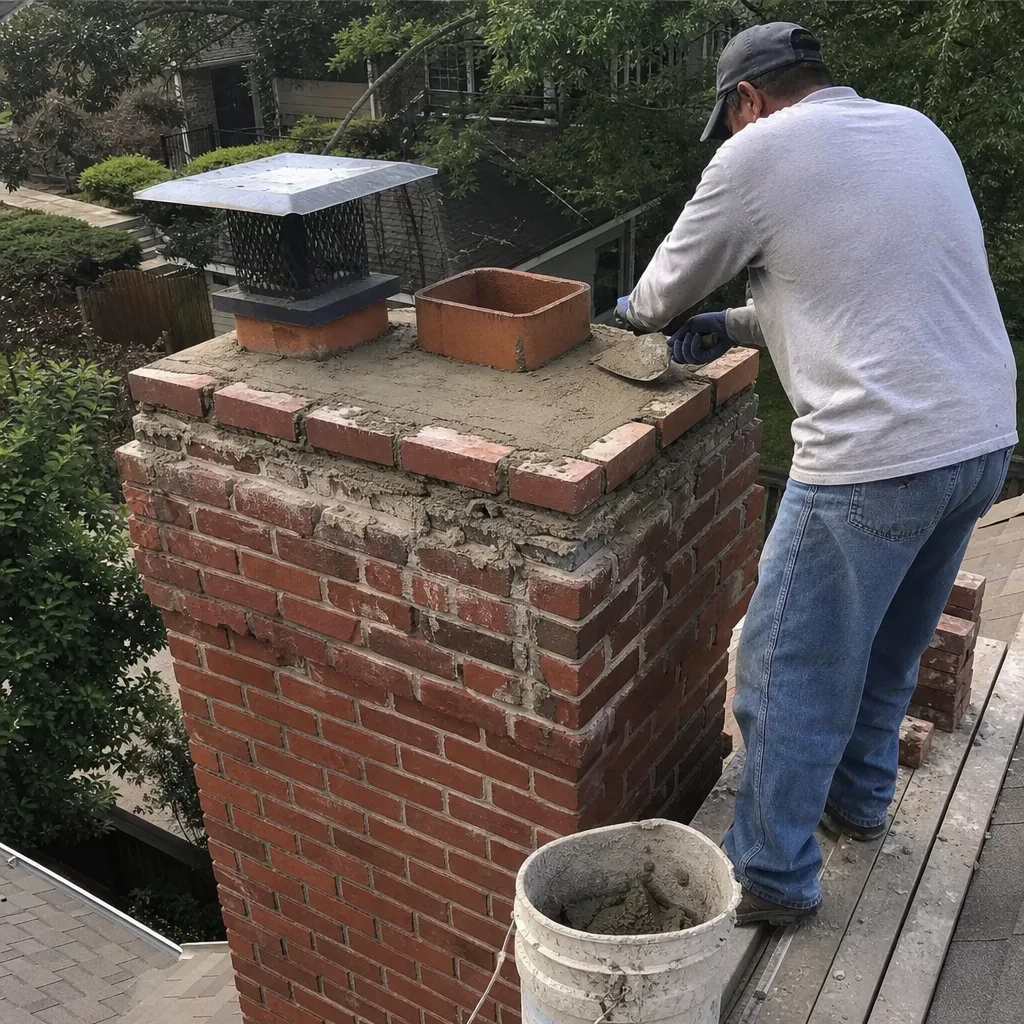
- Crown integrity beneath surface. A crown can look intact from the ground while harboring hairline cracks that channel water directly to the liner and lateral courses. Probing and close photography reveal what binoculars cannot.
- Clearances to combustibles in concealed spaces. Where the chimney passes through attic framing or wall chases, NFPA 211 requires two inches of clearance to combustible material. Thermal imaging and physical measurement in these spaces are Level 2 requirements, not optional extras.
The documented photo record from a Level 2 inspection gives you dated, attributable evidence of condition. In a claims dispute or resale transaction, this documentation carries weight that verbal assurances cannot match.
Marietta Storm Season: Post-Weather Checks That Matter
Marietta’s position on the Piedmont plateau, with the Gulf Stream moisture feed from the south and Appalachian cold air drainage from the north, creates specific weather patterns that affect chimneys differently than coastal or mountain markets. Our storm season runs in two phases: late February through April (severe thunderstorms, occasional tornado watches), and June through September (tropical moisture, high wind events).
Post-Storm Inspection Protocol
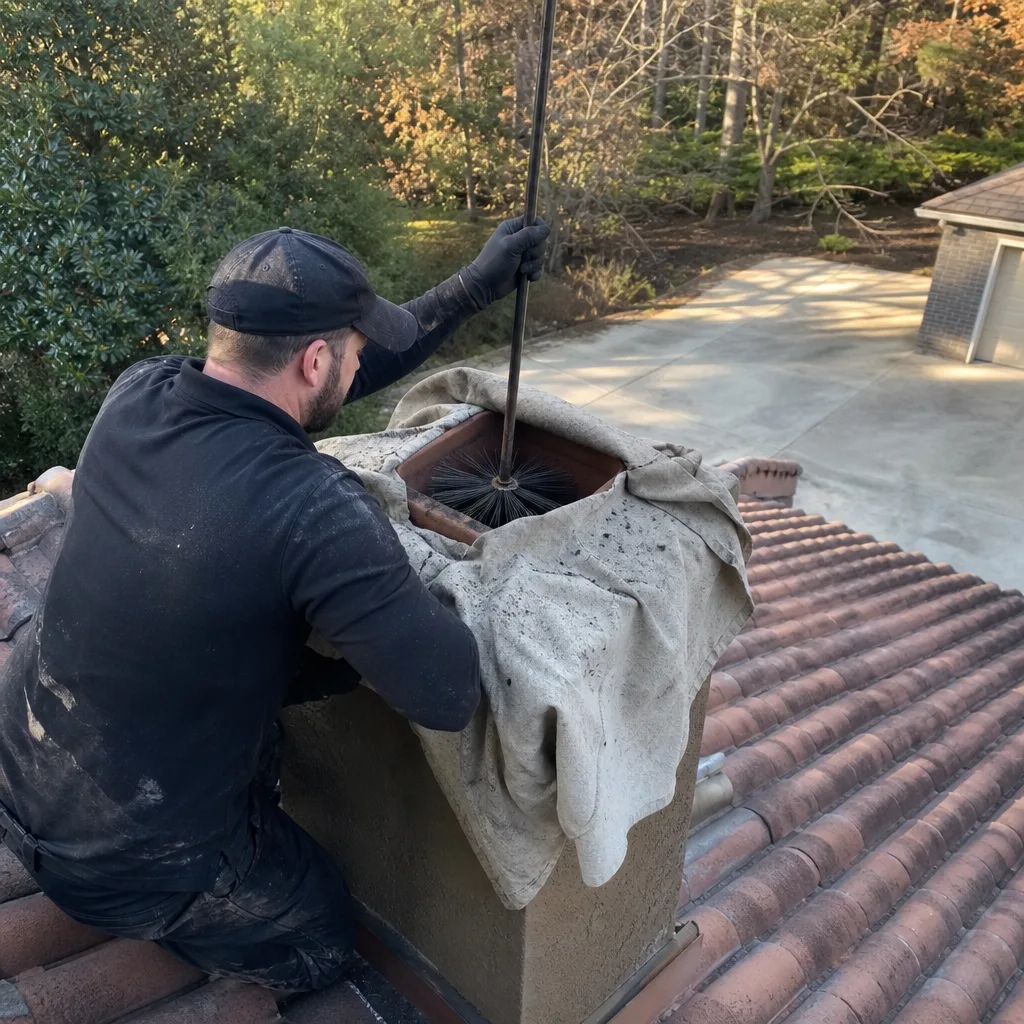
- Cap and screen after high wind or hail. Walk the perimeter and look up. Dented caps, torn mesh, or displaced rain pans are common after March and April severe weather. A displaced cap invites water intrusion and animal entry. We replace caps with Gelco and Famco products - both specify wind ratings and mesh corrosion resistance that matter in this climate.
- Flashing inspection after any roof disturbance. Step flashing, counterflashing, and cricket (saddle) configurations are where roof-chimney intersections leak. After any storm with winds above 45 mph, check attic spaces beneath the chimney penetration for water staining. In Marietta’s mature neighborhoods - East Cobb, Indian Hills, the historic district near the Square - 1970s-1990s construction often used single-piece counterflashing that fatigues at the bend point.
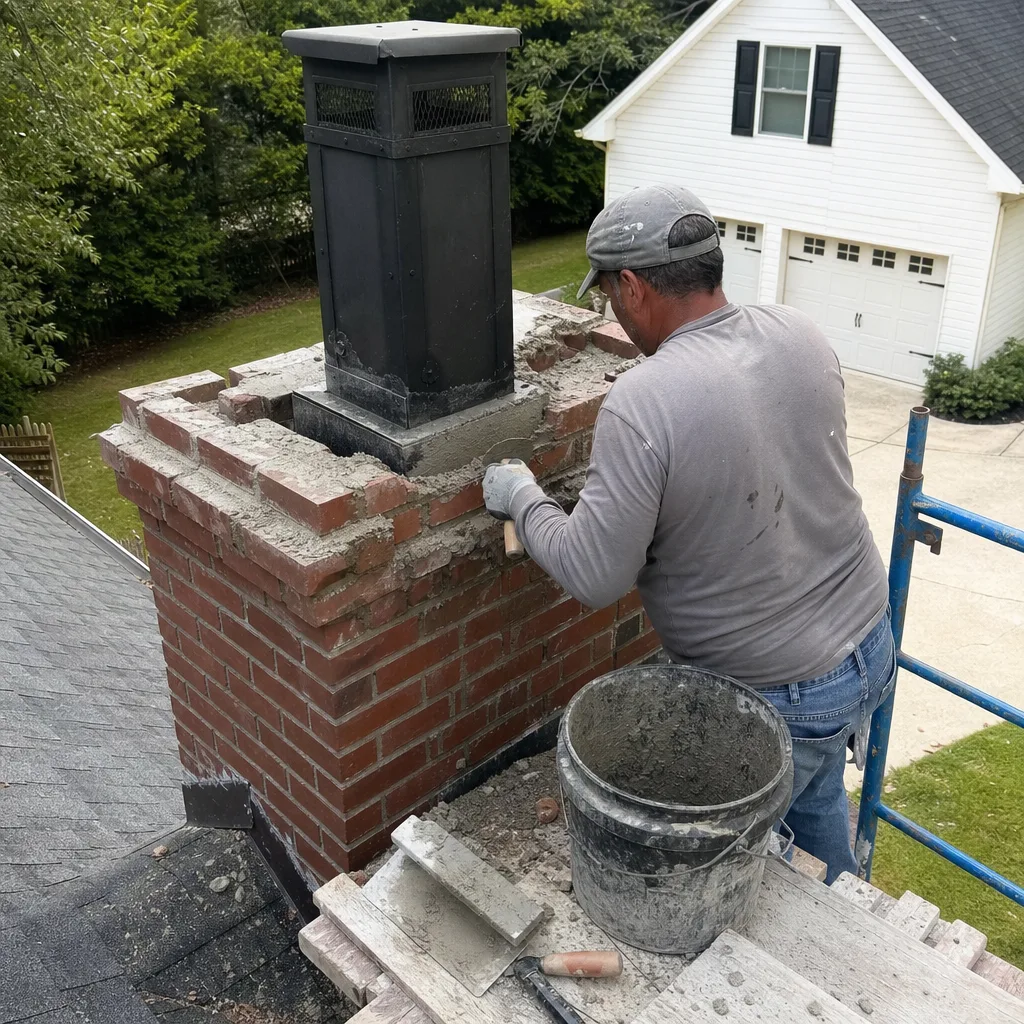
- Crown examination after freeze-thaw cycles. Hard freezes are infrequent but not absent. January 2022 and January 2024 both brought multiple nights below 20°F. Water trapped in crown microcracks expands, widens the crack, and accelerates deterioration. A crown that was sound in October can be compromised by March.
- Animal entry checks in nesting season. Squirrels breed February through May; raccoons March through June. A cap with damaged mesh or a missing rain pan becomes an entry point. Evidence includes chirping, debris falling into the firebox, or odor. If you suspect active nesting, do not light a fire - young animals can block the flue, and smoke can asphyxiate them, creating a decomposition hazard.
Neighborhood-Specific Considerations
In the older oak canopy of West Cobb and the Kennesaw Mountain corridor, limb strike on chimneys is more frequent than in newer subdivisions with younger trees. After any storm with reported tree damage in your ZIP code, prioritize the cap and crown check. In the newer construction east of I-75 - Town Center area, Bells Ferry corridor - builder-grade chase covers (the metal top on factory-built chimneys) often fail at the seal weld within 8-12 years, accelerated by UV exposure on south and west exposures.
The Three Documents Every Sweep Appointment Must Produce
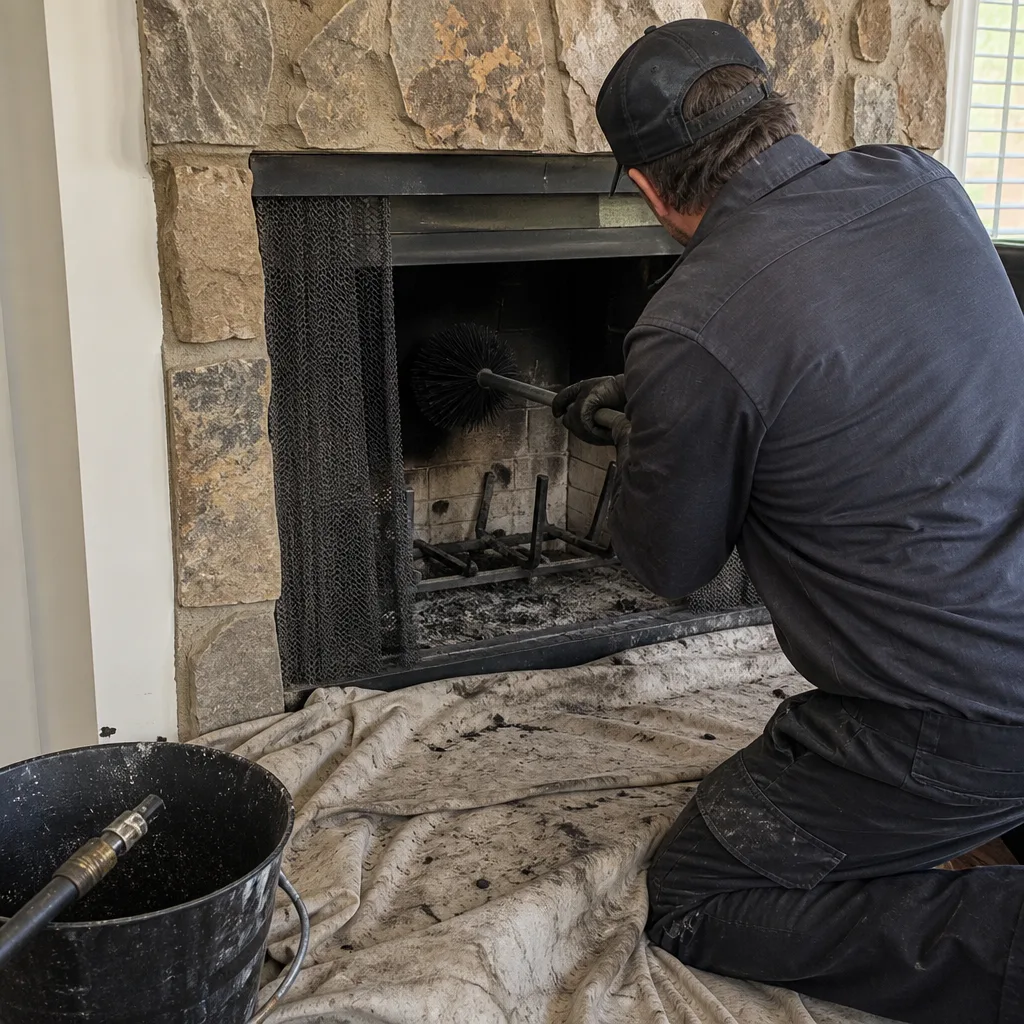
We’ve completed more than 38,000 Chimney Cleaning & Sweep services since 2009. Every one produced three documents before the technician left the property. Not two. Not “we’ll email it.” Three physical or digital documents, dated, with the company identification and technician name.
Document 1: Written Price Quote Before Work Starts
Haven Standard Clause 1 - “Have it in writing” - requires a written price, written scope, and written warranty before any work begins. Not after the tech is in your home. Not after the “inspection fee” is collected. The quote specifies:
- Exact services to be performed (sweep, inspection classification, any repair)
- Line-item pricing for each service
- Material specifications if applicable (liner type, cap model, crown repair compound)
- Warranty terms and duration
- Payment terms and schedule
This document protects both parties. You know what you’re paying before you agree. We know you’ve authorized the scope. In a dispute, this document is the reference point.
Document 2: Scope-of-Work Completion Record
After work is finished, you receive a completion record stating what was actually done, by whom, with what equipment, and when. For a sweep, this includes:
- Date and time of service
- Technician name and certification number
- Chimney type and appliance served
- Cleaning method and tools used
- Condition assessment summary
- Recommendations for follow-up, if any
This is your dated proof of maintenance. Insurance adjusters and home inspectors recognize this format. A receipt that says “chimney sweep - $189” does not serve the same function.
Document 3: Camera Findings Summary with Photos
Clause 4 of the Haven Standard requires a documented photo record on every job. The camera findings summary includes representative images from the inspection - typically 8-15 photos - with annotations indicating location, condition, and any anomaly. You see what we saw.
This is the document that distinguishes a defensible inspection from an unverifiable claim. When a home inspector asks “when was the last Level 2 inspection,” this summary is your answer. When an insurance adjuster questions whether a liner was cracked before the fire, the dated photo record establishes pre-loss condition.
We do not charge extra for this documentation. It is included as standard on every Chimney Cleaning & Sweep in Marietta visit. The archive practice that became Clause 4 has run continuously since 2009.
How to Build a Transferable Maintenance Log
A maintenance log that survives your ownership and transfers cleanly at resale requires structure. Scattered receipts in a drawer do not constitute a log. Here’s the format we recommend to Marietta homeowners, based on what real estate attorneys and home inspectors actually ask for.
The Log Format
Use a three-ring binder or dedicated digital folder with this structure:
- Property information page. Address, year built, chimney type (masonry, factory-built, or specialty), number of flues, appliance types (wood-burning fireplace, gas insert, pellet stove, etc.). Include a photo of the exterior chimney profile for reference.
- Annual sweep records. One section per year, in reverse chronological order. Each entry contains: date of service, company name, technician name, technician CSIA certification number, services performed, and all three documents (quote, completion record, camera summary). If you used Fireplace Services in Marietta for appliance-specific work, include those records here too.
- Repair and modification records. Liner replacement, crown rebuild, cap installation, chase cover replacement. Include before-and-after photos, material specifications (DuraFlex, HeatShield, etc.), and warranty documents.
- Self-inspection notes. Your monthly check log, dated and initialed. This demonstrates homeowner diligence.
- Weather event notes. Date of significant storms, your post-storm checks, and any professional follow-up triggered. In Marietta, note particularly: tornado watches with confirmed touchdowns in Cobb County, hail events with reported diameter, and freeze events with consecutive nights below 25°F.
Digital Backup
Scan or photograph all documents. Store in cloud storage with your other home records. Label files with date and service type: “2024-10-15_Level2Sweep_LevelTwoChimney.pdf”. This naming convention lets you retrieve records instantly when a buyer’s inspector asks.
At Resale
Georgia’s seller disclosure form does not specifically require chimney maintenance disclosure, but material defects must be disclosed. A complete maintenance log becomes a marketing asset - evidence of proactive care that distinguishes your property from comparable homes without documentation. We’ve had Marietta sellers report that their log accelerated inspection negotiations and supported their asking price.
Why “Passed Inspection” Means Nothing Without a Camera Scan
The phrase “passed inspection” appears on handwritten notes, verbal reports, and some competitor receipts. In the context of NFPA 211, it has no standardized meaning. A Level 1 inspection “passes” if no immediate hazards are visible from accessible areas - but this explicitly excludes the flue interior, concealed clearances, and most crown conditions.
A chimney can “pass” a Level 1 inspection while harboring a cracked liner, Class III creosote, and inadequate clearance to combustibles in the attic. All three conditions are known fire and CO hazards. The homeowner receives reassurance that is, in defensible terms, worthless.
The camera scan is what makes an inspection meaningful. When we document liner condition with dated, annotated photography, “passed” becomes a claim with evidence behind it. When we identify a defect and show you the image, “needs repair” becomes equally defensible.
This distinction matters in claims disputes. An insurer’s investigator who finds a cracked liner after a fire will ask: “Was this visible? Would a reasonable inspection have identified it?” A Level 2 camera scan with photo record answers that question. A “passed inspection” note on a receipt does not.
We established camera-scan documentation as our default in 2009, before regulators or insurers required it. That practice became Clause 4 of the Haven Standard because it is the only inspection format that produces accountable, transferable evidence.
What Chimney Maintenance Costs in Marietta
Price transparency is central to how we operate. Every job is quoted in writing before work begins - no exceptions, never “call for a quote.” Here are the typical ranges for Marietta homeowners, based on our experience across Cobb County and the metro core.
| Service | Typical Range | What Affects Price |
|---|---|---|
| Level 2 chimney sweep with camera inspection | $189 - $289 | Number of flues, appliance type, accessibility, creosote class |
| Level 2 inspection only (no sweep needed) | $149 - $219 | Number of appliances, attic/crawl access, documentation requirements |
| Chimney cap replacement (standard stainless) | $285 - $450 | Flue count, mesh specification, wind rating, brand (Gelco, Famco) |
| Crown repair (minor crack sealing) | $325 - $550 | Crown size, crack pattern, access method |
| Crown rebuild (full replacement) | $1,200 - $2,400 | Dimensions, reinforcement, forming complexity |
| Flue liner repair (HeatShield cerfractory) | $1,800 - $3,200 | Flue length, damage extent, access |
| Stainless steel liner replacement (DuraFlex, Olympia Chimney) | $2,800 - $4,500 | Flue length, diameter, appliance type, insulation requirements |
| Firebox refractory panel replacement | $450 - $850 | Panel count, brand, shipping for specialty sizes |
These ranges reflect our sourcing through Haven’s buying network, which aggregates purchasing across independently owned operations to keep customer prices honest. We do not markup materials to match “retail” pricing that exists only on competitor quotes.
Our Free Second Opinion on Any Written Estimate applies to any competitor’s written quote for comparable scope. Bring us the documentation - we’ll review it against what we find, line by line, at no charge.
Setting Your Annual Schedule
Timing your sweep matters for availability, pricing, and safety. In Marietta’s market, demand patterns are predictable.
Optimal Booking Windows
- September through early October: Ideal. Weather is stable, technician availability is good, and you’re prepared before first cold snap. Book by August 15 for preferred dates.
- Mid-October through November: Peak demand. Wait times extend, and emergency pricing (where competitors charge it) may apply. We maintain flat pricing year-round, but availability narrows.
- December through February: Emergency-only for most providers. We answer live 24/7, but scheduled maintenance in this window is difficult. If you haven’t swept in 12+ months, do not delay to this window.
- March through May: Excellent secondary window. Post-heating-season availability is strong, and storm damage from spring severe weather can be assessed simultaneously.
- June through August: Viable, especially for properties with gas appliances used year-round. Attic temperatures make some inspections uncomfortable but not impossible; we schedule early morning to manage this.
Frequency Guidelines
NFPA 211 recommends annual inspection for all chimneys, and sweeping “as needed” based on creosote accumulation. For wood-burning appliances, this typically means annual sweep for moderate use (one cord or more per season). For gas appliances, inspection every 1-2 years with sweep only if debris or deterioration is found. Pellet stoves require annual cleaning of the vent system per manufacturer specification.
In Marietta’s climate, with moderate heating degree days and mixed appliance types, most homeowners with wood-burning fireplaces need annual sweep. Those with gas logs and no wood use can often extend to biennial inspection with camera documentation, provided no storm damage or operational issues occur.
Common Mistakes to Avoid
- Accepting a “free inspection” that isn’t documented. A verbal all-clear with no photos, no written scope, and no dated record provides zero protection in a dispute. The “inspection” was marketing, not maintenance.
- Assuming gas fireplaces need no attention. Gas appliances produce corrosive condensation, attract nesting animals through idle flues, and can develop vent blockages. Annual inspection is still recommended; sweep frequency is lower but not zero.
- Ignoring the smoke chamber. Many sweeps brush the flue and call it done. The smoke chamber above the damper is where most chimney fires originate. If your sweep quote doesn’t mention smoke chamber access and parging assessment, you’re getting incomplete service.
- Skipping post-storm checks because “it looks fine from the ground.” In the 2021 March tornado outbreak, we found displaced chase covers and cracked crowns in East Cobb that homeowners had walked past for weeks. Ground-level appearance is not diagnostic.
- Letting the “passed” note substitute for documentation. A receipt with “passed” and a date is not a maintenance record. It’s a piece of paper. Insurers and inspectors require attributable, detailed documentation.
- Delaying sweep until you smell smoke indoors. Smoke spillage indicates a problem already active - blocked flue, negative pressure, or downdraft. These conditions can precede carbon monoxide events. Schedule proactively, not reactively.
- Choosing by price alone without verifying what’s included. A $99 sweep that excludes camera inspection, excludes smoke chamber assessment, and produces no documentation is not comparable to a full Level 2 service. Compare scope, not just dollars.
When to Call a Professional
Call for a Level 2 inspection with camera documentation when: you haven’t had a documented sweep in 12+ months; you’ve purchased a home and received no maintenance records from the seller; you detect smoke odors, drafting problems, or visible deterioration; after any severe weather event with wind above 45 mph or reported tree damage in your area; before installing a new appliance or converting fuel types; or when your insurer requests proof of maintenance.
Emberly Chimney Cleaners Marietta offers free estimates in Marietta - call (470) 288-2763. A live person answers 24 hours a day, 7 days a week. We’ll schedule a technician, send a text when they’re en route, and produce the three documents that make your maintenance record complete. Every quote is written before work starts, every job carries the 365-Day Done Right Promise, and every visit includes the camera-scan photo record we’ve delivered since 2009.
Frequently Asked Questions
A Level 2 chimney sweep with camera inspection in Marietta typically costs $189 to $289, depending on flue count, appliance type, and creosote accumulation level. A standalone Level 2 inspection without sweep runs $149 to $219. We provide a written, itemized quote before any work begins - no exceptions. Call (470) 288-2763 for an exact quote; estimates are free.
Wood-burning fireplaces and stoves need annual sweep with inspection for typical use (one cord per season or more). Gas appliances need annual inspection with sweep only if debris or deterioration is found. Pellet stoves require annual vent cleaning per manufacturer specification. Marietta’s moderate heating demand and mixed appliance types mean most homeowners fall into the annual or biennial cycle, but the specific interval depends on use, fuel, and documented condition from your last camera inspection.
You need liner replacement when camera documentation shows cracks, gaps, spalling, or corrosion that compromise containment of heat and combustion gases - not because a sweep says so without showing you. We specify when work can safely wait (minor spalling with no exposure of combustibles, monitored annually) versus when it cannot (cracks allowing flame contact with framing, CO leakage path). Nothing is recommended without camera evidence you can see yourself. Call (470) 288-2763 for a free second opinion on any written estimate.
Skipped maintenance leads to creosote accumulation (fire risk), liner deterioration (fire and CO risk), water intrusion (structural damage), and animal nesting (blockage and decomposition hazard). In claims terms, an undocumented chimney fire gives your insurer grounds to invoke maintenance exclusion. The cost of prevention - $189 to $289 for documented sweep - is trivial against the cost of a denied fire claim or preventable injury. Call (470) 288-2763 to schedule before burning season.
Level 1 is visual inspection from accessible areas with no tools - adequate for unchanged, regularly maintained systems. Level 2 adds camera scan of the flue interior, inspection of accessible portions of appliance and chimney exterior, and examination of attic and crawl spaces where the chimney passes through. Level 2 is required at property sale, after chimney fire or seismic event, and upon installation of new appliance. In our practice, Level 2 is the default for all visits - Clause 4 of the Haven Standard requires camera documentation on every job.
Homeowners can perform the monthly self-inspections described in this checklist - damper operation, firebox visible cracks, hearth extension, ground-level cap check. Flue cleaning and internal inspection require specialized equipment (rotary brushes, vacuum systems, camera units) and training in creosote classification and hazard identification. More critically, roof access for exterior inspection involves fall risk, and disturbing Class III creosote without proper containment creates fire and inhalation hazards. We do not recommend DIY flue cleaning; the documented professional record is also a significant portion of the value. For Chimney Repair in Marietta needs beyond sweep, professional evaluation is essential.
Demand three documents: written price quote before work starts (with line-item scope and warranty terms), dated completion record with technician identification, and camera findings summary with annotated photos. Verify the company carries current licensing and insurance, that technicians are background-checked and uniformed, and that the company can produce license information on request. The quote should name materials by brand when applicable - DuraFlex, HeatShield, Gelco, Famco, Copperfield - not generic descriptions. Anything less is incomplete service.
The Bottom Line
Effective chimney maintenance in Marietta splits cleanly between what you can verify yourself and what requires documented professional proof. Your monthly checks of damper, firebox, and cap condition build a habit of observation and create evidence of homeowner diligence. Your annual professional visit, with camera-scan documentation and the three required documents, creates defensible proof of system condition. The gap between these - the homeowner who neither self-inspects nor demands documentation - is where insurance claims fail, resale negotiations stall, and preventable hazards become emergencies. Start your log today, schedule your documented sweep before burning season, and keep the paper trail that protects your home and your liability. For more guides & resources, visit our blog.
Written by Corrine Halstead, Owner at Emberly Chimney Cleaners Marietta, serving Marietta since 2009.