
Last updated September 22, 2026
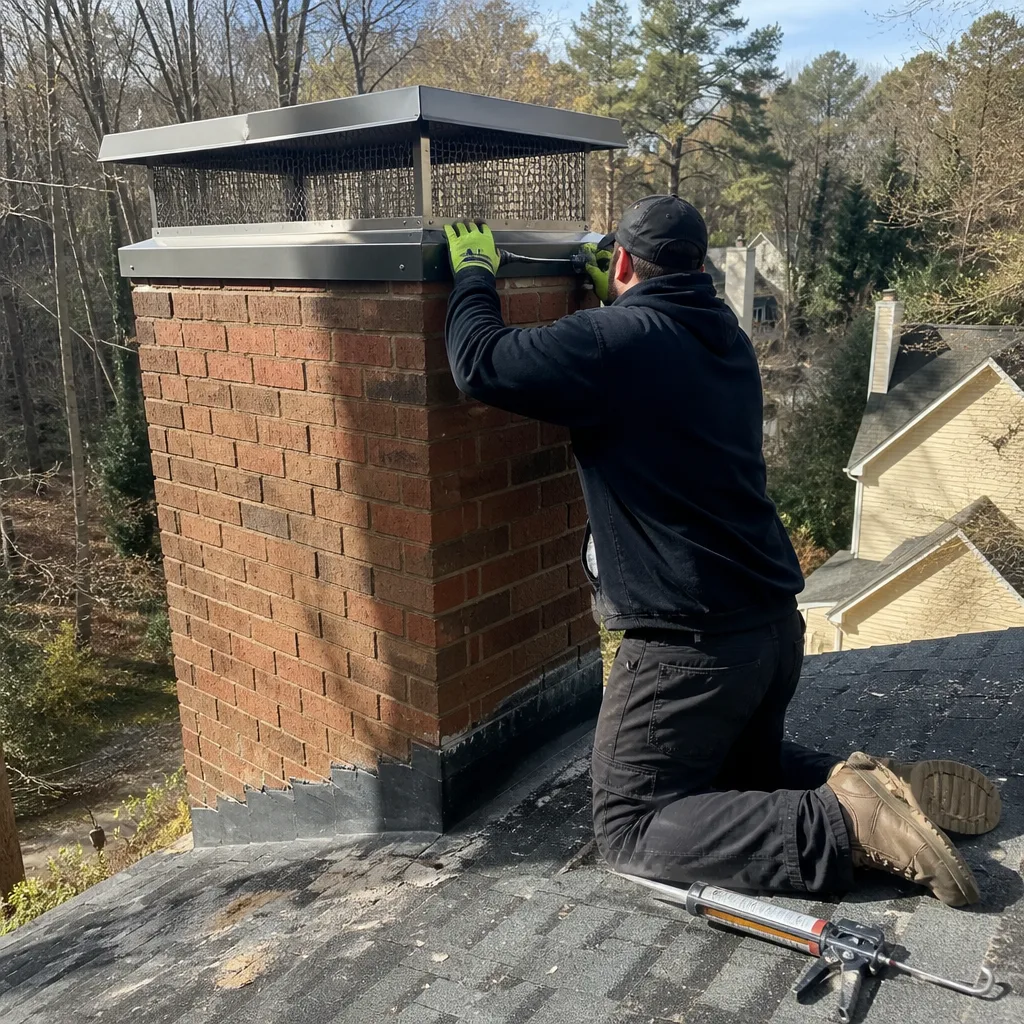
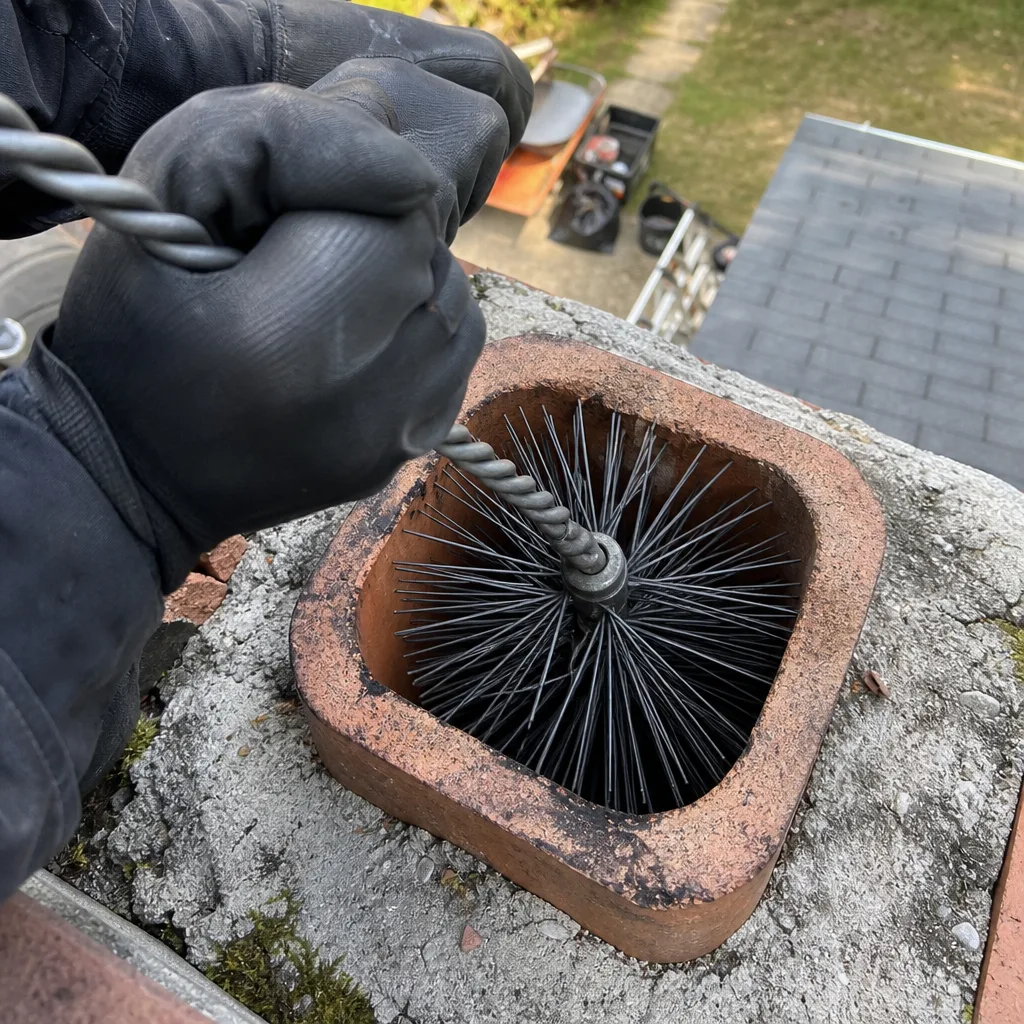
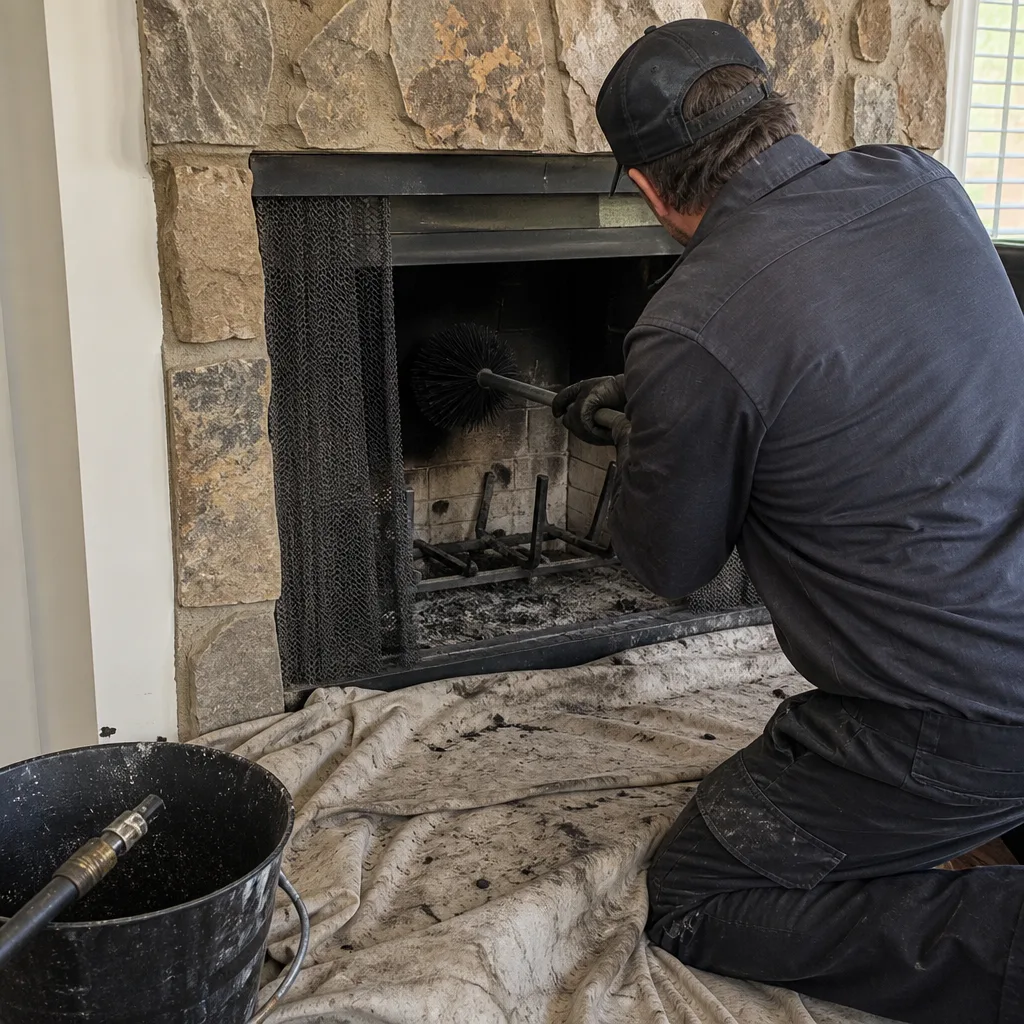
Level 1 sweep and inspection to the NFPA 211 annual standard - flue, crown, cap, and flashing checked and photographed
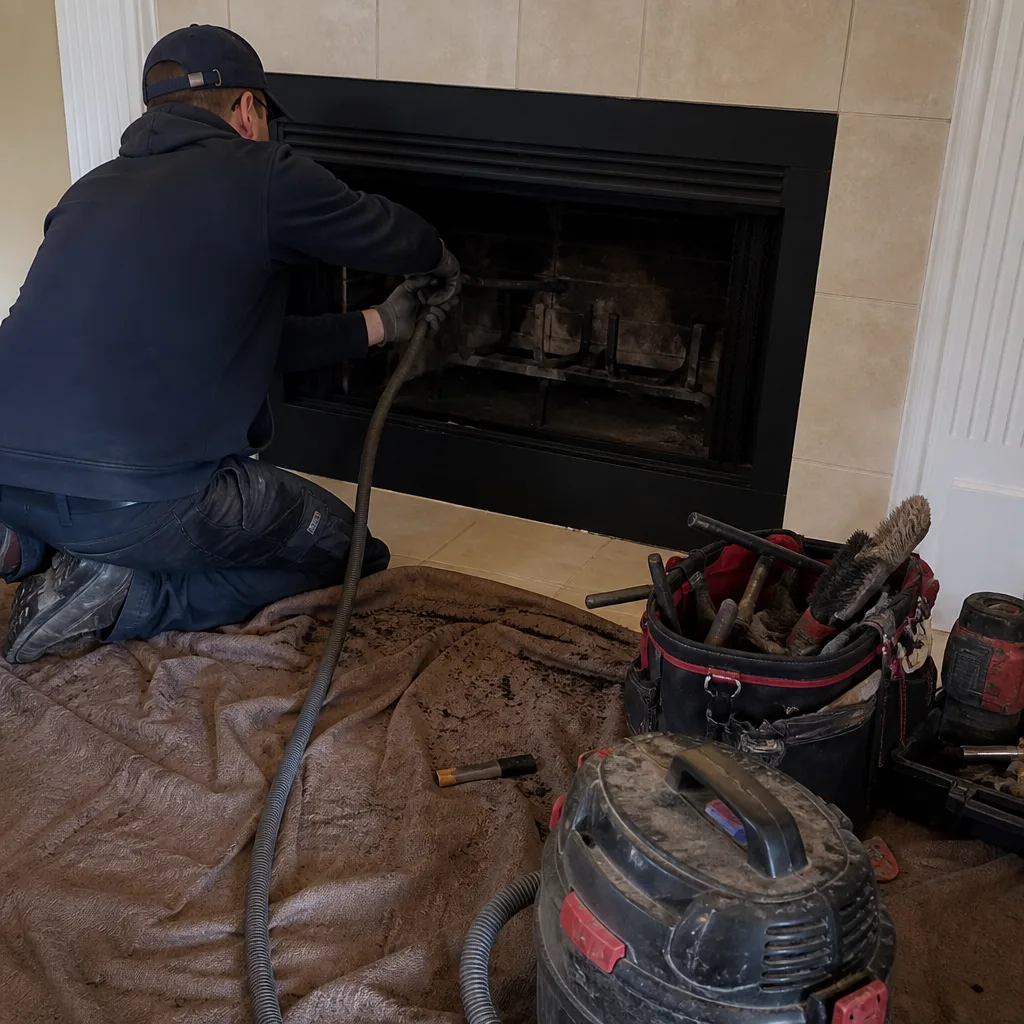
Chimney sweep logs do not sweep chimneys. They loosen some creosote - which then falls where a brush and vacuum still have to collect it.
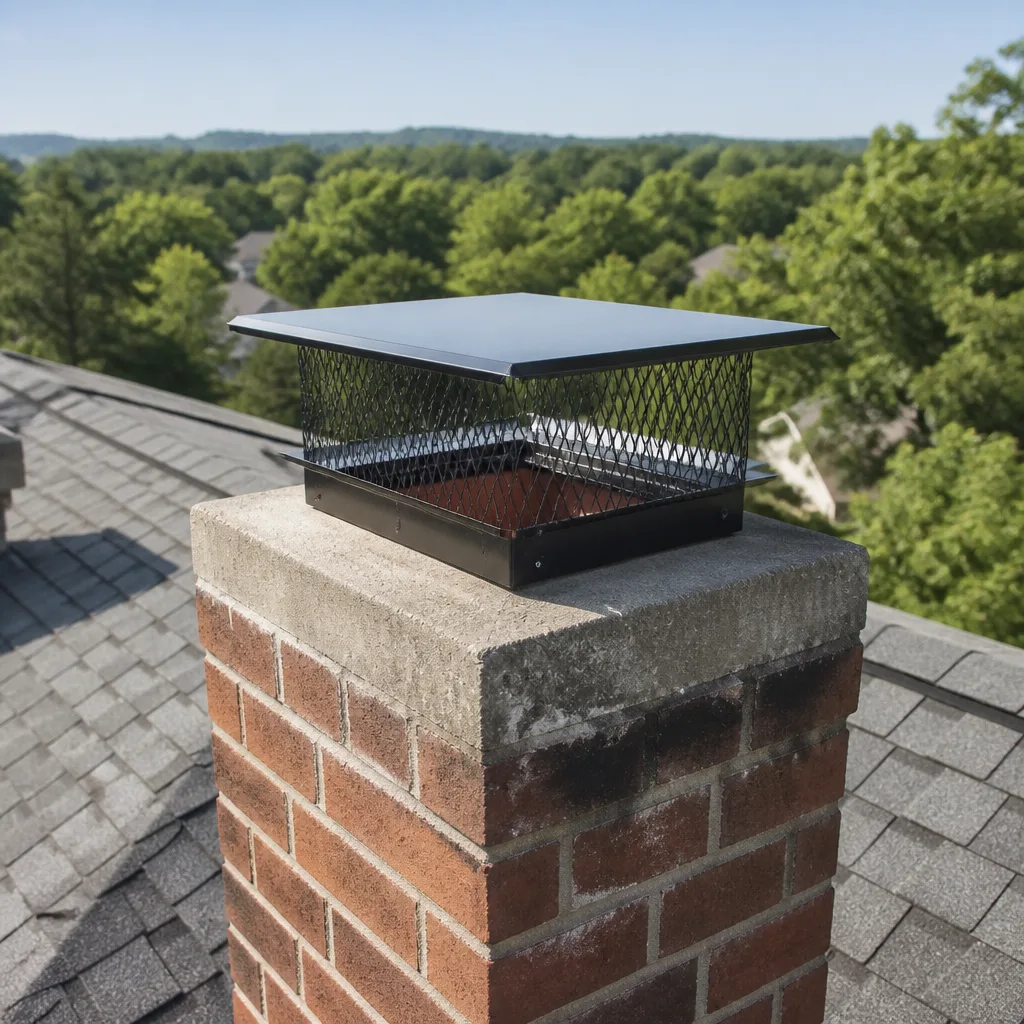
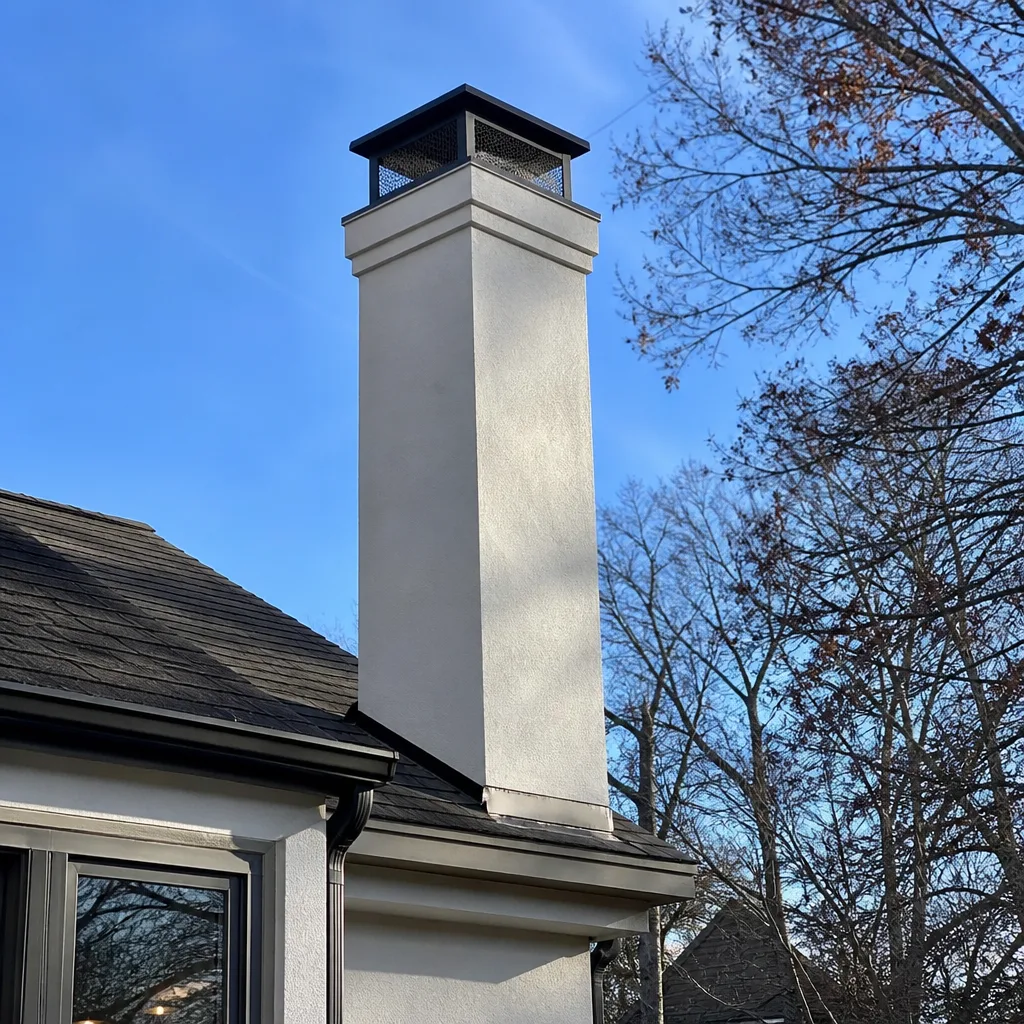
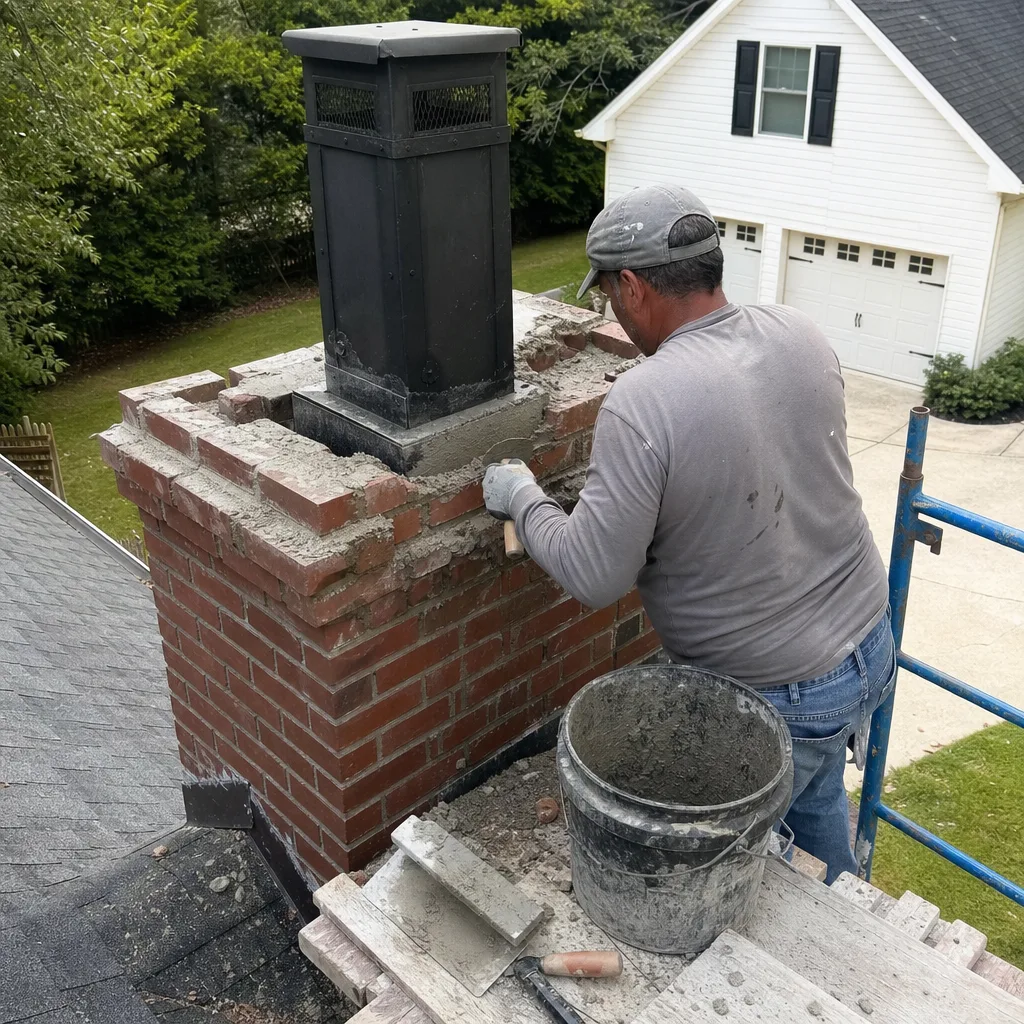
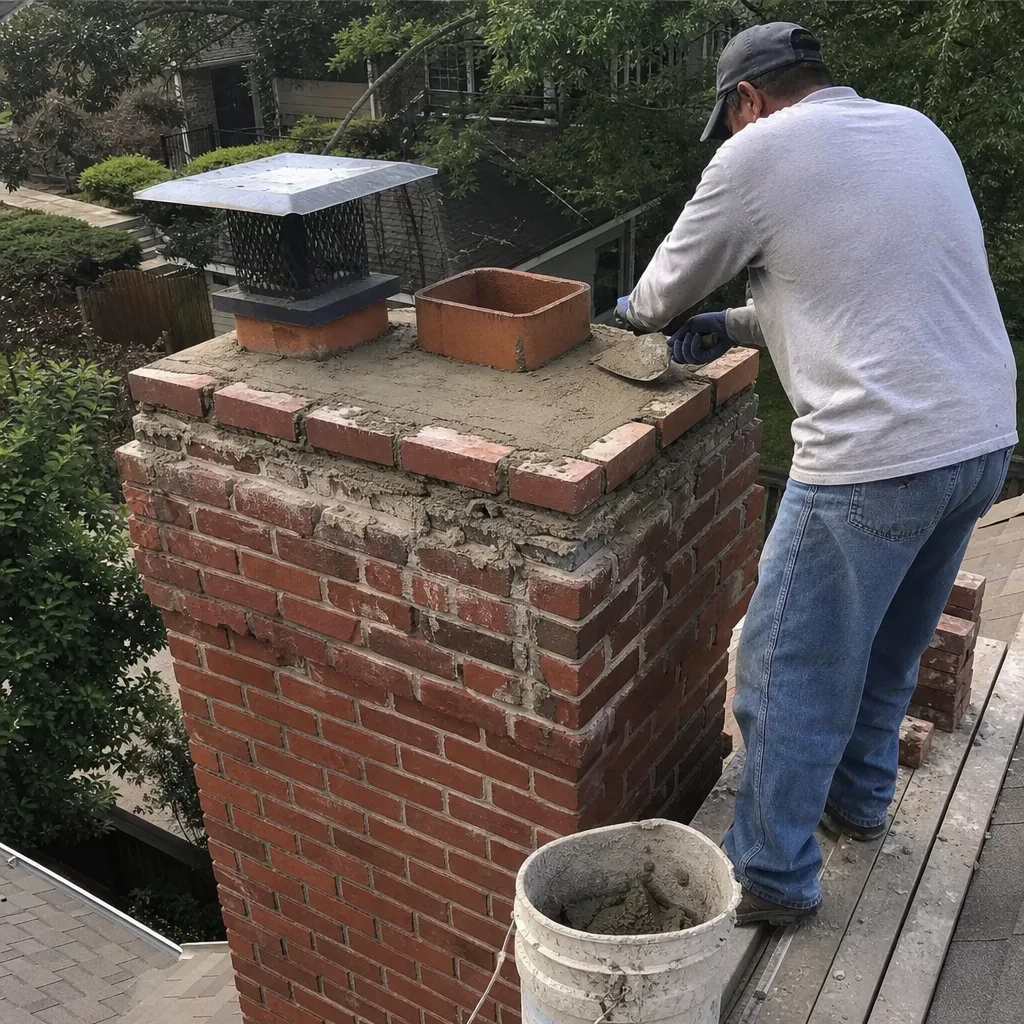
Caps & crowns
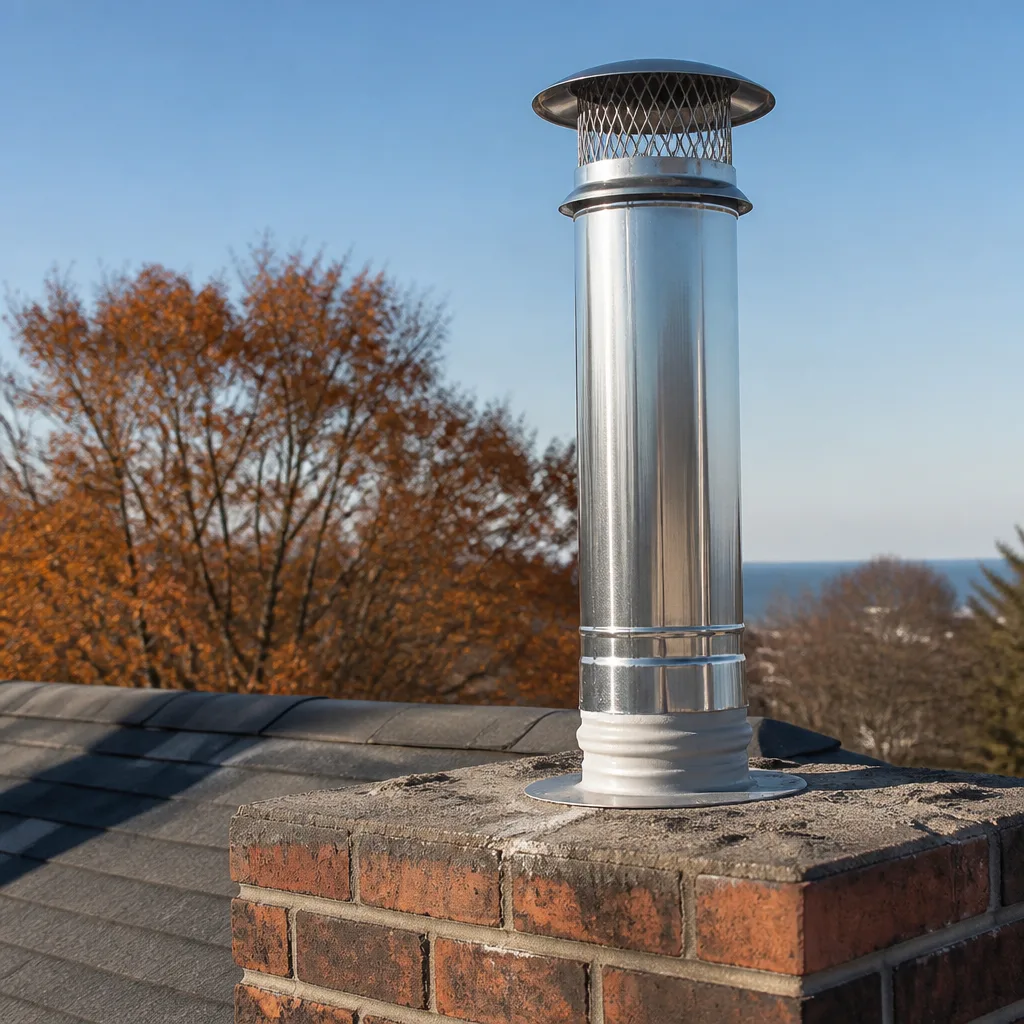
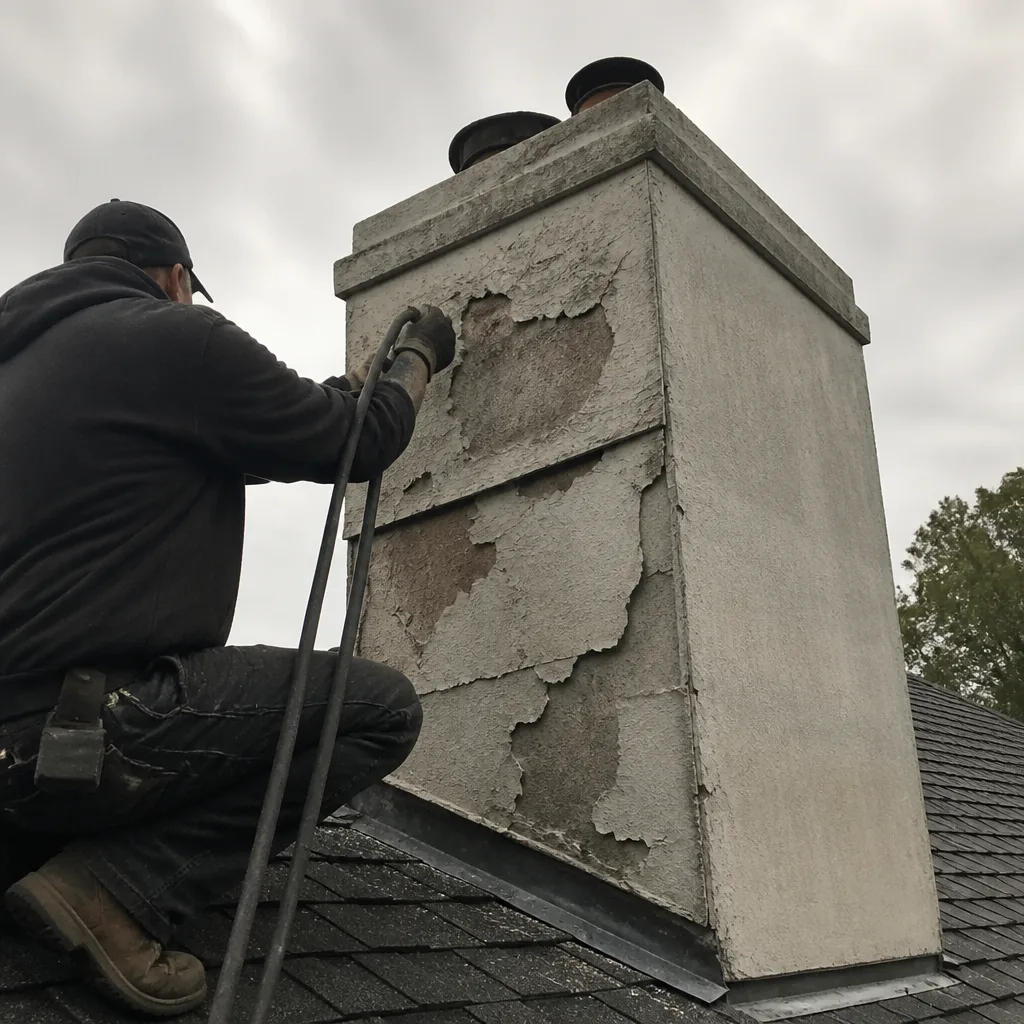
Masonry repair
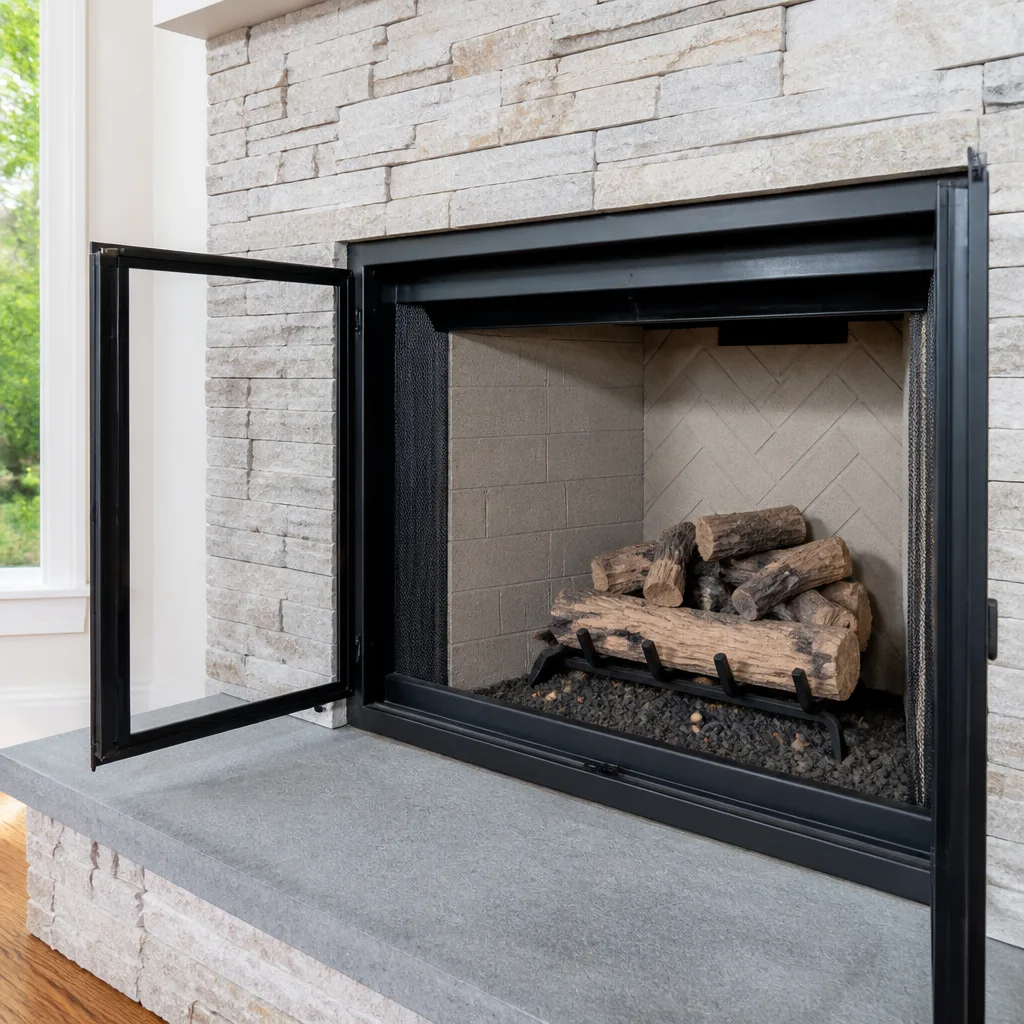
 Before
 After
After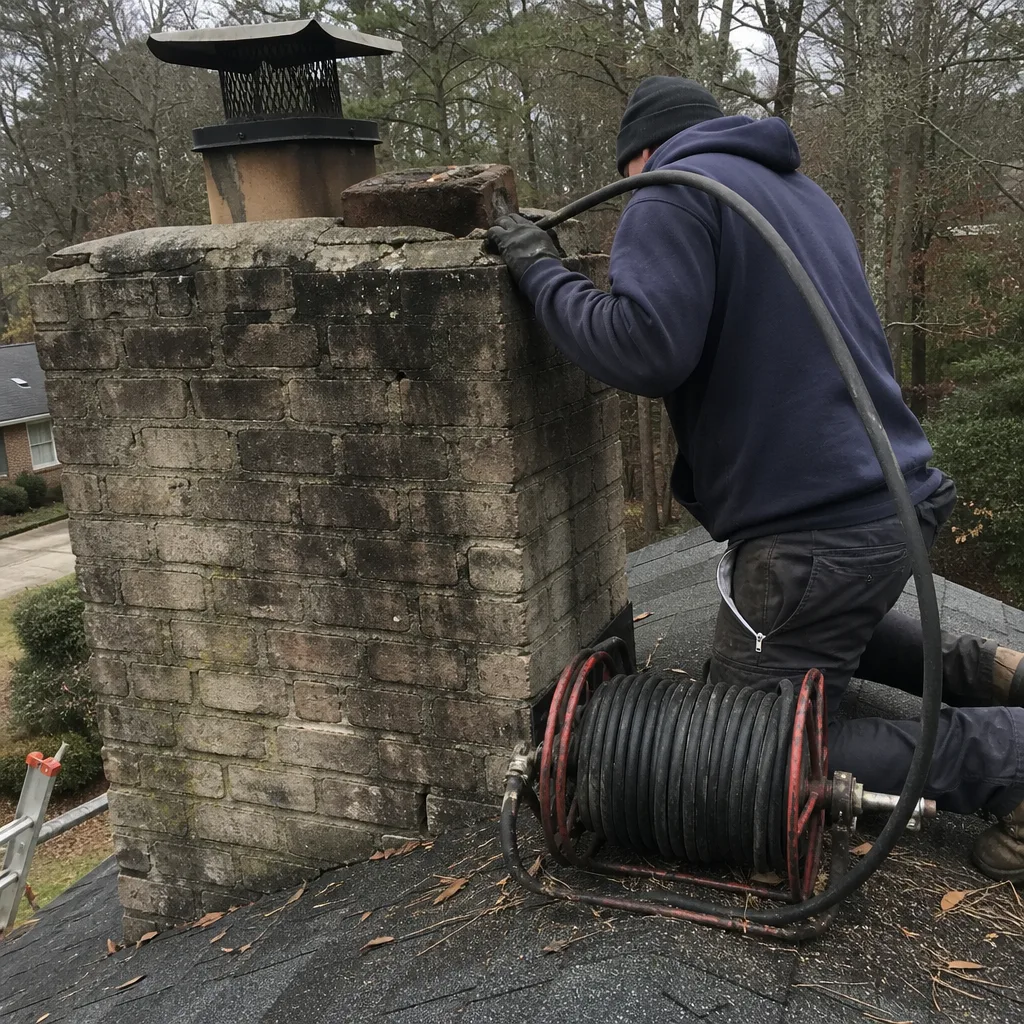 Before
 After
After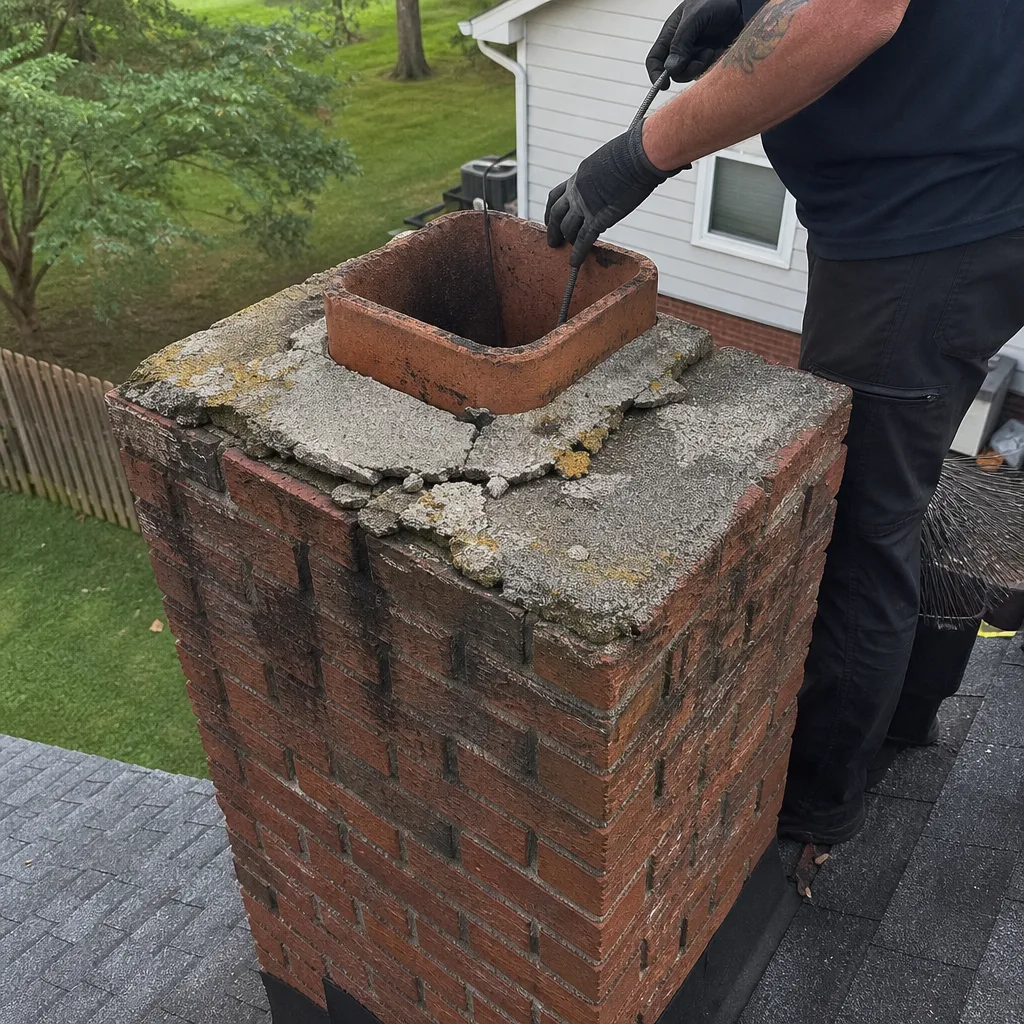 Before
 After
AfterChimney Cleaning Warning Signs: A Marietta Homeowner’s Reference Guide
White staining on your brick chimney looks like dirt. It’s actually efflorescence, minerals left behind when water moves through masonry from the inside out. In Marietta, where humidity stays above 70% for months and afternoon thunderstorms drive water into every hairline crack, that white powder often signals something worse: combustion gases migrating through a cracked flue liner toward your framing before they ever reach the cap. Most warning-sign guides tell you what to look for. This one tells you what each visible symptom means is happening inside the flue where you cannot see it, and which signs let you schedule a cleaning versus which ones mean stop using the fireplace tonight.
Quick Answer
The most serious chimney warning signs in Marietta homes are: smoke smell in a closed fireplace (indicates liner damage or negative pressure), rust-colored staining on the firebox floor (condensation from poor draft in humid climates), and white efflorescence on exterior brick (water intrusion through compromised liner or crown). Schedule a Level 2 camera inspection for cosmetic signs like light soot buildup or minor exterior staining. Stop using the fireplace immediately for functional signs like smoke rolling into the room on lighting, debris falling into the firebox, or any visible cracking in the firebox brick.
Table of Contents
- The Severity-Tiered Sign Index: Cosmetic, Functional, and Structural
- Marietta-Specific Warning Signs: Humidity, Red Clay, and What They Change
- The Smoke Smell in a Closed Fireplace: What It Actually Means
- Damper Problem or Liner Problem: Two Different Repair Paths
- What a Camera Scan Shows for Each Warning Sign Category
- What It Costs to Address Warning Signs in Marietta
- Common Mistakes to Avoid
- When to Call a Professional
- Frequently Asked Questions
BeforeAfterThe Severity-Tiered Sign Index: Cosmetic, Functional, and Structural
Not every warning sign demands the same response. We’ve sorted what we find in Marietta homes into three tiers based on what happens if you ignore it until your scheduled sweep.
Cosmetic Signs - Schedule a Cleaning Within the Season
These indicate normal wear or minor maintenance needs. They do not create immediate hazard, but they will progress if deferred.
- Light soot buildup on firebox walls - Less than 1/8 inch of black, powdery deposit. This is Class I creosote, the kind a standard sweep removes easily. In Marietta’s mild winters, homeowners who burn weekend-only often accumulate this over two to three seasons without risk.
- Minor exterior staining below the cap - Dark streaking on the chimney exterior usually means the cap is shedding water imperfectly or the crown has minor erosion. Water is reaching the brick but not yet saturating it.
- Faint smoke odor when opening the damper after long disuse - Normal downdraft pushing stale air into the room. If the smell dissipates within minutes and does not return with the damper closed, it’s typically residual soot, not active leakage.
Functional Signs - Stop Use Pending Inspection
These indicate active performance failure that can produce smoke, CO, or fire risk.
- Smoke rolls into the room immediately on lighting - Draft failure. Could be damper malfunction, blockages, or negative pressure in the house. Do not assume more kindling will fix it.
- Rust-colored staining on firebox floor or damper plate - In Marietta’s humidity, this is rarely simple rust. It’s condensation from poor draft: cool, moist air sitting in the flue, reacting with metal surfaces, and depositing iron oxide mixed with acidic condensate. The underlying cause is often an oversized flue or liner breach.
- Debris falling into firebox (twigs, leaves, masonry particles) - Active intrusion. Birds, squirrels, or deteriorating masonry are entering the flue. Each fire risks igniting nesting material or pulling loose brick down.
- Smoke smell persists for hours after fire is out, with damper closed - This is the critical distinction we detail below. It means smoke is finding paths around the damper, usually through liner gaps or smoke chamber deterioration.
Structural Signs - Stop Use, Require Level 2 Camera Documentation Before Any Fire
These indicate compromise to the containment system that protects your home from fire and gases.
- White efflorescence on exterior brick - Water vapor carrying combustion products or plain moisture is migrating through the masonry. The liner is cracked or the mortar joints have failed. In Marietta’s clay soils, this often pairs with settling-related stress cracks in the smoke chamber.
- Spalling brick or flaking mortar on chimney exterior - Freeze-thaw damage is rare here, so spalling usually means chronic water saturation from a failed crown or internal condensation. The brick faces pop off because water is trapped inside, not because of Georgia winters.
- Visible cracking in firebox brick or refractory panels - Heat is reaching surfaces not rated for it, or the firebox has shifted. Marietta’s red clay soil produces gradual, differential settling rather than frost heave cracking. The pattern is different: diagonal cracks running from the firebox corners toward the smoke chamber, not horizontal freeze lines.
- Any gap visible between flue tiles or liner sections - Only confirmable with a camera, but sometimes homeowners spot shifted tiles when looking up from the firebox with a flashlight. If you see it, stop.
Marietta-Specific Warning Signs: Humidity, Red Clay, and What They Change
Chimney diagnostics in Marietta differ from northern climates in ways that matter for what you observe and what it means.
Rust-Colored Staining: Marietta’s Humidity Signature
In dry climates, rust on a damper plate means the plate itself is corroding. In Marietta, where indoor relative humidity routinely exceeds 60% even in conditioned spaces, rust-colored staining more often indicates condensate chemistry. Cool, humid air sits in an oversized or unlined flue. The moisture combines with sulfur compounds from previous fires, forms mild sulfuric acid, and attacks the steel damper. The stain is iron oxide mixed with acid residue, not simple rust. The fix is rarely “replace the damper.” It’s usually resize the liner or repair the liner breach causing the temperature differential.
We’ve seen this pattern repeatedly in East Cobb and Sandy Plains neighborhoods, where 1980s and 1990s construction often used 8×12 clay flue tiles for fireplaces that would have performed better with 6-inch stainless liners. The oversized flue never warms enough to establish proper draft in humid conditions.
Red Clay Soil and Settlement Patterns
Georgia’s Piedmont clay expands and contracts with moisture, but gradually. Unlike frost heave, which produces vertical cracking, clay settlement in Marietta creates diagonal stress patterns. We see:
- Corner cracks in firebox refractory - Running 30 to 45 degrees from the firebox floor toward the smoke chamber. These indicate the hearth slab and chimney base are settling at slightly different rates.
- Smoke chamber shelf cracks - Horizontal cracking where the sloped smoke chamber walls meet the vertical flue. The chimney stack is settling around the flue, creating shear stress.
- Crown separation from flue tile - A gap opening between the crown and the top flue tile, visible from the ground with binoculars. The clay soil has dropped the chimney structure while the flue tile, being more rigid, stays put.
These patterns matter because they predict where liner damage will occur. A Level 2 camera inspection targets the stress points the soil has already identified.
Cap and Crown Failure in Thunderstorm Country
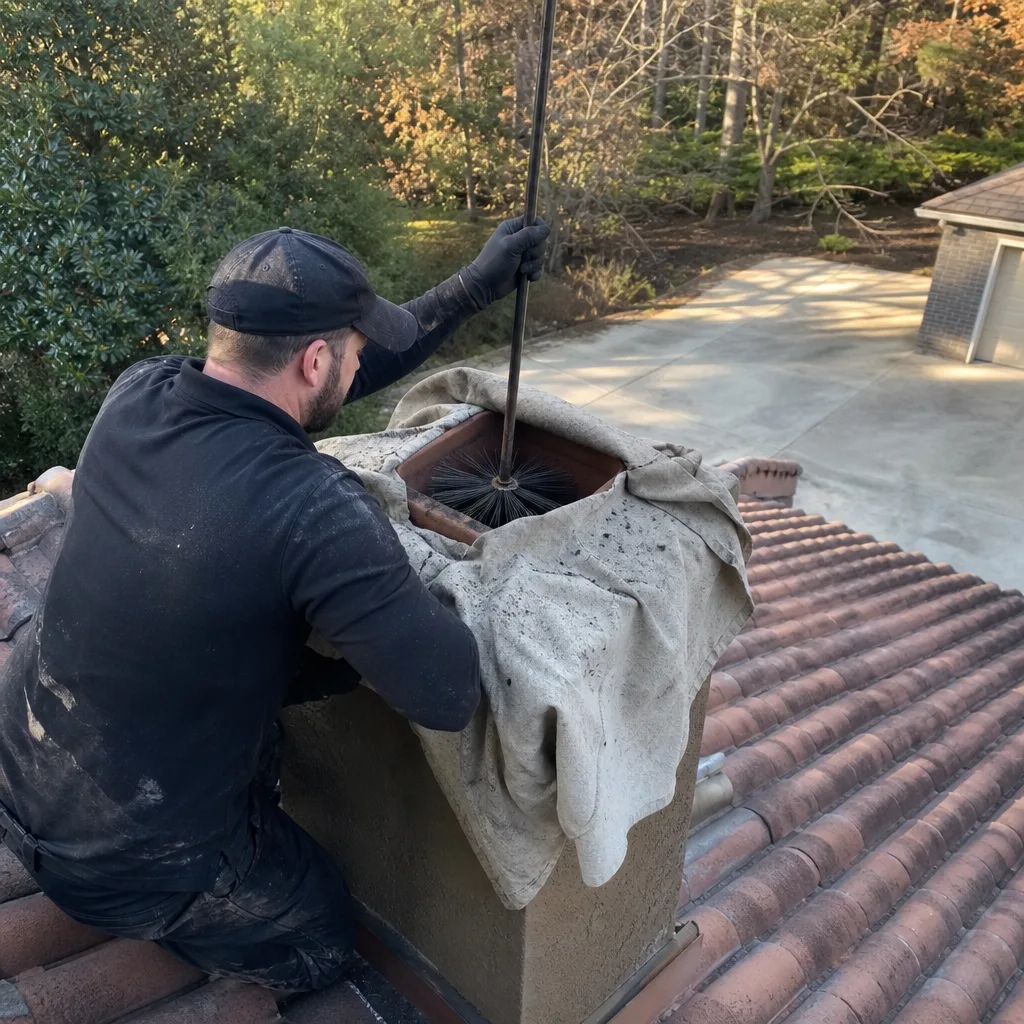
Marietta averages 52 inches of rainfall annually, much of it in intense afternoon events. A crown with hairline cracks that might last decades in Arizona fails in five to eight years here. The warning sign is dark vertical streaking on the chimney face below the crown line, often mistaken for “just weathering.” It’s active water intrusion, and in homes with original construction crowns (thin mortar wash rather than poured concrete with overhang), we expect to find it in every inspection of a home built before 2010.
The Smoke Smell in a Closed Fireplace: What It Actually Means
This is the sign homeowners most often misdiagnose, and it’s the one that can indicate the most serious hidden damage.
Here’s the mechanism. A properly functioning chimney creates negative pressure in the firebox when no fire is burning: warm air rises, drawing replacement air up from the room. When the damper is closed, that negative pressure should seal against the damper plate. If you smell smoke with the damper closed and no fire lit, one of three failures is occurring:
- Liner breach above the damper - Smoke from previous fires has penetrated the masonry surrounding the flue. The masonry acts like a sponge, holding particulate matter. When the house pressure equalizes (HVAC cycling, windy day, bathroom exhaust running), that stored smoke off-gasses into the room through gaps in the firebox masonry or through the hearth.
- Smoke chamber deterioration - The sloped transition from firebox to flue is parged with mortar that cracks and erodes. Smoke eddies in this chamber during firing, deposits creosote on rough surfaces, and those deposits off-gas when the flue cools. A closed damper doesn’t seal the smoke chamber; it only blocks the flue above it.
- Negative house pressure drawing down the flue - Modern Marietta homes are tight. Kitchen range hoods, bathroom exhausts, and HVAC returns can create enough negative pressure to pull air down the flue, past an imperfect damper seal, carrying residual odors. This is an HVAC problem masquerading as a chimney problem, but the chimney’s imperfect seal is what enables it.
Airing out the room does not address any of these. The smell will return because the source is structural, not atmospheric. The correct response is a Level 2 inspection with camera documentation of the smoke chamber and liner condition above the damper.
In our experience across Marietta, from historic homes near the Square to newer construction in West Cobb, smoke smell with closed damper correlates with liner breach about 40% of the time and smoke chamber deterioration another 35%. The remaining 25% is house pressure dynamics. Camera inspection distinguishes them without guesswork.
Damper Problem or Liner Problem: Two Different Repair Paths
Smoke in the room can originate from two entirely different failures, and confusing them leads to wrong repairs and continued hazard.
The Damper Problem Signature
Smoke rolls into the room immediately on lighting, within 30 seconds of ignition. The fire struggles to establish. You may see smoke puffing from the fireplace opening before the flue warms. This is draft failure at the initiation point.
Causes:
- Damper not fully opening (mechanical failure, creosote buildup on hinge, or homeowner error)
- Damper installed too low, creating a short flue effect
- Blockage above the damper (bird nest, collapsed flue tile, excessive creosote)
- Competing air pressure: HVAC return near fireplace, kitchen exhaust running, or house too tight for combustion air
Repair path: Mechanical repair or replacement of damper assembly, blockage removal, or combustion air modification. Liner is typically intact.
The Liner Problem Signature
Fire burns adequately or even well, but smoke odor persists for hours afterward, or you notice smoke smell on upper floors near the chimney chase. The fireplace performed during burning; the failure is in containment after combustion.
Causes:
- Cracked clay flue tiles allowing smoke migration into chimney cavity
- Missing mortar joints between flue tile sections
- Corroded or separated stainless liner (often at offset or transition)
- Deteriorated smoke chamber parging creating turbulent deposition
Repair path: Liner repair or replacement, smoke chamber parging, or full chimney rebuild depending on extent. Damper may be functional and still require replacement only as part of liner access.
The distinction matters for cost and urgency. A damper replacement in Marietta typically runs $400-$800. A liner replacement runs $2,500-$5,500 depending on height, diameter, and whether the chase requires modification. We’ve had homeowners in Kennesaw and Acworth spend $600 on a damper replacement for what was actually a $3,200 liner breach because no camera inspection was performed to distinguish the symptoms-exactly why our guide on how to hire a chimney cleaning contractor in Marietta emphasizes verifying diagnostic capability before authorizing repairs.
Clause 4 of the Haven Standard requires photo documentation on every job precisely to prevent this. You see what we see, and you see it before any work is authorized.
What a Camera Scan Shows for Each Warning Sign Category
The NFPA 211 Level 2 inspection is defined by camera documentation of the flue interior. Here’s what we document for each warning sign tier, and what you should expect in your report.
Cosmetic Signs: What the Camera Confirms
For light soot buildup, the camera shows uniform black coating with visible flue tile joints or liner corrugation still distinct. We document thickness at three points (bottom, middle, top of flue) and classify the creosote: Class I (powdery, brush-removable), Class II (crunchy, some scraping), or Class III (glazed, requires rotary removal). For Marietta homeowners burning seasoned hardwood on weekends, we expect Class I or early Class II. If you’re seeing Class III with light use, we look for unseasoned wood sources or appliance misfiring.
For minor exterior staining, the camera may show no interior defect at all. The crown or cap issue is external. We still document the full flue because exterior water intrusion can precede interior damage by several years.
Functional Signs: What the Camera Reveals
For rust-colored staining, we expect to find:
- Oversized flue relative to appliance (common in 1980s-1990s Marietta construction)
- Condensation streaking on flue walls, sometimes with white efflorescence on clay tile surfaces
- Corrosion pitting on metal damper visible from below, but liner intact above
For debris falling, we document the obstruction: nesting material with species identification (required for wildlife permit if removal is needed), collapsed tile fragments with measurement, or dislodged mortar from deteriorated joints.
Structural Signs: The Critical Documentation
For white efflorescence on exterior brick, the camera typically reveals:
- Vertical cracks in clay flue tiles, often at joints or offsets
- Smoke staining on chimney cavity walls, proving gas migration
- Missing or deteriorated mortar between flue tile sections
- Sometimes liner displacement: tiles shifted from thermal expansion cycles
For firebox cracking, we document the crack pattern from below, then run the camera to find where that stress has propagated into the smoke chamber or liner. The diagonal cracks from Marietta’s clay settlement almost always terminate in smoke chamber shelf cracks or liner offset displacement.
Your report includes still images at minimum 640×480 resolution, video clip of the full scan, and written annotation of each finding with location (measured distance from top or bottom of flue). This is not optional documentation. Clause 4 of the Haven Standard requires it on every job, and we’ve maintained this archive continuously since 2009.
What It Costs to Address Warning Signs in Marietta
Specific pricing matters. These ranges reflect Marietta market conditions, material costs through our Haven buying network, and labor rates for CSIA-certified technicians in the metro Atlanta area.
| Service | Typical Range | What’s Included |
|---|---|---|
| Standard chimney sweep (Class I-II creosote) | $199-$289 | Full brush sweep, debris removal, Level 1 visual inspection, written condition report |
| Level 2 camera inspection | $299-$399 | Internal camera scan of full flue, smoke chamber documentation, photo/video record, written findings with annotated images |
| Glazed creosote removal (Class III) | $450-$650 | Rotary chain removal, chemical treatment if needed, follow-up sweep, documentation |
| Damper repair or replacement | $400-$850 | Mechanical repair or new assembly (lyemetal or stainless), installation, operation test |
| Stainless steel liner installation (single appliance) | $2,800-$5,500 | DuraFlex or Olympia Chimney stainless liner, proper sizing, insulation where required, connection, documentation |
| Smoke chamber parging | $1,200-$2,400 | HeatShield or similar refractory coating, application to proper thickness, cure and inspection |
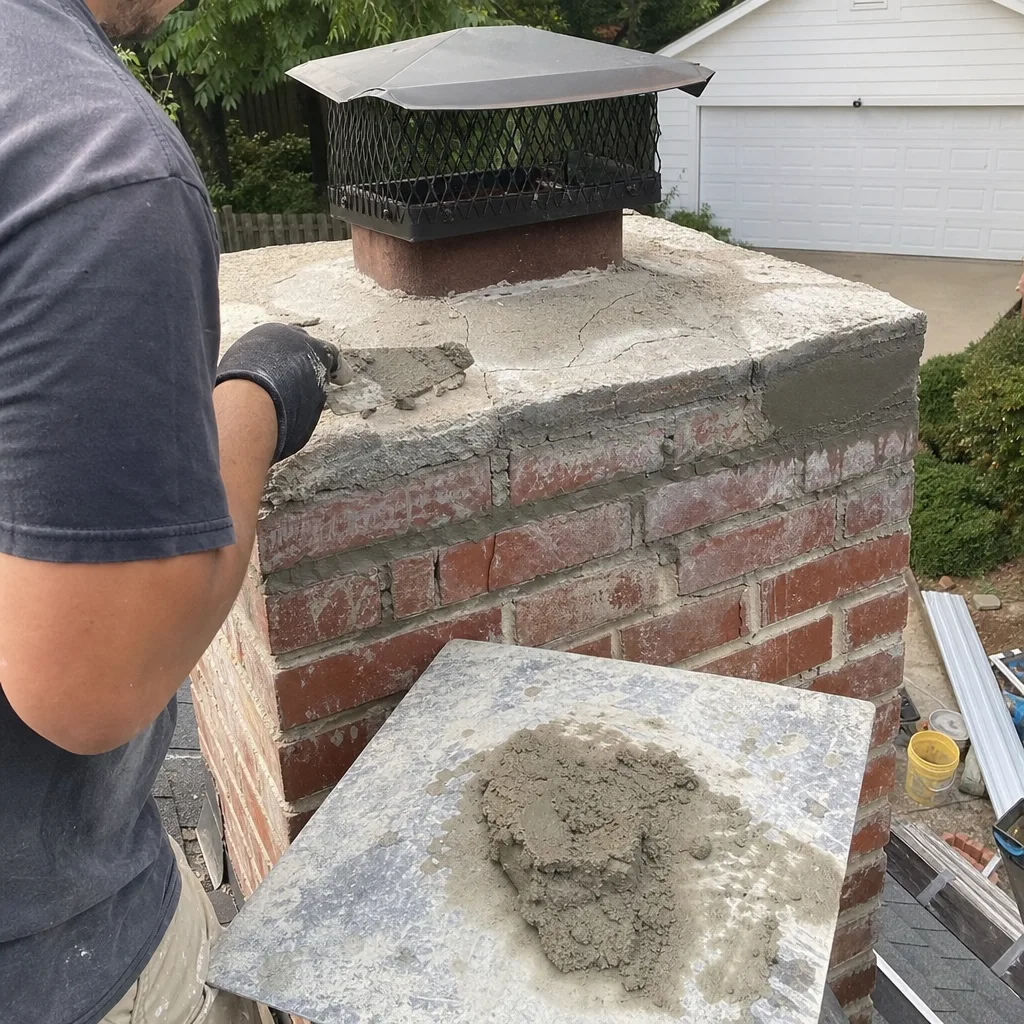
| Crown repair or rebuild | $850-$2,200 | Crack sealing or formed concrete crown with proper overhang and drip edge |
| Firebox refractory panel replacement | $1,100-$2,800 | Factory-matched panels or custom pour, installation, cure schedule |
Every price is delivered in writing before work starts. Haven Standard Clause 1 requires it. We don’t start, then tell you. The written scope specifies materials by brand where relevant: DuraFlex or Olympia Chimney for liners, HeatShield for smoke chamber parging, Gelco or Famco for caps and accessories. You know what you’re paying for before anyone touches your chimney.
Our Free Second Opinion applies to any competitor’s written estimate. Bring us their scope and price. We’ll review it against what our camera shows in your flue, and we’ll tell you where we agree, where we differ, and why.
Common Mistakes to Avoid
- Assuming white exterior staining is just age - In Marietta’s humidity, efflorescence progresses faster than in drier climates. What looks cosmetic for two years can become structural in three. Schedule camera inspection when you first notice it, not when the brick faces start spalling.
- Buying a “chimney cleaning log” instead of a sweep - These products loosen some creosote, which then falls to the smoke chamber shelf and firebox floor. They do not remove buildup from flue walls and they cannot address liner damage. We’ve documented fires caused by accumulated loosened creosote igniting on the smoke chamber shelf.
- Confusing a Level 1 visual inspection with a Level 2 camera inspection - A flashlight look from the firebox or roof cannot see the 70% of flue damage that occurs at offsets, joints, or above the smoke chamber. Many Marietta homeowners have paid for “inspections” that missed critical liner breaches because no camera was used.
- Ignoring smoke smell because “it’s an old house” - Old houses in Marietta’s historic districts have survived because their chimneys functioned. Smoke smell indicates they are no longer functioning as designed. The age of the house is irrelevant to whether combustion gases are migrating toward living spaces.
- Waiting for “burning season” to schedule - Marietta’s mild fall means demand spikes in October. By then, contractors with camera capability are booked weeks out. Structural signs found in August can be addressed before first fire; the same signs found in November may mean no fires until January.
- Accepting “call for quote” pricing - You cannot compare prices without written scopes. A $150 sweep that omits camera inspection and finds nothing is more expensive than a $299 sweep that documents a $3,000 liner breach you can now address before it causes damage.
- Assuming new construction means no problems - We’ve found unlined flues, improperly sized liners, and missing mortar joints in Marietta homes built after 2015. Georgia does not require chimney inspection at final occupancy, and builder-grade installations often skip details that matter for safe operation.
When to Call a Professional
Call before burning season if you’ve noticed any cosmetic sign: light buildup, minor staining, or faint odors. Schedule allows proper documentation and any needed repair before temperatures drop.
Call this week if you have functional signs: smoke on lighting, rust staining, debris falling, or persistent smoke smell with damper closed. These indicate active failure that will worsen with use. Do not burn until inspected.
Call today, before any further use, for structural signs: efflorescence, spalling, firebox cracking, or visible flue tile gaps. These indicate containment compromise. A fire in a compromised chimney can ignite adjacent framing or allow CO into living spaces.
Emberly Chimney Cleaners Marietta offers free estimates in Marietta and throughout Cobb County. Every estimate includes written scope, written price, and written warranty before any work is authorized. Call (470) 288-2763 to schedule. Live phone support is available 24 hours a day, 7 days a week. You’ll speak to a person, not a menu.
Frequently Asked Questions
A standard chimney sweep in Marietta typically costs $199-$289 for Class I or II creosote removal, including debris disposal and a written condition report. Glazed creosote (Class III) requiring rotary removal runs $450-$650. A Level 2 camera inspection, which we recommend for any home not swept within two years or showing warning signs, is $299-$399. Call (470) 288-2763 for an exact quote - estimates are free, delivered in writing, and include no obligation.
If the liner is cracked, separated, or improperly sized, cleaning more often does not restore containment function. Class III creosote forms faster in damaged liners because of turbulent airflow and temperature variation. We’ve documented cases where homeowners in East Cobb paid for three extra sweeps over four years rather than replace a $3,200 liner, spending more on maintenance that never addressed the root cause. The camera inspection shows whether the liner is intact; if it is, more frequent sweeping may suffice. If it isn’t, replacement is the only code-compliant repair.
NFPA 211 recommends annual inspection and cleaning as needed. For Marietta homeowners burning seasoned hardwood 2-3 times weekly during winter, we typically see Class I creosote accumulation requiring sweep every 2-3 years. Those burning pine, unseasoned wood, or using fireplaces more frequently need annual sweeping. The definitive answer comes from camera inspection: we measure buildup, classify creosote type, and recommend interval based on your actual use pattern, not a calendar. For more guides & resources on maintaining your chimney system, explore our blog.
Skipped maintenance progresses through predictable stages. Year 1-2: Class I creosote accumulates; no immediate hazard, but efficiency drops. Year 2-4: Class II-III creosote forms; chimney fire risk becomes material, and acidic condensate begins attacking metal components. Year 4+: liner damage from thermal stress and moisture; smoke migration into chimney cavity; potential CO intrusion or adjacent framing ignition. In Marietta’s humidity, the timeline compresses because moisture accelerates both creosote hardening and metal corrosion. Call (470) 288-2763 for a current condition assessment - it’s free, and it tells you exactly where you are in this progression.
Summer humidity in Marietta raises the dew point inside the flue. Residual creosote, which contains organic compounds, reactivates in moist air and produces odor. If the damper is closed and you still smell it, the cause is usually liner breach or smoke chamber deterioration allowing those compounds to bypass the damper seal. Airing the room or using deodorizing products masks the symptom. The repair is inspection and documentation of the liner and smoke chamber condition, then repair of identified breaches.
You can see the firebox and the first few feet of flue from below, and the crown and cap from the roof or ground with binoculars. You cannot see the 60-70% of flue length where most damage occurs: at offsets, joints, transitions, and above the smoke chamber. A homeowner flashlight inspection is useful for spotting obvious firebox cracking or major debris, but it cannot replace camera documentation. We provide the camera record under Clause 4 of the Haven Standard so you see what we see, with no interpretation gap.
The Bottom Line
Chimney warning signs in Marietta homes fall into three clear tiers. Cosmetic signs like light soot or minor exterior staining mean schedule a sweep within the season. Functional signs like smoke on lighting, rust-colored staining, or persistent odor mean stop burning and get a Level 2 camera inspection. Structural signs like efflorescence, spalling, or firebox cracking mean stop all use immediately and require documented camera assessment before any repair authorization.
The humid climate, red clay soils, and thunderstorm intensity of the Marietta area create specific failure patterns that differ from northern climates. Rust-colored staining indicates condensate chemistry, not simple corrosion. Settlement cracks run diagonally, not horizontally. Crown failure accelerates under intense rainfall. Recognizing these local patterns prevents misdiagnosis and wrong repairs.
Every inspection from Emberly Chimney Cleaners Marietta home includes the camera documentation, written price, and written warranty that define our work. We’ve completed more than 38,000 chimney inspections and cleanings since 2009, each with that same documentation standard. If you’re seeing warning signs, or if you’re unsure what tier they fall into, call (470) 288-2763 for a free estimate. We’ll show you what your flue looks like, name the exact cost to address it, and let you decide on your timeline.
Written by Corrine Halstead, Owner at Emberly Chimney Cleaners Marietta, serving Marietta since 2009.